

Just have a moment to look around you. Your keyboard keys, the iPhone accessories, your medical equipment, and even the interiors of your car will have a behind-the-scenes story to them, that all start within a plastic injection molding machine. They might seem simple but these daily goods have a manufacturing process behind their clean lines and flawless consistency which was created on accuracy, time and rapid design measurements.
When you’re new to plastic injection molding or thinking how your next project is going to be, plastic injection molding can be first seen overwhelming. Machines, molds, materials, cycle times, it is easy to lose track of it. In this article you’ll understand the reason why manufacturers are using this process to make millions of the parts in such an efficient and cost effective manner.
What Is Plastic Injection Molding?
Plastic injection molding machine is a production technique in which the hot plastic is forced into a highly-designed mold. After cooling and hardening of the plastic, the mold opens and the part that is out is a complete copy of the mold shape.
Why manufacturers utilize it:
- Produce identical objects every cycle
- Support intricate design
- Perfect for medium to large volume production
- Works with a variety of plastic materials
How Plastic Injection Molding Works?
When you understand the process, you’re able to design parts more effectively and prevent unnecessary expense.
Step 1: Material feeding
Plastic pellets are placed in a hopper. These are pellets of raw polymer combined with strength, colour, or rubber enhancers.
Step 2: Melting and mixing
The rotating screw serves not only to heat the pellets, but also to blend them and to turn the plastic into a smooth and molten state.
Step 3: Injection into the mold
Le high-pressure injected molten plastic is pressured into a closed mold. This force makes sure that the material is used to fill in every minute detail.
Step 4: Cooling and solidification
The mold is cooled using water channels. One of the determinants of controlling the cost and cycle of production is the cooling time.
Step 5: Part ejection
When solid, ejector pins push the complete part out of the mold and the action is repeated.
What Are the Main Types of Injection Molding Machines?
The nature of machines used in plastic injection molding also determines the quality of parts, the rate of production, the amount of energy used or cost. Here’re only a few fundamental types of injection molding machines, how they work and when to utilize them.
Hydraulic Injection Molding Machines
Hydraulic injection molding machines are hydraulically powered using hydraulic fluid and pumps and are used to push all the clamping unit and injection system. These machines have served as a source of plastic injection molding over the decades because they are strong and durable.
Best for
- Large plastic injection molding parts
- Automotive and industrial plastic components
- Applications where clamping force is more important than speed
Mechanical (Toggle) Injection Molding Machines
Toggle machines, which are also called mechanical injection molding machines, have a mechanical linkage system that opens and closes the mold rather than a hydraulic system that depends on hydraulic systems completely. These machines enhance clamping force on a toggle mechanism and are therefore effective in some of the common molding tasks.
Best for
- Medium-sized plastic parts
- Stable, repetitive production runs
- Facilities looking for simple, low-maintenance solutions
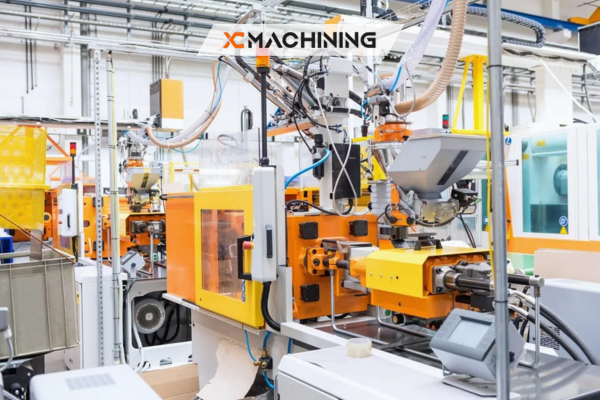
Electric Injection Molding Machines
Electric injection molding machines exploit electric servo motors in all the motions, injection, clamping, and ejection. These machines are a significant development in technology of plastic injection molding.
Best for
- Medical and electronics plastic injection molding
- Thin-wall and high-precision parts
- Clean-room and high-quality production environments
Hybrid Injection Molding Machines
Hybrid injection molding machines have hydraulic clamp power and electric servo injection and movement. This design gives a balance between performance and efficiency.
Best for
- Medium to large plastic injection molding parts
- Manufacturers needing both power and precision
- High-volume production with varied part designs
Specialized Injection Molding Machines
Specialized Injection molding machines are designed to perform specific tasks that cannot be effectively done with the help of standard machines.
Common specialized machine types
- Multi-material (two-shot) molding machines – Combine two plastics in one part
- Insert molding machines – Mold plastic around metal or electronic inserts
- Micro-injection molding machines – Produce extremely small, precise plastic parts
- Vertical injection molding machines – Ideal for insert and overmolding processes
Best for
- Medical micro-components
- Electronic connectors and inserts
- Multi-material or overmolded plastic parts
How Does a Plastic Injection Molding Machine Work?
Plastic injection molding machine applies a controlled, repeatable operation in transforming raw plastic into a complete component.
Step 1: Plastic Pellets Are Loaded into the Hopper
Additive and polymer plastic pellets are emptied into the hopper. The hopper holds the material and feeds it into the machine at a regulated rate to have uniform processing.
Step 2: Pellets Enter the Heated Barrel
The pellets are released out of the hopper into the barrel which has a rotating screw. This screw helps to propel the pellets forward in the process of regulating flow and pressure.
Step 3: Plastic Is Melted Evenly
When the pellets pass through the barrel, external heaters and friction of the screw increases the temperature. These solid pellets slowly turn into a smooth and molten plastic.
Step 4: Pressure Builds and Shot Size Is Prepared
The screw keeps rotating and drawing to a point, creating pressure and gather precisely enough molten plastic required to make one molding cycle of the material, which is called the shot size.
Step 5: Mold Closes with Clamping Force
The halves of the mold are clamped to close tightly so as to maintain the halves closed during the injection. This prevents plastic leaking and flashing.
Step 6: Molten Plastic Is Injected into the Mold
The screw is injected as a plunger into the mold cavity at a controlled pressure and speed forcing the plastic to flow through the screw and fill the mold.
Step 7: Packing and Holding Pressure
Once the cavity is filled, the machine exerts pressure briefly. This takes the place of shrinkage in the materials when the plastic starts cooling.
Step 8: Cooling and Solidification
Cooling channels inside the mold circulate coolant to remove heat. At this stage the plastic hardens and attains a final shape.
Step 9: Mold Opens
After the part has been thoroughly solid, the mold will automatically open without destroying the part.
Step 10: Finished Part Is Ejected
Ejector pins force out the solid portion through the mold. The final part may be dropped into a container or into a conveyor system.
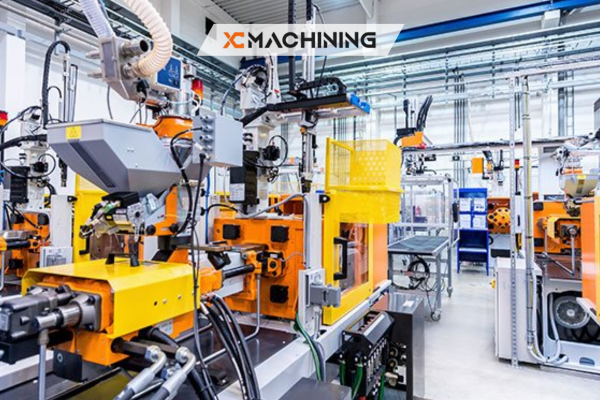
Key Considerations When Choosing a Plastic Injection Molding Machine
The following are the primary factors which need to be considered prior to buying a plastic injection molding machine to ensure that the machine is suitable in your production and part requirements:
- Production Volume: This is the number of parts to be produced on a daily or monthly basis. The more the volume is required, the larger, quicker machines with more clamping forces will be required.
- Type de matériau : variety of plastics (ABS, PP, Nylon, PC, etc.) melting points vary as well as their flow characteristics. Select a machine that can work with your desired materials.
- Clamping Force: The machine should have adequate clamping force to ensure that the mold is closed during injection and to ensure flashing is avoided and no part defects occur.
- Shot Size: Shot size displays the limit to the quantity of molten plastic injected per shot. It must fit pleasantly to the weight and volume of your part.
- Cycle Time: Reduced cycle times enhance the productivity and reduce the cost per unit in areas with large plastic injection molding.
- Automation Features: Search for automation, like robotic part removal, automated feeding, and in-line inspection to enhance consistency and lessen the workforce.
- Efficacité énergétique: The use of energy saving machines (especially electrons or hybrids) can help to reduce the electricity bills and sustainable production.
- Budget and ROI: A trade off between the initial cost of the machine and the long term cost of operating the machine to give the best ROI.
Final Thoughts
Moulage par injection de plastique is not merely the technique but a strategy of efficient production at a high quality. Manufacturers are able to get the same consistent results and scale at a timely rate by knowledge of the appropriate machine, materials, and design.
In order to achieve success, you must make informed decisions about the type of machine, the material to be used and optimization of the process. Injection molding is an effective instrument of creating quality and success in the long term with the appropriate strategy in place.
FAQ
Can injection molding be used for small, intricate parts?
Yes, injection molding is ideal for producing intricate microscopic parts with precise tolerances. Particularly, micro injection molding serves small and precise parts used in medical and electronics devices.
How do you choose the right injection molding machine size?
The size of machines must be equal to the volume and size of the parts. When high volume production is required, a machine with more clamping force and shot size will be required whereas smaller machines can be used in a limited number of runs or complex parts.
How does cycle time affect production in injection molding?
The shorter cycle time translates to quicker manufacturing and the end result will be a reduced cost per part. Nevertheless, to ensure part strength and dimensional accuracy, a balance has to be created between cycle time and sufficient cooling.
What is the role of cooling in injection molding?
Solidifying the plastic as well as preventing warping all depend on cooling. The rate of cooling should be monitored because there should be no rapid or slow cooling which may interfere with the quality of the final part.
How do multi-material injection molding machines work?
Multi-material molding is the process of injecting two or more different plastics into the mold. It is best used when the parts need to have varying material characteristics, e.g. soft-touch grips or overmolded components of different textures.



 French
  English
  Spanish
  German