HDPE (High-Density Polyethylene) offers excellent machinability and post-processing flexibility. Although its low surface energy makes coatings and paints difficult to adhere to, several professional finishing techniques enhance its function and aesthetics.
Machined Finish
Freshly machined HDPE typically exhibits a smooth, satin-like surface. This natural finish is ideal for parts requiring dimensional accuracy without cosmetic treatment. XC Machining’s precision tooling ensures minimal tool marks, producing clean, consistent parts straight off the machine.
Polished Finish
Polishing HDPE can produce a glossy, reflective surface ideal for consumer and display products. Using controlled buffing or thermal polishing techniques, XC Machining enhances the appearance while maintaining surface integrity. This finish adds visual appeal to housings, panels, and prototypes.
Textured or Matte Finish
For industrial or ergonomic applications, a matte or textured surface may be preferred. This is achieved through controlled toolpath strategies or surface etching. XC Machining provides custom texture patterns that improve handling and functional grip without compromising tolerance.
Coating and Printing
Due to HDPE’s low surface adhesion, painting or coating requires surface activation such as corona or plasma treatment. XC Machining applies these methods when labeling, marking, or anti-static coatings are needed. UV-resistant coatings are also used for outdoor and marine HDPE components.
Vapor and Heat Treatment
In select cases, mild vapor or heat treatment can slightly melt the top layer of HDPE, sealing micro-pores and improving smoothness. XC Machining utilizes these methods for containers, pipes, or seals where watertight surfaces are required, ensuring a clean and sealed final product.
How Does XC Machining Ensure Precision in HDPE Machining?
XC Machining achieves accuracy in HDPE parts requires more than just CNC programming, it demands a deep understanding of material science, tooling, and process control. Our advanced workflow ensures every part meets performance and aesthetic standards with unmatched precision and repeatability.
Specialized Tooling and Cutting Parameters
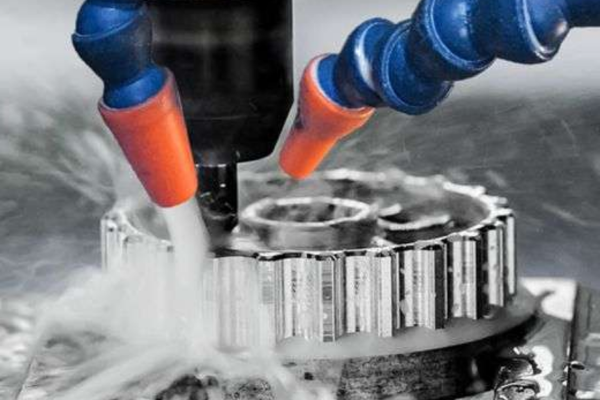
XC Machining employs high-sharpness carbide and PCD tools with optimized feed rates to prevent melting or burr formation. The cutting parameters are calibrated to HDPE’s low thermal conductivity, ensuring clean edges and consistent surface finish across every batch.
Controlled Fixturing and Support Systems
To counter HDPE’s flexibility, our engineers design custom fixtures that securely hold parts during machining. This minimizes vibration and distortion, allowing for stable cuts even in thin-walled or complex geometries.
Temperature and Chip Management
Excessive heat can distort polymer components, so XC Machining uses air or mist cooling systems instead of flood coolant. Chips are efficiently evacuated to avoid re-welding or tool wear, maintaining process stability during extended runs.
In-Process Inspection and Dimensional Verification
Each stage of machining undergoes inspection using coordinate measuring machines (CMMs) and laser scanners. XC Machining’s in-line quality verification ensures that every HDPE part matches the CAD model, maintaining tolerance consistency from prototype to mass production.
Post-Machining Finishing and Assembly Integration
After machining, XC Machining performs deburring, polishing, or cleaning to achieve the required finish. For projects involving multi-material assemblies, we ensure seamless integration through insert fitting or mechanical fastening, delivering ready-to-use HDPE components to clients worldwide.





 French
  English
  Spanish
  German