

Meta Description : Explore the benefits of CNC machining for medical industry. Learn about its applications, advantages, and how medical CNC services ensure precision and safety.
In the medical field, precision is everything. Every device and instrument must be crafted with the utmost accuracy to ensure patient safety and optimal performance. This is where CNC machining for medical industry steps in. In the medical industry, where accuracy can literally mean the difference between life and death, CNC machining is the unsung hero behind the scenes, ensuring every part is made to perfection. Whether it’s a complex surgical tool, a custom implant, or diagnostic equipment, CNC technology delivers reliability and consistency.
Let’s dive into how this powerful technology is shaping the future of medicine, with precise parts at a time.
Applications of Medical CNC Machining
Usinage CNC is a significant process in the production of medical components, providing high precision and durability. Whether its metals, plastics, ceramics, or composites, CNC machining will make sure that the medical components meet strict quality and medical standards. Here’re some of the uses of CNC machining in the medical sector:
Dispositifs médicaux
Medical devices refer to any instruments, equipment or tools utilised in medicine. CNC machining for medical industry is an important activity in the production of components in numerous medical equipment. The components might include diagnostic tools, as well as, patient monitoring devices.
Common Medical Devices Machined:
- Stethoscope
- Defibrillators
- Blood pressure monitors
- Ventilator components
- ECG, X-ray, and MRI machine parts
Implants médicaux
Medical implants are the devices designed to be inserted or implanted into the body to substitute or support damaged body tissues or body organs. The implants can be made by CNC machining for medical industry so that they meet high standards in terms of dimensional accuracy and biocompatibility.
Examples of Medical Implants:
- Joint replacements
- Spine screws and rods
- Coronary stents
- Pacemakers
- Drug delivery devices
Instruments chirurgicaux
Surgery tools are essential for performing surgery. The development of tools by CNC machining does not only result in highly precise tools but also is biocompatible and strong in order to avoid infection or rejection.
Examples of Surgical Instruments:
- Scalpels
- Ciseaux chirurgicaux
- Pince
- Clamps and retractors
- Porte-aiguilles
Dental Instruments
The quality of dental equipment should be extremely precise and clean since they are applied when performing operations that touch the health of the mouth and teeth of the patients. Accuracy and fine details in dental tools are produced by means of CNC machining for medical industry.
Examples of Dental Instruments:
- Dental probes
- Dental scalers
- Mirrors
- Exercices
- Suction devices
Orthopedic Devices
Devices used to aid in healing of bones and joints include orthopedic devices like braces, splints and external supports. CNC machining can be used to create custom-fitting equipment with exact dimensions to guarantee maximum comfort and functionality.
Examples of Orthopedic Devices:
- Joint braces
- Bone plates and screws
- Hip and knee prosthetics
- Ankle foot orthoses (AFOs)
Surgical Robotics Components
Surgical robots are gaining importance in minimally invasive surgeries. Components manufactured with the use of CNC machining are lightweight and precise to ensure the robotic tools perform perfectly.
Examples of Surgical Robotics Components:
- Robotic arm parts
- Control interfaces
- Joints and actuators
Diagnostic Equipment Parts
The diagnostic machines like MRI machines, X-ray machines, and ultrasound machines use parts that have been engineered to a high level so that they can work continuous operations. CNC machining also guarantees that components are durable and meet necessary medical standards.
Examples of Diagnostic Equipment Parts:
- MRI machine casings
- X-ray tube enclosures
- Ultrasound transducers
Prothèses
Artificial limbs and facial implants require precise fitting and customization. CNC machining for medical industry is important in the production of parts that are functional and comfortable to the specific measurements of each patient.
Examples of Prosthetics:
- Artificial limbs (arms, legs)
- Facial prosthetics (e.g., nose, ears)
- Cosmetic implants
Medical Packaging Components
Medical packaging should be able to protect, preserve the sterility and safe transportation of medical devices. CNC machining is applied to produce bespoke packaging pieces, e.g. trays, containers, and protective cases, which adhere to high standards of regulations.
Examples of Medical Packaging Components:
- Sterilization trays
- Protective containers for implants
- Packaging for syringes and needles
Precision Technologies for the Medical CNC Machining
CNC machining offers various techniques that are able to meet strict quality standards in the healthcare sector. Here’re different types of CNC machining processes commonly applied in medical production.
Usinage médical par électroérosion à fil
Wire Electrical Discharge Machining (EDM) is a very specific non-traditional machining technology which involves utilizing an electrostatically charged wire to cut through conductive materials. It is a perfect way to produce complex components with minimal roughness in their surfaces and very strict tolerances.
- Precision Cuts: Wire EDM can achieve incredibly fine tolerances of up to ±0.0025 mm and surface finishes as smooth as 1.5 µm Ra.
- Best for Complex Parts: The wire EDM can be used to produce complex parts, i.e. plastic injection molds, extrusion dies, and also parts of medical devices that need fine details.
5-Axis CNC Medical Machining
Usinage CNC à 5 axes offers a significant advantage over traditional 3-axis and 4-axis machines by allowing parts to be moved in five different directions simultaneously. This increased degree of freedom allows for the creation of more complex geometries that would otherwise be impossible or time-consuming on simpler machines.
- Complex Part Geometries: It enables machining of complex parts and making it ideal for medical implants, prosthetics and complex surgical instruments.
- Increased Precision: 5-axis machines are able to access the part in many angles which with more accuracy and reduced set up time.
Swiss CNC Medical Machining
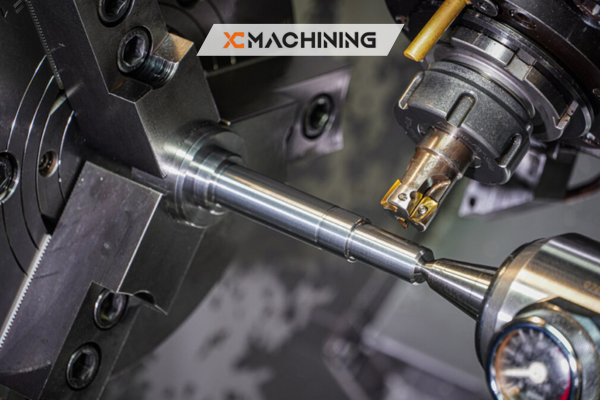
Swiss CNC machining is a high precision manufacturing process for small parts and high accuracy. It is also unique because it can cut on multiple cuttings at the same time using the Z-axis to have a higher degree of cutting flexibility.
- Complex Cuts: This process is ideal for making parts that have a tight tolerance and complex features especially those that are cylindrical or round.
- Multi-Spindle Operation: The effective processing of components without need for several setups is made possible by cooperation of multiple cutting tools.
Medical CNC Milling
Medical CNC milling involves 4-axis and 3-axis milling. This process is needed to make the medical components quickly and precise while maintaining tolerances. The versatility of medical CNC milling is that it can process a number of materials making it one of the most versatile CNC processes in the medical manufacturing industry.
- Rapid Production: CNC milling has short lead times when it comes to the production of prototypes and complete medical parts.
- Polyvalence des matériaux : Materials used in the medical industry like stainless steel, titanium, PEEK, nylon and PVC .
Micro Machining in the Medical Industry
Micro machining is a fine-tuning production method that is applied to produce tiny and delicate medical parts. This process makes parts of the highest medical quality that is accurate to the micrometer-level, making it ideal for manufacturing of medical implants, surgical instruments and diagnostic equipment.
- Miniaturization: Enables the production of smaller, more compact medical devices without compromising on performance, ideal for implants and diagnostic sensors.
- Complex Shapes: Capable of producing intricate geometries and fine details, essential for devices like micro surgical tools and implantable sensors.
What Are The Applications of CNC Machining for the Medical Industry?
The medical field depends heavily on CNC machining for medical industry, making precision parts for everything from the implants to the surgical tools.
Precision That Meets Life-Saving Standards
CNC machining is incredibly precise, and it is guaranteed that even minute medical parts are made to the specifications. This is critical in medical devices, where the slightest mistakes can be disastrous in terms of safety.
Tailored Solutions for Complex Medical Needs
Highly customized parts can be made using CNC machining, making it possible to produce unique medical devices or implants meeting the unique needs for every patient, ensuring good functionality and comfort.
Versatile Materials for Medical Excellence
The material of CNC machining is not limited to stainless steel, but rather to biocompatible polymers, providing companies with a wide range of options in selecting the most suitable material in each medical case, without compromising safety or longevity.
Efficient Mass Production with Consistency
CNC machining provides precision and efficiency without numbers of components, a single prototype or thousands of components. This suits well in the medical industry where manufacturers should be able to increase production at a high standard and still offer high standards in all units.
Faster Production Times for Urgent Needs
The automation and high speed of CNC machining for medical industry result in short production times, which is necessary when the medical parts and devices are required the most. This is more important especially where time-sensitive medical intervention or procedure and where accurate and timely equipment is needed.
Conclusion
In the medical field, micromachining is an important tool, which allows the development of very small, precise and complex components necessary in modern medical practices. Through its capacity to create micro-sized components with tight tolerances,complicated shapes and forms, medical devices and implants that are not only functional, but also safe.
If you’re concerned about manufacturing of medical components, then utilizing cnc machining can be a major ingredient towards having your products satisfying the high standards of the healthcare sector.
FAQ
How does CNC machining promote the safety of medical devices?
CNC machining makes medical components within precision tolerances, minimising the possibility of defects. The level of accuracy is essential in the development of safe, dependable equipment that is used in important medical environments.
What role does CNC machining play in the development of personalized medical implants?
CNC machining provides the possibility to make custom implants with the help of precise shaping of the components to meet individual anatomy of a patient, more comfortable and functional.
Can CNC machining be used for bioresorbable medical devices?
Yes, CNC machining can be applied to recyclable materials, such as PLA and PCL, which are the best in production of temporary implants and drug delivery systems in the medical sector.
How does CNC machining compare to traditional manufacturing methods for medical parts?
CNC machining provides more precise and fast manufacturing solutions than the old process and it is the best option for production of high quality medical parts with a minimal error.
What are the environmental benefits of using CNC machining for medical manufacturing?
CNC machining reduces materials waste being very precise and enables the use of biodegradeable materials, which makes the medical manufacturing process more sustainable.



 French
  English
  Spanish
  German