
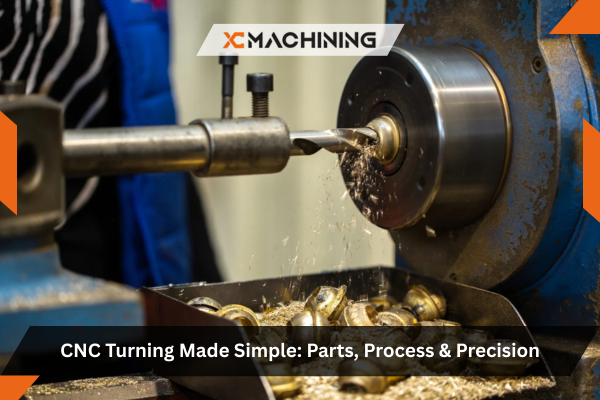
Qu'est-ce que le tournage CNC ?
CNC turning is a manufacturing process where a workpiece rotates while a stationary cutting tool removes material to create cylindrical shapes. The computer controls every movement. This ensures accuracy and consistency across hundreds or thousands of parts.
Unlike traditional manual lathes, modern Tours CNC eliminate human error through programmed instructions. The process works perfectly for creating shafts, bushings, bolts, and any component with rotational symmetry. Industries from aerospace to medical devices rely on this technology daily.
How CNC Turning Works
The workpiece spins at high speed in a chuck. Cutting tools approach from various angles. Material removal happens layer by layer until the desired shape emerges. Coolant flows continuously to manage heat and flush away metal chips.
Services de tournage CNC handle everything from simple bolts to complex aerospace components. The process typically achieves tolerances of ±0.005 inches. Specialized machines reach ±0.001 inches for critical applications. Some ultra-precision work hits ±0.0001 inches.
CNC Turning vs. Other Machining Methods
Understanding when to use Tournage CNC versus other processes saves time and money.
| Processus | Pièce à usiner | Outil | Meilleur pour |
| Tournage CNC | Rotates | Stationary | Cylindrical parts, shafts, bolts |
| Fraisage CNC | Stationary | Rotates | Flat surfaces, complex 3D shapes |
| Swiss Turning | Rotates with guide bushing | Stationary | Small precision parts under 1.25″ |
Tours CNC excel at producing round parts faster than milling. A shaft that takes 45 minutes to mill might only need 15 minutes on a lathe. This speed advantage makes turning the preferred choice for cylindrical components. Production volumes above 50 units benefit most from this efficiency.
Types of CNC Turning Machines
Different machines serve different manufacturing needs. Each type has specific advantages.
Centres de tournage horizontaux
These represent the most common CNC turning machine configuration. The spindle sits horizontally with tools mounted above the workpiece. Gravity naturally pulls chips downward into collection bins. This keeps the cutting area clean during operation.
Production environments favor horizontal centers for their reliability. They require minimal maintenance. These machines handle parts from 0.5 inches to 24 inches in diameter efficiently.
Centres de tournage verticaux
The chuck faces upward in vertical configurations. This makes them ideal for large, heavy components. Parts weighing several hundred pounds sit more stable when mounted flat. They don’t sag or vibrate like they would on horizontal setups.
Industries like energy and heavy equipment rely on vertical machines. They’re perfect for oversized components that need stability during machining.
Swiss-Type Lathes
Medical device manufacturers and electronics companies need services de tournage CNC de précision that Swiss lathes provide. These machines support the workpiece with a guide bushing extremely close to the cutting point. This enables microscopic tolerances on small parts. The support reduces deflection and vibration.
Swiss turning dominates production of components under 1.25 inches diameter. Precision matters most in these applications. Watch components and medical implants require this level of accuracy.
The CNC Turning Process
Moderne Services de tournage CNC follow a systematic workflow. Quality and efficiency depend on each step.
Design and Programming
Engineers create 3D models using CAD software like SolidWorks or Fusion 360. These digital designs include exact dimensions. Surface finish requirements get specified. Material specifications are documented. CAM software then converts the design into G-code that CNC controllers understand.
Programming determines cutting speeds, feed rates, and tool paths. Experienced programmers optimize these parameters. They consider material hardness and desired surface finish.
Configuration de la machine
Operators install appropriate cutting tools and secure raw material in the chuck. Tool offset measurements ensure the machine knows each tool’s exact position. A first article inspection verifies the program produces correct dimensions. This happens before running the full batch.
Qualité Services de tournage CNC maintain detailed setup sheets. These documents record every parameter for future production runs. Repeatability depends on consistent setup procedures.
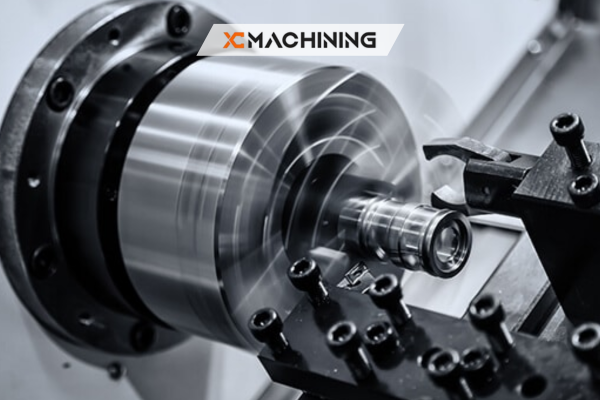
Opération d'usinage
The spindle accelerates to programmed RPM. Cutting tools advance into the rotating material. Carbide or ceramic tool tips withstand tremendous heat and pressure during material removal. Modern machines monitor cutting forces in real-time. They adjust speeds if resistance increases unexpectedly.
Multi-axis Tours CNC can perform several operations simultaneously. This reduces cycle time significantly. Parts that once required multiple setups now complete in one operation.
Contrôle de la qualité
Finished parts undergo dimensional inspection using coordinate measuring machines (CMM) or optical comparators. Surface finish gets verified with profilometers. These instruments measure roughness in microinches. Critical features receive 100% inspection while non-critical dimensions follow sampling plans.
Materials for CNC Turning
Custom CNC turned parts come in numerous materials. Each has specific properties.
Aluminum alloys like 6061-T6 machine beautifully. They produce excellent surface finishes with minimal tool wear. Stainless steel 304 and 316 resist corrosion but generate more heat during cutting. Brass machines faster than steel. It offers natural antimicrobial properties valued in medical applications.
Plastics including Delrin, nylon, and PEEK provide lightweight alternatives to metal. These materials machine easily but require special attention to heat buildup. Excessive heat can cause melting or distortion. Proper coolant use prevents these problems.
Titanium and Inconel challenge even experienced operators. They work-harden during cutting. Yet aerospace and medical industries depend on these materials for critical components. Special tooling and cutting parameters make these materials manageable.
Key Advantages of CNC Turning
Precision CNC turning services deliver benefits that traditional manufacturing cannot match.
Exceptional Accuracy
Computer control eliminates the human variability that plagues manual machining. Once programmed correctly, a CNC turning machine produces identical parts. This holds true whether it’s the first piece or the ten-thousandth. Tolerances can reach as tight as ±0.0001 inches Wevolver. This precision is essential for aerospace and medical applications.
Vitesse de production
Automated tool changes reduce cycle times dramatically. Simultaneous multi-axis movements save even more time. A part requiring four setups on a manual lathe might complete in one setup on a modern turning center. High-volume manufacturers run machines 24/7 with minimal supervision.
Rapport coût-efficacité
While setup costs exist, per-part costs drop significantly in volume production. Services de tournage CNC reduce labor expenses since one operator can monitor multiple machines. Material waste decreases through optimized cutting paths. Precise depth control ensures minimal scrap.
Cohérence et répétabilité
Once programmed, CNC lathes produce identical parts with consistent quality regardless of production run size Wevolver. This repeatability proves critical for assemblies. Multiple parts must fit together perfectly. Variation causes assembly problems and quality issues.
Common CNC Turning Operations
Tours CNC perform various operations beyond basic outer diameter turning.
Facing creates flat end surfaces perpendicular to the rotation axis. Threading cuts precise spiral grooves for bolts and screws. Single-point tools or thread-milling cutters handle this operation. Boring enlarges existing holes to exact diameters. It produces superior surface finishes compared to drilling.
Grooving cuts narrow channels that hold O-rings. These channels also provide clearance for assembly. Knurling creates diamond or straight patterns. These patterns improve grip on handles and knobs. Drilling adds holes along the centerline using stationary drill bits held in the tailstock.
Parting operations separate finished parts from bar stock. This requires careful planning to avoid vibration. Vibration ruins surface finish and dimensional accuracy.
Industries Using CNC Turning
Custom CNC turned parts serve virtually every manufacturing sector.
Aérospatiale
Aircraft engines contain thousands of precisely turned components. These include turbine shafts, hydraulic fittings, and landing gear bushings. Aerospace specifications demand tight tolerances. Complete traceability is required. Precision CNC turning services easily meet these stringent requirements.
Dispositifs médicaux
Surgical instruments, orthopedic implants, and dental tools require biocompatible materials. They need microscopic precision. Swiss-type Tours CNC excel at producing small medical components. Complex features are standard in this industry.
Automobile
Drive shafts, transmission gears, brake components, and engine parts rely on high-volume Services de tournage CNC. Automotive manufacturers value the repeatability that ensures every vehicle receives identical quality parts. Cost efficiency matters in this competitive market.
Électronique
Connectors, heat sinks, threaded standoffs, and enclosure components frequently use turned aluminum or brass. CNC turning handles copper and aluminum effectively for detailed designs needed in electronics manufacturing Swmachinetech. Thermal management components benefit from precise machining.
Selecting CNC Turning Services
Choosing the right manufacturing partner impacts project success significantly.
| Facteur | What to Verify |
| Capacités | Machine types, size ranges, tolerance capabilities |
| Quality Systems | ISO 9001, industry certifications, inspection equipment |
| Lead Times | Standard and rush options, capacity for repeat orders |
| Matériaux | Experience with your specific material requirements |
| Volume | Minimum quantities, pricing structure for your volume |
Qualité Services de tournage CNC provide design for manufacturability feedback before production begins. This collaboration identifies potential issues early. It avoids costly redesigns later. Communication throughout the process ensures expectations are met.
Verify certifications relevant to your industry. Aerospace requires AS9100. Medical devices need ISO 13485. Automotive often demands IATF 16949 compliance. These certifications demonstrate commitment to quality.
Design Tips for CNC Turning
Optimizing designs for Tours CNC reduces costs and improves quality.
Maintain consistent wall thickness when possible. This reduces machining time and improves part rigidity. Specify tolerances only where functionally necessary. Tighter tolerances increase costs without adding value for non-critical dimensions. Standard tolerances work fine for most features.
Avoid deep, narrow grooves that require specialized tooling. Internal features should have length-to-diameter ratios below 4:1 for best results. Sharp internal corners are impossible to machine. Cutting tools have radius. Specify reasonable radii that standard tools can produce.
Thread lengths should account for complete thread engagement plus a few extra threads. Provide adequate clearance for tool runout at shoulders and faces. These small design considerations prevent manufacturing problems.
Cost Factors in CNC Turning
Understanding pricing helps with budgeting and design decisions.
Material costs vary widely. Aluminum costs far less than titanium or Inconel. Complexity affects machining time through the number of operations required. Tool changes add time. CNC turning setups are generally quicker and more cost-effective for round or cylindrical parts than Fraisage CNC Neway.
Quantity dramatically impacts per-part pricing. Setup costs spread across more units in larger runs. Tolerance requirements influence costs. Tighter specifications demand more careful machining. They also require more inspection time.
Rush orders incur premium pricing. Schedule disruption and potential overtime labor drive up costs. Standard lead times of 2-3 weeks offer the best balance. Cost and delivery speed both matter.
Quality Standards and Certifications
Reputable services de tournage CNC de précision maintain relevant industry certifications.
ISO 9001:2015 provides the foundation for quality management systems across all industries. AS9100 adds aerospace-specific requirements for traceability and process control. ISO 13485 governs medical device manufacturing. It requires stringent documentation and validation protocols.
First article inspection reports (FAIR) document that initial production meets all specifications. Certificate of conformance (C of C) statements verify materials meet requirements. Material test reports (MTR) trace raw material chemistry and properties. These documents provide necessary traceability.
Regular calibration of measuring instruments ensures accuracy over time. Quality Services de tournage CNC maintain calibration records. They use NIST-traceable standards. This guarantees measurement reliability.
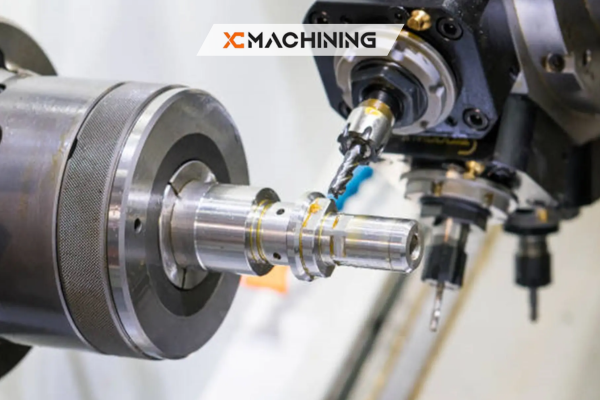
Future Trends in CNC Turning
Technology continues advancing CNC turning machine des capacités.
Artificial intelligence optimizes cutting parameters automatically. It adjusts based on tool wear and material hardness variations. Real-time monitoring detects problems before they produce scrap parts. This reduces waste and downtime significantly.
Hybrid machines combine turning with additive manufacturing. This enables complex internal geometries impossible with cutting alone. Five-axis turning centers handle increasingly complex geometries. They eliminate multiple setups entirely.
Automation extends beyond the machine itself. Robotic loading systems work continuously. Automated inspection catches defects immediately. These advances allow Services de tournage CNC to operate lights-out production overnight. Human supervision becomes unnecessary.
Common Mistakes to Avoid
Learning from common errors saves time and money.
Specifying tighter tolerances than functionally necessary increases costs. It provides no benefit. Design features too small for standard tooling require custom tools. Custom tools add significant expense. Inadequate print documentation leads to manufacturing assumptions. Assumptions may not match design intent.
Ignoring material selection impacts both machinability and final performance. Aluminum machines easily. Stainless steel requires more aggressive cutting parameters. Choosing materials based solely on cost causes problems. Machining characteristics matter tremendously.
Failing to communicate volume expectations affects pricing quotes. Services de tournage CNC price prototype quantities differently. Production runs of thousands get volume discounts. Clear communication prevents surprises.
Conclusion
CNC turning remains essential for manufacturing cylindrical components. Industries from aerospace to medical devices depend on this technology. It delivers precision, speed, and consistency that manual methods cannot match. Working with experienced manufacturers ensures parts meet specifications reliably. Modern Tours CNC continue evolving with automation and AI integration.
Ready to Start Your CNC Turning Project?
XC Machining delivers precision Pièces tournées CNC sur mesure with fast turnaround times and competitive pricing. Upload CAD files for instant quotes and free design feedback from experienced engineers.
Visit XC Machining for comprehensive services de tournage CNC de précision backed by ISO 9001 certification and advanced inspection capabilities.
Questions fréquemment posées
Q1: What tolerances can CNC turning achieve?
Standard Tournage CNC maintains ±0.005 inches. Precision work reaches ±0.001 inches. Specialized machines achieve ±0.0001 inches for critical applications.
Q2: How does CNC turning differ from milling?
Tours CNC rotate the workpiece while tools remain stationary. This works best for cylindrical parts. Milling rotates tools against stationary workpieces for flat surfaces.
Q3: What’s the minimum order quantity?
This varies by provider and part complexity. Some Services de tournage CNC accept prototype quantities of 1-10 pieces. Others specialize in production runs of 100+ units.
Q4: Which materials work best for CNC turning?
Aluminum, brass, and mild steel machine easily with excellent surface finishes. Stainless steel, titanium, and engineering plastics like Delrin also work well.
Q5: How long does CNC turning take?
Lead times typically range 1-3 weeks for standard orders. Simple parts machine in 5-15 minutes each. Complex Pièces tournées CNC sur mesure may require 30-60 minutes per piec
References and Citations
- Wevolver. (2024). “What is CNC Turning? Process, Advantages, Applications.” Retrieved from manufacturing technology research database. Data shows precision capabilities and industry applications.
- Society of Manufacturing Engineers (SME). (2024). “CNC Machining Technology Report.” Industry standards for tolerances and quality systems in precision machining operations.
- National Institute of Standards and Technology (NIST). (2025). “Manufacturing Extension Partnership Technical Resources.” Guidelines for computer numerical control processes and measurement standards.
- Precision Machined Products Association (PMPA). (2024). “Industry Trends and Technology Adoption.” Statistics on CNC turning adoption rates and production efficiency improvements across manufacturing sectors.



 French
  English
  Spanish
  German