Aluminum 7050 is a high-strength aerospace alloy, and selecting the right surface finish enhances durability, corrosion protection, and aesthetics. Each finishing method offers unique advantages depending on the part’s intended use and environmental exposure.
Type II Anodizing for Color and Corrosion Resistance
Type II anodizing is a popular choice for Aluminum 7050 parts when color consistency and corrosion protection are required. Although 7050 has a higher zinc and copper content, proper pre-treatment allows it to anodize effectively. The resulting oxide layer improves resistance to moisture and moderate wear while offering visually appealing color options such as black, blue, gold, or clear. XC Machining finely controls bath parameters to achieve consistent results across complex geometries.
Type III Hard Anodizing for Extreme Wear Environments
For aerospace, defense, or high-load mechanical components, Type III anodizing provides superior hardness and abrasion resistance. The oxide layer can reach up to 50 microns, transforming the surface into a ceramic-like coating. Hard anodized 7050 is ideal for sliding elements, high-friction components, and structural parts subjected to repeated stress. XC Machining ensures the surface maintains uniform thickness, avoiding dimensional deviations.
Chromate Conversion Coating (Alodine/Iridite)
Chromate conversion is widely used in aerospace environments where electrical conductivity and corrosion protection are critical. This finish is thinner than anodizing and does not significantly change dimensions. It enhances paint adhesion and protects the material during storage or transport. XC Machining provides RoHS-compliant chromate coatings suitable for electronic housings and aircraft components.
Sandblasting or Bead Blasting for Uniform Matte Texture
Blasting produces a clean, uniform matte surface by smoothing machining marks and preparing the part for coating or anodizing. For Aluminum 7050, fine glass bead blasting is typically preferred to avoid excessive surface damage. This finish is excellent for aesthetic parts where glare reduction and scratch blending are important.
Powder Coating for Strong Visual and Environmental Protection
Powder coating adds a thick, durable polymer layer to the surface, making it resistant to impacts, chemicals, and outdoor exposure. While not as common in aerospace applications, it is suitable for structural housings, industrial parts, or components requiring color branding. XC Machining applies powder coating with strict temperature control to ensure the substrate is not overheated during curing.
Polishing for Smooth, Reflective Surfaces
Polishing enhances the visual appeal of 7050 aluminum by removing fine scratches and producing a smooth, reflective finish. This method is used mainly for consumer products, high-end equipment, and display components. XC Machining uses multi-stage polishing techniques to achieve mirror-like or satin finishes based on customer requirements.
What Are the Challenges in Machining Aluminum 7050 and How XC Machining Overcomes Them?
Aluminum 7050 offers exceptional mechanical strength, but these benefits come with machining challenges due to its high zinc and copper content. Understanding these difficulties allows XC Machining to optimize toolpaths, tooling selection, and machining strategies for perfect results.
Higher Hardness Leading to Faster Tool Wear
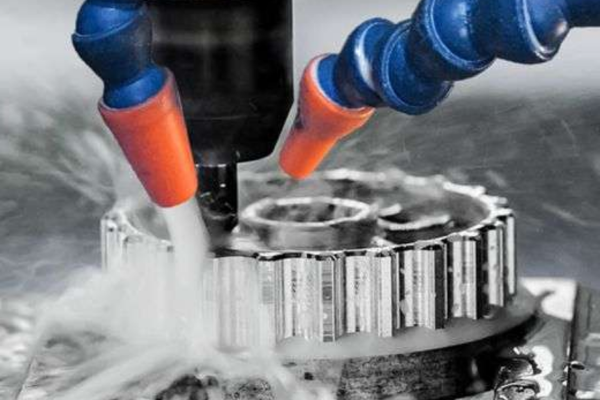
Aluminum 7050 is significantly harder than common alloys like 6061, which increases cutting forces and accelerates tool wear. Standard carbide tools may dull quickly when used without proper optimization. XC Machining uses coated carbide and PCD tools, optimized spindle speeds, and precise lubrication to maintain tool integrity and extend tool life during machining.
Heat Generation During High-Speed Cutting
7050’s strength causes cutting friction that generates substantial heat, risking thermal expansion and dimensional inaccuracies. Excessive heat can also damage tool edges or create built-up material on the cutting surface. XC Machining employs high-pressure coolant systems, through-spindle cooling, and temperature-controlled machining strategies to manage heat effectively.
Risk of Stress Cracking and Micro-Cracks
Due to its high copper content, Aluminum 7050 is more sensitive to stress cracking, especially during aggressive machining or improper heat treatment. XC Machining mitigates this issue by using stable tempers such as T7451 or T7651 and applying balanced cutting forces to avoid excessive stress on the material.
Difficult Chip Control Due to Tough, Long Chips
7050 produces long, continuous chips that can wrap around tools or cause surface damage. Poor chip evacuation also increases heat and decreases surface quality. XC Machining uses chip-breaker tool geometries, advanced CAM programming, and optimized feed rates to ensure efficient chip evacuation and safer machining.
Maintaining Tight Tolerances on a High-Strength Alloy
Aerospace components made from 7050 often demand extremely tight tolerances, sometimes within micrometres. The alloy’s hardness and machining heat can cause slight warping or dimensional drift. XC Machining compensates by performing multi-stage roughing and finishing passes, allowing stress relief between cuts and verifying accuracy with CMM (Coordinate Measuring Machines).





 French
  English
  Spanish
  German