
Introducción
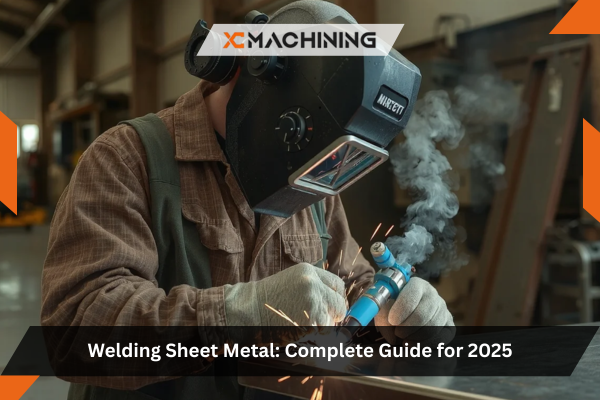
Working with thin sheet metal separates experienced welders from beginners. The material heats fast, warps easily, and burns through if you’re not careful. Unlike thick steel where mistakes are forgiving, thin gauge demands precision and control.
The global sheet metal fabrication services market reached $10.3 billion in 2024. Industries rely on welding sheet metal for everything from car body panels to aircraft components. Success requires understanding how different metals respond to heat and which process works best for your application.
Understanding Sheet Metal Welding Challenges
Most welders learn on thicker material. Sheet metal is different – typically 18 gauge or thinner with barely any margin for error.
Heat Management Issues
Thin materials reach critical temperature fast. One second too long and you’ve blown a hole through the base metal. Heat concentrates quickly because there’s less mass to absorb it.
Warping and Distortion
Uneven heat distribution causes panels to bend and twist. Thin metal moves when it heats up. Without proper technique, flat panels turn into potato chips.
Penetration Control
Getting fusion without burn-through takes practice. Too little heat and you’re laying wire on top. Too much heat punches holes. The sweet spot is narrow, especially on metal under 20 gauge.
Professional mecanizado de metales shops combine welding with CNC metal machining service operations for industries like aerospace and medical machining where tolerances are tight. Facilities offering both mecanizado cnc de metales and welding capabilities handle complete component fabrication from start to finish.
Top Methods for Welding Sheet Metal
Different processes work better depending on thickness and application. Some give you control, others prioritize speed.
TIG Welding – Precision Control
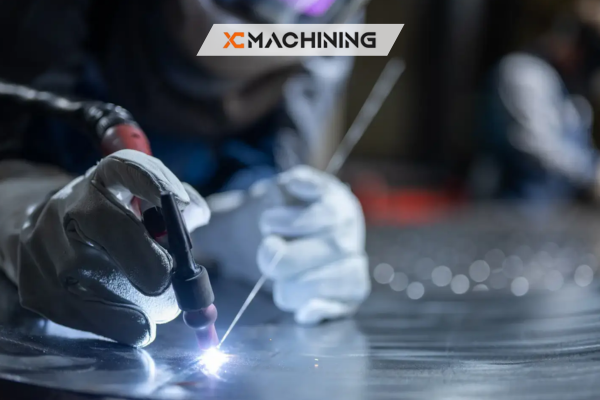
When you need absolute control on thin gauge, TIG is the answer. The tungsten electrode doesn’t consume like MIG wire, so you control filler metal input exactly.
The foot pedal adjusts amperage in real-time. Puddle getting hot? Back off. Need penetration? Push down. That control is why TIG welding dominates aerospace and medical machining work.
Lo mejor para:
- Stainless steel medical components requiring medical machining precisión
- Aluminum aerospace parts
- Automotive panels under 1mm
- Critical certified joints
Settings Table:
| Material Gauge | Amperage | Filler Rod | Gas Flow |
| 22 gauge | 25-35A | 1/16″ | 15-18 CFH |
| 20 gauge | 30-40A | 1/16″ | 15-20 CFH |
| 18 gauge | 40-55A | 3/32″ | 18-20 CFH |
Pure argon shielding gas protects the weld zone. No contamination means strong, clean welds on stainless and aluminum.
MIG Welding – Speed and Versatility
MIG is the workhorse for production. Wire feeds automatically through the gun – three to four times faster than TIG once dialed in.
Easier to learn than TIG welding. No foot pedal, torch angle, and filler rod coordination. Point, trigger, weld. Getting it right on thin metal still takes practice though.
Critical Point: Use 0.023″ or 0.024″ wire on 20 gauge or thinner. Standard 0.030″ wire needs too much heat and causes burn-through. Thinner wire melts at lower voltage.
MIG Settings:
| Gauge | Voltage | Wire Feed | Gas Flow |
| 20 gauge | 14-16V | 130-170 ipm | 18-20 CFH |
| 18 gauge | 15-17V | 150-200 ipm | 20-25 CFH |
| 16 gauge | 16-18V | 180-230 ipm | 20-25 CFH |
C25 gas (75% argon, 25% carbon dioxide) works great for steel. Pure argon for aluminum – never mix CO2 with aluminum.
Spot Welding – Production Efficiency
Walk into any auto plant and you’ll see spot welding everywhere. Two copper electrodes clamp overlapping sheet metal and zap it with high current. Creates a weld in under a second.
Why It Works: Modern cars use 150-200 spot welds per vehicle. That volume is impossible with manual welding. Each spot completes faster than you can blink. No filler metal, no shielding gas bottles.
Aplicaciones:
- Automotive body assembly
- Appliance manufacturing
- Electronics enclosures
- Any overlap joints needing speed
The automotive sector drives 40% of sheet metal demand. Spot welding dominates because speed matters when welding thin metal panels together in high volumes.
Soldadura por arco de plasma
Plasma takes TIG and focuses it through a tiny nozzle. The constricted arc creates surgical precision on ultra-thin stainless steel from 0.3mm to 1.5mm.
Used For:
- Aerospace components with tight tolerances
- Equipos de procesado de alimentos
- Medical machining service production runs
- High-speed automated welding
Medical device manufacturers use plasma welding for implantable housings and surgical instruments where quality affects patient safety.
Laser Welding
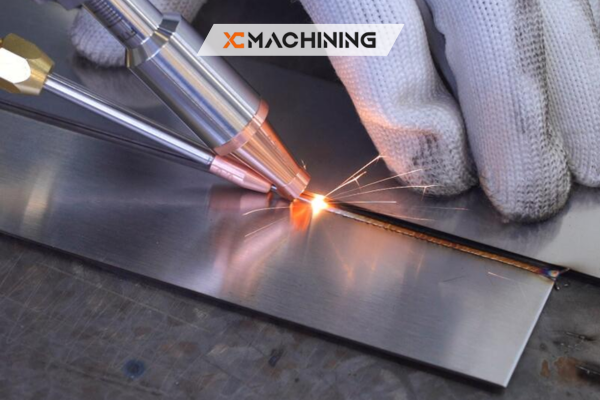
Laser welding uses concentrated light energy with minimal heat input. A focused beam melts just the joint line, creating narrow welds that barely affect surrounding material.
Automotive manufacturers weld 100+ meters of body seams per vehicle with lasers. Improves structural rigidity while reducing weight.
Ventajas:
- Fastest welding speeds available
- Almost no distortion on thin panels
- Joins dissimilar metals
- Automated consistency across thousands of parts
Companies doing mecanizado cnc de metales alongside welding sheet metal see how these complementary processes handle complex geometries impossible with either method alone. Manufacturing facilities with integrated CNC metal machining and welding operations deliver complete assemblies faster than shops outsourcing one process or the other.
Resistance Seam Welding
Creates continuous welds by passing overlapping metal between rotating electrodes. Current flows through the contact point producing leak-proof seams.
Common Uses:
- Fuel tanks requiring hermetic seals
- Pipe manufacturing
- Metal containers and drums
Maintains consistent quality across long production runs – valuable for manufacturing operations needing reliable, repeatable results.
Expert Tips for Welding Sheet Metal
Real shop experience teaches you what actually works. Most beginners make the same mistakes with heat, speed, and preparation.
Select Proper Filler Material
Filler diameter affects everything. Too thick pumps in excess heat trying to melt it. For 1mm sheet metal, use 0.8-0.9mm filler rod maximum.
Material Matching:
- Mild steel: ER70S-6
- Stainless 304: ER308L
- Aluminum 3003/5052: ER4043
Match filler to base metal or welds won’t hold under stress.
Master Skip Welding
Don’t weld entire seams in one continuous pass. That concentrates heat and causes warping.
How It Works: Make 1-inch tack welds spaced 2-3 inches apart. Skip around alternating sides. Once everything cools, fill gaps between tacks. This spreads heat around instead of concentrating it.
Let each tack cool 30-60 seconds before welding nearby. Cuts distortion by 70% compared to continuous welding on thin gauge.
Control Travel Speed
Move steadily without pausing. Proper MIG speed is 10-15 inches per minute on 20-gauge steel. Too slow causes heat buildup. Too fast produces weak fusion.
Listen to the Arc: Smooth “bacon frying” sound means correct speed. Popping means too slow. Irregular sound suggests too fast.
Use Backing Bars
Clamp copper or aluminum bars behind weld joints. They pull heat away from sheet metal, reducing burn-through while supporting the puddle.
Copper conducts heat 1,500% better than steel. Position bars within 1/2 inch of joints for maximum effect.
Optimize Shielding Gas
Gas Selection:
- C25 (75% Argon/25% CO2) for carbon steel MIG
- Pure argon for TIG all materials
- Pure argon for aluminum MIG
Maintain 15-20 CFH flow indoors. Increase to 20-30 CFH in drafty conditions. Too much flow creates turbulence that compromises shielding.
Perfect Joint Fit-Up
Keep gaps under 1/32 inch between pieces. Wider gaps require excess filler and heat, increasing burn-through probability.
Clean surfaces thoroughly before welding sheet metal. Remove mill scale, rust, oil, and coatings within 1 inch of joints. Contamination causes porosity and weak welds.
Apply Proper Clamping
Secure material every 6-8 inches along joints using C-clamps or locking pliers. Place clamps within 1-2 inches of weld lines for best restraint.
For large panels, use strongbacks – straight steel bars clamped across surfaces to resist warping during heat cycles.
Test Before Welding
Always run test welds on scrap matching project thickness. Dial in exact settings before welding actual parts. Document successful combinations for future reference.
This prevents costly mistakes on finished components, especially critical for cnc metal machining service projects requiring tight tolerances.
Common Mistakes to Avoid
Using Too Much Heat
Beginners assume more heat equals stronger welds. On sheet metal, excess amperage causes burn-through and weakens surrounding material.
Start lower than expected. For 20-gauge MIG, begin at 14 volts and adjust up only if penetration is insufficient.
Moving Too Slowly
Slow travel allows heat to concentrate in one spot. This increases burn-through and creates wide, weak zones.
Maintain consistent movement. Hand should never stop during active welding.
Skipping Surface Prep
Trying to weld over rust, oil, or coatings produces porous, contaminated welds. Invest five minutes cleaning each joint properly.
Grind away coatings, wipe with acetone, use dedicated stainless brushes for final cleaning.
Wrong Wire Diameter
Using 0.035″ wire on thin material requires excessive heat to melt the thicker electrode. This burns through delicate base metal.
Stock 0.023″ and 0.024″ wire specifically for sheet metal work. Match wire diameter to material thickness.
Poor Positioning
Welding in awkward positions produces inconsistent results. Reposition workpieces to enable flat welding whenever possible.
Flat position yields 80-90% success rates even for beginners. Overhead welding on sheet metal often fails 3-4 times more frequently.
Choosing the Right Method
Picking the right way to weld sheet metal depends on thickness, metal type, and project requirements.
For Material Under 20 Gauge
TIG welding works best when you need precise control. The tungsten electrode and foot pedal give fine adjustment over heat input – critical on 22 gauge or thinner.
MIG welding with 0.023″ wire works faster when production speed matters. Takes practice avoiding holes, but once dialed in, you can weld much quicker than TIG.
Spot welding handles lap joints in production where welding thin metal panels together quickly justifies equipment investment.
For 18-16 Gauge Material
MIG welding makes sense for most welding sheet metal projects in this range. Fast enough for production, strong enough for structural use, forgiving enough that you won’t blow holes constantly.
TIG welding when appearance matters – visible seams on architectural metalwork or when welding stainless steel sheet metal for high-end applications.
Spot welding in production settings assembling the same parts repeatedly. Speed advantage becomes significant making hundreds or thousands of identical assemblies.
For 14 Gauge and Thicker
MIG welding handles most general work at this thickness. Material is thick enough that burn-through stops being a major concern.
Stick welding becomes viable outdoors or in field conditions. Wind won’t blow away shielding gas because stick doesn’t use external gas.
TIG welding for critical applications requiring certified welds or medical machining standards where quality needs documentation.
Industries requiring combined metal machining service and welding benefit from facilities handling both processes. When you need precision mecanizado cnc de metales alongside quality welding sheet metal work, one shop eliminates coordination headaches. Shops doing both welding sheet metal y CNC metal machining service understand how processes complement each other for complex fabrications.
Aplicaciones industriales
Different industries approach welding sheet metal with specific requirements that shape which methods they prefer. The market for sheet metal fabrication hit $10.3 billion in 2024.
Fabricación de automóviles
Car manufacturers consume massive amounts of sheet metal. Body panels, reinforcements, brackets – it all starts as flat sheet that gets formed and welded.
The automotive sector drives 40% of galvanized sheet metal demand. Modern cars use 150-200 individual spot welds holding body structures together. Each spot completes in under a second versus several seconds for MIG or TIG.
Electric vehicle production pushes demand for lighter components. Weight matters more in EVs because it directly affects battery range. This means welding sheet metal at 18 or even 20 gauge where previous generations used thicker 16 gauge.
Aerospace Components
Aircraft manufacturers use welding sheet metal extensively but with tighter requirements than automotive. Every weld needs documentation, certification, and often x-ray inspection.
TIG welding dominates for aluminum work on fuselages and control surfaces. Boeing specifies TIG exclusively for critical joints where quality directly impacts safety and structural performance.
Facilities handling medical machining alongside welding sheet metal can deliver complete device assemblies meeting stringent regulatory requirements for implantable and surgical applications.
Fabricación de productos sanitarios
Medical machining applications demand contamination-free welds on thin-walled stainless components used in surgical instruments and implantable devices. Often means working with material under 1mm thick.
TIG welding with pure argon produces biocompatible, corrosion-resistant joints meeting FDA requirements. Every weld gets documented with specific parameters for traceability.
Plasma arc welding gains use in medical machining service operations where high-volume production of identical small parts justifies automated equipment. Produces consistent, repeatable welds batch after batch.
HVAC and Construction
Commercial HVAC fabricators weld sheet metal ductwork using MIG welding. Speed matters when fabricating dozens of duct sections for commercial building installations.
Galvanized steel dominates HVAC because zinc coating prevents rust in humid environments. This creates challenges – zinc produces toxic fumes when heated and causes porosity. Most shops grind off galvanizing within an inch of seams before welding sheet metal.
Construction demand for architectural products supports steady 4% annual growth according to industry data. Infrastructure modernization drives expansion in both mecanizado de metales and fabrication sectors through 2030.
Conclusión
Getting good at welding sheet metal comes down to heat control and proper technique. TIG welding gives precision for really thin stuff under 20 gauge, while MIG welding speeds things up on thicker material. Either way, manage your heat input or you’ll burn holes and warp panels.
Practice on scrap material first, dial in your settings, and don’t rush the process. Professional metal machining service operations combine welding with CNC metal machining to handle complex parts across multiple manufacturing processes. Advanced shops integrate welding sheet metal capabilities with mecanizado cnc de metales for complete component solutions.
Ready for Expert Fabrication?
XC Machining handles comprehensive prototyping and manufacturing including professional welding sheet metal, CNC metal machining service, and precision mecanizado de metales for automotive, aerospace, and medical device industries. With 15+ years of experience, the facility delivers high-quality results with fast turnaround times.
Whether projects require TIG welding for ultra-thin components under 22 gauge, MIG welding for production volume on thicker material, or integrated medical machining capabilities for critical applications, the engineering team ensures specifications are met precisely.
Contact us today for a free quote on your sheet metal welding and machining project.
Preguntas frecuentes
What is the easiest method for welding sheet metal? MIG welding works best for beginners on material 18 gauge and thicker, using 0.023″ wire with C25 shielding gas at 14-16 volts. TIG provides better control on thinner materials but requires more practice to master.
Can you weld very thin sheet metal without burning through? Yes, using TIG welding at 20-30 amps with pure argon on material down to 0.5mm thickness. Keep arc length tight at 1/8 inch and move steadily without pausing to prevent heat buildup.
What causes warping when welding sheet metal? Excessive heat input and continuous welding create uneven thermal expansion. Prevent warping by using skip welding technique, backing bars for heat dissipation, and proper clamping to restrain material during cooling cycles.
Which welding method works best for stainless steel sheet metal? TIG welding with pure argon shielding gas produces highest quality stainless welds. Use ER308L filler rod for 304 stainless steel and maintain pristine surface cleanliness. For medical machining applications requiring biocompatible welds, TIG with documented procedures ensures FDA compliance.
How do you prevent burn-through on thin metal? Reduce amperage 15-20% below standard settings, use smallest available wire diameter, increase travel speed, maintain tight fit-up under 1/32″ gap, and clamp backing bars behind joints for support and heat dissipation.
Citations
- Grand View Research (2024). “Welding Products Market Size & Share Report 2030.” Global welding products market valued at $15.30 billion in 2024, projected to reach $19.94 billion by 2030. https://www.grandviewresearch.com/industry-analysis/global-welding-products-market
- Precedence Research (2025). “Sheet Metal Fabrication Services Market Size to Hit USD 33.31 Billion by 2034.” Global market valued at $21.35 billion in 2024, welding services segment growing at fastest CAGR. https://www.precedenceresearch.com/sheet-metal-fabrication-services-market
- GM Insights (2025). “Sheet Metal Fabrication Services Market Analysis 2032.” Market valued at $10.3 billion in 2024, automotive sector accounts for 40% of galvanized sheet metal demand. https://www.gminsights.com/industry-analysis/sheet-metal-fabrication-services-market
American Welding Society (2025). “Welding Workforce Data.” Approximately 330,000 new welding professionals needed by 2028, with 82,500 jobs to fill annually from 2024-2028. https://www.thefabricator.com/thewelder/article/arcwelding/outlook-trends-and-pay-for-the-welding-workforce-according-to-aws-data



 Spanish
  English
  French
  German