

The defense industry is heavily dependent on the most advanced technologies in order to develop high performance and reliable parts used in the defence field. CNC precision machining is one of the most important methods that force innovation in the same area. When used together with 3D printing aerospace components, these technologies would allow complex, high-precision components to be produced, which are highly demanded by the stringent aerospace applications.
In the blog, we’ll explore advantages of CNC machining in the defense industry, how to integrate with 3D printing aerospace aircraft manufacturing processes and how these technologies can be used to develop the manufacturing industry of aerospace and defense.
What is CNC Precision Machining?
CNC (Computer Numerical Control) machining uses computerised tools to accurately carve and shape materials. It finds wide application in aircraft and defense to form parts with high tolerance parts. Manipulation of materials to specifications is very important in industries where performance and safety are the most important factors.
Key Benefits of CNC Precision Machining:
- Hohe Präzision:Tolerances as small as ±0.0005 inches are possible with cnc machining.
- Vielseitigkeit der Materialien: Able to handle hard materials such as titanium, steel and aluminum.
- Reproduzierbarkeit: Ensure to produce consistent high quality parts in large production runs.
What is 3D Printing in Aircraft & Defense?
The aircraft and defense sectors are changing the design and production of parts using 3D printing (also referred to as additive manufacturing). By building components layer by layer from digital design, this approach makes it feasible to create intricate geometries that are frequently not achievable with conventional machining.
Why 3D Printing Matters:
- Lightweight Components: 3D printing aerospace produces lightweight components with minimal wastage which is important in aircraft components.
- Komplexe Geometrien: Allow to create intricate and customised designs.
- Faster Prototyping: Speeds up the design-to-production cycle, reducing time to market.
Applications of CNC Precision Machining and 3D Printing in Aircraft & Defense
The most prerequisite demands in the aerospace industry and the defense industry are the highest precision, resilience, and functionality of the product. CNC-Präzisionsbearbeitung and the 3D printing technologies have become an essential instrument in fulfilling such high standards. Some of the most important aerospace and defense applications are discussed below:
End-Use Production of Flightworthy Components with High-Precision Tolerances
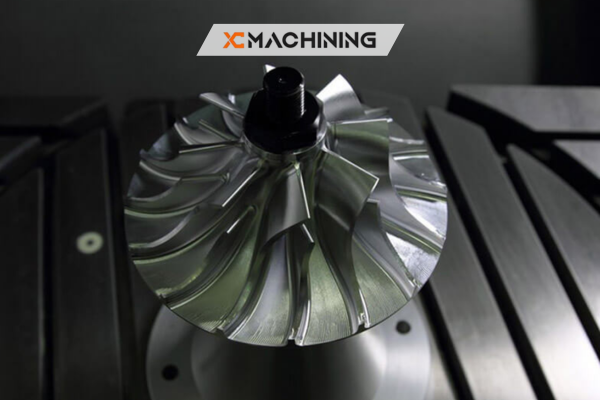
The production of flightworthy components must be done with high precision in the aerospace and defense sectors. CNC precision machining is capable of producing critical components such as turbine blades, engine components as well as structural parts with tight tolerances (usually within a range of ±0.0005 inches). Such elements have to withstand harsh environments and conditions such as high temperatures and pressure which mean design and implementation cannot be compromised.
- Materials Used: Titanium, high-strength steel, aluminum alloys, and nickel-based superalloys.
- Anwendungen: Aircraft engines, landing gear components, avionics housings, and structural elements.
Customized Small Production Runs for Repairs or Replacements
In aerospace and defence not every component are produced in large quantities. The process of repairing or replacing many components involves custom production of parts, particularly in the case of old systems or equipment. These small batch components can be produced very quickly through CNC machining and 3D printing aerospace to maintain operations.
- Anwendungen: Replacement parts, out of stock or rare parts, specialized military equipment.
- Materials Used: High grade aluminum, steel and high strength composites.
- Vorteile: Reduce downtime on maintenance and repair, especially for legacy system
Rapid Tooling, Jigs, Brackets, and Chassis for Manufacturing
Jigs and tools are essential in order to enhance accuracy in the production process. Aerospace and defense manufacturing can achieve a lot in terms of streamlining the assembly process through the rapid production of these tools. CNC machining enables the production of a high level of jigs, brackets, and chassis, which are used to hold large and complex parts in the process of manufacturing.
- Anwendungen: Assembly fixtures for aircraft construction, brackets for radar systems, jigs for aircraft fuselage assembly.
- Vorteile: Better precision, less time in setup and capability to deal with sophisticated designs.
Custom Tooling
Specialised parts that can no longer be found in the standard manufacturing processes may require custom tooling. CNC machining has the ability to make tooling devices like dies, molds, and punches that are utilized to shape or cut the other parts ensuring the parts are shaped and finished to exact specifications. These tools are utilized in aerospace production as well as in defense systems.
- Anwendungen: Die tooling of aircraft fuselage, mold-making of composite structures, punching tools of military vehicle parts.
- Materials Used: Steel, carbide and hardened alloys for durability and a long service life.
Rapid Prototyping of Parts Using 3D Printing with Metals and Plastics
Additive manufacturing, also referred to as 3D printing aerospace, finds more applications in the aerospace and defence sectors for quick prototyping. In this technology, manufacturers can produce complicated parts directly on the basis of digital files, either in metals or plastics. The prototypes are easy to test and can be modified, which makes it the best solution to shortening the product development cycles.
- Anwendungen: Prototype parts for military drones, mockups for aircraft engines, prototype components for weapons systems.
- Materials Used: Titanium, stainless steel, aluminum, thermoplastics, such as ABS, and composite materials.
Custom Fixturing
Fixturing is a process that entails the development of special holding tools that hold components in a manufacturing process. Part positions during machining, welding, or assembly are done using custom fixtures to ensure accurate positioning of parts. These fixtures may be part-specific to guarantee the appropriate alignment and stability of the production process.
- Anwendungen: Holding military-grade components for machining, securing sensitive aerospace components for assembly.
- Vorteile: Enhanced precision, reduced setup times, and more accurate machining processes.
Fit Check Gauges
Fit check gauges are important in ensuring that the parts fit together as intended. Such gauges are applicable in inspection of tolerances, alignment and assembly conditions prior to full scale production or quality control. CNC machining and 3D printing are used to make these gauges and they reach high levels of accuracy in measurements.
- Anwendungen: Verifying the fit of aircraft components during assembly, checking precision in military vehicles or weapons systems.
- Vorteile: Ensures that parts will fit correctly in their intended applications, preventing costly rework or failure during final assembly.
Composite Tooling
Composite materials are finding application in the aerospace and military sector due to their strength-to-weight ratio. However, composites involve the use of specialized tooling. Custom tools used for cutting, molding and shaping composite material may be produced by precision machining CNC and specialized molds used to produce composite parts by 3D printing aerospace.
- Anwendungen: Composite tooling for lightweight aircraft parts, military vehicle components, and spacecraft structures.
- Vorteile: Enables the production of strong, lightweight components that are critical in the aerospace and defense industries.
Capabilities in CNC Machining for Aircraft & Defense
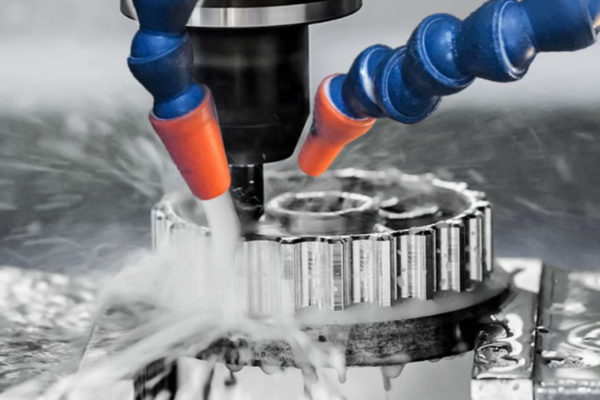
- 5-Axis CNC Machining: 5-Achsen-CNC-Bearbeitung is a technique that permits more advanced manufacturing through five-axis movement of parts. The method is best for complicated, delicate parts such as engine parts, turbine blades, and military hardware.
- High-Speed CNC Machining: For parts that need rapid turnarounds including crucial maintanance parts and small-batch manufacturing of military weapons with the help of precise cnc machining.
- Electrical Discharge Machining (EDM): This technique is used to cut hard material and useful for making complicated design create small holes.
Capabilities in 3D Printing for Aircraft & Defense
- Metal 3D Printing: Metal 3D printing technologies like Selective Laser Melting (SLM) and Direct Metal Laser Sintering (DMLS) are increasingly being used for high-performance aerospace and defense parts.
- Plastic 3D Printing: Plastic 3D printing (e.g., FDM and SLA) is frequently utilized in the prototyping and other non-critical parts, including interior aircrafts or enclosures of military electronics.
- Hybride Fertigung: Hybrid manufacturing combines CNC machining and 3D printing in a single process. It allows making complicated components with the benefit of the two technologies.
Letzte Worte
With the development of the defense industry, new technologies such as CNC precision machining and 3D printing aircraft components are opening new opportunities for more efficient, cost-efficient, and innovative manufacturing solutions. With the combination of the technologies, the defense manufacturers can meet the high standards of quality, performance and durability, which are expected in the military applications.
When making the decision, whether CNC or 3D printing aerospace in your next defense initiative, understand the advantages and uses of both technologies so you can make a better decision.
FAQS
How does CNC precision machining ensure the quality of defense components?
The integration of CNC machining and 3D printing allows a manufacturer to exploit the benefits of both technologies: 3D printing is capable of providing flexibility in designs and quick prototyping, CNC machining can also be used to provide a high precision finish, resulting in cost-effective and high-performance parts.
What are the advantages of combining CNC machining and 3D printing in defense manufacturing?
A combination of CNC machining and 3D printing allows manufacturers to take advantage of both technologies, which offer flexibility and speed in prototyping, as well as precision finishing by CNC machining, resulting in cost-effective and high-performance components
Which kinds of materials are usually utilized in CNC machining for defence use?
Titanium, steel and aluminum are some of the high strength alloys that are used in common materials in CNC machining in the field of defense. The materials provide the toughness required in severe parts like in military vehicles and aircrafts.
What are the benefits of rapid prototyping using 3D printing in developing a defense product?
3D printing enables rapid prototyping of designs, enabling defense design testing refinement processes to proceed much more quickly. This saves development time, finds problems in early stages and shortens the time of delivering final and functional components.
What is the role of composite tooling in the manufacture of aerospace?
It is possible to precisely shape and mold lightweight yet durable composite material. The specialized equipment required to produce advanced composites parts used in aircraft and defence systems are made possible by cnc machining and 3d printing.



 German
  English
  French
  Spanish