

Have you ever wondered how aerospace are becoming lighter, stronger, and more fuel-efficient simultaneously? The answer lies in technology that is transforming the aerospace sector, 3d printing in aerospace. What used to be a means of making simple prototypes is now a huge manufacturing process able to yield actual flight-ready aerospace parts.
In an industry where every gram matters and nothing can be less than reliable, 3D printing promises something that conventional production can not give, and this is freedom of design. In this article, you’ll find out the application of 3D printing in aerospace, the processes involved in it, and the real benefits of this technology.
What is 3D Printing in Aerospace?
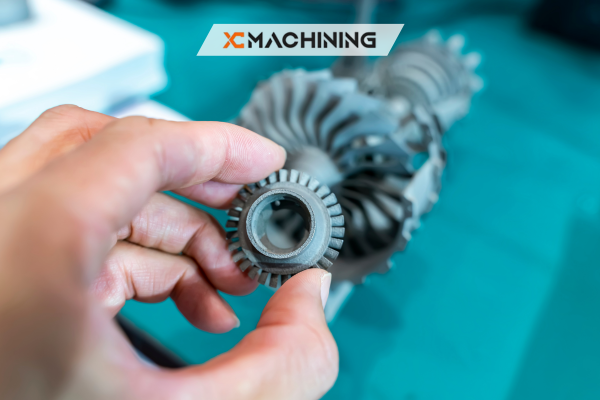
3D printing is a production method where a material is added in layers to create complex components and structures directly based on digital designs. In the aerospace sector, 3D printers are employed in the production of parts with complex geometry, less weight, and high precision. These are essential components that are used in aerospace applications where performance and reliability are main concerns.
What Applications Do 3D-Printed Parts Serve in the Aerospace Industry?
3D-printed parts are used in the aerospace industry to produce lightweight, complex, and high-performance components for engines, structures, interiors, maintenance tools, and rapid prototyping.
Komponenten des Motors
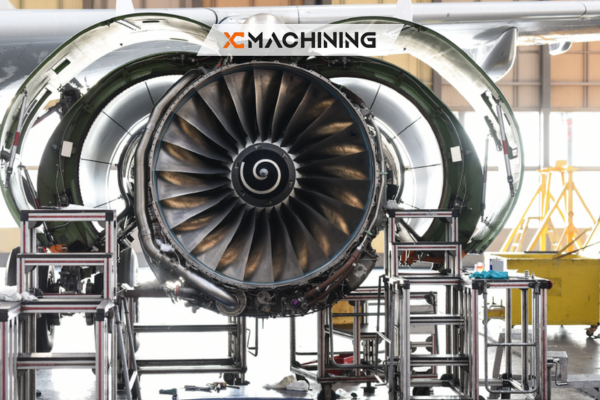
Components of engines, e.g. fuel nozzles are essential to the aerospace performance, and can be manufactured using 3D printing technologies, including Electron Beam Melting (EBM) and Direct Energy Deposition (DED). Such techniques enable the production of lighter and more accurate parts that can promote fuel efficiency and also minimize the environmental impact of the aircraft.
Turbine Blades
The turbine blades are also essential to the engine operation and its production takes great accuracy and resilience of the 3D printing technique called DMLS (Direct Metal Laser Sintering). 3D printing is able to create complex tribune blades with intricate cooling channels that are impossible to create with other methods.
Strukturelle Komponenten
The design of an plane is supported by structural components that allow it to be strong and stable. The 3D printing technologies, such as EBM and DED, allow creating strong and lightweight components of the airplane structure, such as bracketry, bulkheads, and frames, out of high-endurance materials, such as titanium and aluminum alloys.
Maintenance and Repair Tools
Mit 3d printing aerospace, the manufacturing companies will be able to produce in-quick tools like jigs and fixtures using materials like titanium and stainless steel. This is able to speed up the process of making repairs, and reduce aerospace downtimes which is an affordable solution to the aerospace industry.
Interior Components
Planes are also being 3D printed with the interior (avionics enclosures, plane seats, cabin details) starting to receive more attention. The Fused Deposition Modeling (FDM) and Selective Laser Sintering (SLS) are usually used to print durable and lightweight plastic parts such as seatback panels, door locks, and light fixtures.
Prototyping New Parts
The quick process of prototyping that is made possible by 3D printing is critical in the plane sector. Manufacturers have adopted 3D printing to produce prototypes of the new components to be used in production. This allows the engineers to test designs in a faster way, saving time and cost of development.
Custom Parts for Aerospace
With 3D printing, it is possible to make custom parts that fit the aircraft models or missions. Components like custom mounts, brackets, and clamps can be made in a short period and with great accuracy to suit the individual requirements of various aircraft or spacecraft.
Lightweight Components
Weight is an important concern in the aerospace industry. 3D printing enables making light weight parts, including fuel tanks and panels, without any reduction in strength. The capability of creating and producing parts with complex internal systems greatly lowers the total aircraft weight.
Complex Components with Intricate Geometries
3D printing can be used to create parts that have complicated geometries, i.e. aerofoils, ductwork, and engine parts. These components are often specialized design and we are unable to produce them using conventional production methods and thus more efficient and effective designs can be produced.
Replacement Parts
In the aerospace industry, 3d-Druck aerospace is applied to create spare parts that fit the old aircrafts, to enable them to serve longer before becoming obsolete. This approach assists in preventing the expensive downtime because the parts can be printed on demand, which decreases the necessity of huge stocks of the spare parts.
Types of Materials Used in 3D Printing for Aerospace Applications
The aerospace industry uses numerous materials in 3D printing to fulfil the performance, durability, and safety demands of the aircraft. Some of the most widespread materials in aerospace 3D printing are listed below:
Keramik
Ceramics are a non-metallic, inorganic material with high corrosion resistance, lightweight, and high temperature strength which is highly valued in the aerospace industry. These materials find application in some of the most important parts such as satellite mirrors, especially silicon carbide mirrors to minimize weight yet maximize strength and stiffness.
Carbon Fiber
Carbon fiber is a powerful but light weight material that is produced from fine strands of carbon atoms. When used in combination with other materials in the form of carbon fiber composites, it is even stronger than steel but lighter than aluminum, a perfect combination in the aerospace structures. 3D printing of carbon fiber can enhance aircraft performance by incorporating carbon fiber components into the aircraft parts, including frames, structural parts etc.
Metalle
Metals including aluminum, titanium and nickel-based superalloys are key materials which have an excellent strength to weight ratio and resist corrosion. The metals are very popular in the production of engine components, frames, buildings, and electronic tools.
Polymers
Polymers are repeating chains of molecular products that are commonly used in aerospace in such parts as seatbacks, panels, and air ducts. Lightweight and durable solutions PEEK, Nylon, and ULTEM 9085 are common thermoplastics that are applicable to lightweight and less load-bearing parts. Polymers are very appropriate in interior applications beacuse they are not as strong as to be used in high-stress applications.
Inconel
Inconel, a nickel- chromium superalloy, is famous for its ability of retaining high temperatures and avoiding creep or corrosion. Inconel is also used in the aerospace industry in components like fuel nozzles of jet turbines where it is able to endure the most extreme operating environment.
Verbundwerkstoffe
Composites are materials that are produced by mixing two or more components which are different in order to achieve desirable properties. The strength and weight combination of composite material is also high in aerospace, and thus structural components such as the wings and fuselage components are made of composite material. The wear resistance and the aerodynamics are enhanced with the mixture of various materials.
What Are 3D Printed Aerospace Parts?
The following are mechanical aerospace parts that can all be made by 3D printing:
- Fuel nozzles
- Turbinenschaufeln
- Gehäuse
- Aerofoils
- Door latches
- Duct work
- Seatback
- Panels
- Trim pieces
- Engine components
- Rocket bodies
- Fuel tanks
- Raumfahrzeugteile
What Are the Different Types of 3D Printing Machines Used in the Aerospace Industry?
Es gibt verschiedene Arten von 3D printing machines that are used in the aerospace sector and they are as following:
- Powder Bed Fusion (PBF) Machines: Using techniques like SLS or EBM, these machines employ heat to fuse powdered materials like metal or plastic layer by layer.
- Fused Deposition Modeling (FDM) Machines: It uses extrusion of plastic filaments that are heated, and deposits them into layers to make solid objects.
- Stereolithography (SLA) Machines: High accuracy and complex designs are made possible by stereolithography (SLA) machines, which use UV light to cure liquid resin and create parts layer by layer.
- Direct Energy Deposition (DED) Machines: Large parts can be made with less tooling thanks to Direct Energy Deposition (DED) machines, which melt and deposit material using concentrated heat sources like lasers or plasma arcs.
- Continuous Fiber 3D Printing: It is used to deposit continuous carbon fiber with thermoplastic coating, which results in high strength-to-weight ratios and strong and lightweight parts.
Advantages of 3D Printing Technology in the Aircraft Industry
Reduced Weight
With the use of 3D printing, it is possible to produce lightweight components by using a substitute of heavier metal parts with plastic. This weight saving will reduce the fuel burnt and improve the overall performance and efficiency of the aircraft.
Kosteneinsparungen
The 3D printing method saves a lot of costs involved in production by making the process simple and a few steps are involved as opposed to the traditional manufacturing process. It minimizes the wastage of materials as well making it more sustainable.
Flexibilität bei der Gestaltung
The high complexity and uniqueness of parts that cannot be easily produced by the traditional methods in manufacturing can be produced by 3D printing. This allows engineers to develop intricate designs and streamlined structures that can enhance the performance of planes and use minimum material.
Disadvantages of 3D Printing Technology in the Aircraft Industry
Limited Material Options
Although 3D printing supports most common plastics and metals, many alloys and composite materials are not still suitable , which limits its potential use in the aerospace industry.
Part Strength Issues
Some methods of 3D printing like FDM (Fused Deposition Modeling) and SLS (Selective Laser Sintering) are used to make parts with anisotropic characteristics, i.e. the strength varies depending on the direction the load is applied. This may be problematic for load-bearing parts.
Lengthy Certification Process
Aerospace requires new materials and processes to go through extensive tests and certification to meet high safety standards. This can be a time consuming and expensive process, hindering quick adoption of 3D printing technologies.
Schlussfolgerung
3D printing is a game changer for aerospace which promises new opportunities in the part designs, production and their customization. With the ever-changing technology, 3d printing aerospace is going to bring more advantages and make it a vital tool to aerospace manufacturers.
CNC-Dienstleistungen can be used to offer businesses an opportunity to adopt 3D printing within their operations by offering them the skill and solutions necessary to achieve optimal outcomes. Explore the world of 3D printing and expand your technical possibilities for the aerospace sector.
FAQs
How does 3D printing improve supply chain efficiency in aerospace?
Instead of keeping massive stocks, 3D printing enables aerospace companies to produce parts on demand. This reduces lead times, reduces storage expenses and aircraft can return to service more quickly as a result.
Can 3D printing extend the lifespan of older aircraft?
Indeed, 3D printing allows for the replication of outdated or difficult-to-find parts. By doing this, older airplanes can continue to function without depending on antiquated equipment or vendors.
How does 3D printing support sustainability in aerospace?
The amount of material wasted during the 3D printing is less than in conventional methods. Lightweight printed parts improve fuel efficiency, reducing overall carbon emission.
Is 3D printing suitable for low-volume aerospace production?
3D printing is the best option for low-volume and custom aerospace parts because it doesn’t require costly molds or tooling. This increases the cost-effectiveness of small production runs.
How does 3D printing encourage innovation in aircraft design?
It enables engineers to make complicated shapes and internal designs that cannot be made using traditional production. This design freedom results into lighter, stronger and efficient aircraft components.



 German
  English
  French
  Spanish