

Do you need an accurate, low cost method to cut and shape materials for your next project? CNC routing service is the choice of manufacturers, designers and businesses in various industries.
In this detailed guide, you’ll find out exactly what CNC routing is, how it works and why it could be the right manufacturing solution for your needs. CNC routing is applicable to any type of work you do whether using wood, plastics or soft metals because it’ll help to make a better decision for your project.
Let’s explore all the crucial things you should know about this adaptable manufacturing process.
Inhaltsübersicht
What is a CNC Routing Service?
CNC routing service is a manufacturing process controlled by the computer that cuts, shapes and engraves materials with unbelievable precision. CNC stands for Computer Numerical Control which implies that the cutting tool is controlled by a computer along an exact path.
Consider it as a robot carving system. A spinning cutting tool (also known as router bit) is used to follow the instructions of your digital drawing to cut away material and make whatever you want. This process is fully automated, ensuring consistent results every time.
Unlike other manual methods, CNC routing companies operate special machines that can work hours without becoming fatigued, or committing other human mistakes. This feature makes it ideal for both custom individual exhibits and large scale manufacturing.
How Does CNC Routing Work? A Step-by-Step Process
Understanding cnc routing process will help you to produce higher quality file and get better outcomes, Here’s how it works:
Step 1: Design Creation
The Process begins with a digital design file. Majority of the CNC routing services take CAD (Computer-Aided Design) in different file formats such as DXF, DWG or SVG. Your design will reflect whatever you want to create.
Step 2: CAM Programming
CAM (Computergestützte Fertigung) software helps translate design files into machine language. This forms G-code, or a sequence of codes the machine can understand.
The G-code tells the router:
- Where to move
- How fast to spin
- How deep to cut
- Which tool to use
Schritt 3: Einrichtung der Maschine
The technician prepares the CNC router by:
- Loading the correct cutting bits
- Securing your material to the table
- Setting the starting position (called “zeroing”)
- Running test measurements
Step 4: Cutting Process
The router operates at high speed (usually 12,000 to 24,000 RPM) as it move around your material. The machine will always cut the design as per the programmed path, with an accuracy range of 0.1-0.3 mm.
The majority of routers move in three directions:
- X-axis: Left and right
- Y-axis: Front and back
- Z-axis: Up and down
Step 5: Finishing and Checking the Quality
After the cutting process, parts are carefully checked, some may need extra finishing such as sanding, painting or assembling.
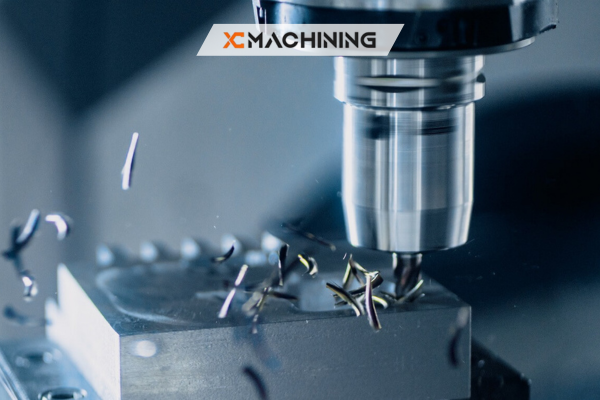
What Are The Key Components of CNC Routing Machines?
Alle CNC-Fräse has several essential parts working together. Understanding these components helps you appreciate the precision of the service.
The Spindle
The spindle is the heart of machines. It bears and rotates the cutting tool at very high speeds. A stronger spindle is capable of cutting materials.
The Gantry
The gantry is like a bridge that passes your material over the spindle, It must be firm and stable to guarantee precise results in cutting.
Achsenmotoren
These motors bring the cutting tool to precise positioning. There are two types:
- Servo motors: With constant feedback, they fine-tune their movements for perfect positioning
- Stepper motors: They move in increments.
The Frame and Table
The frame is stable and is vibration-absorbent. Your material is kept flat in the table by clamps, vacuum suction or fixtures.
CNC Controller
This is the machine’s brain reading G-code and guiding the motors, ensuring each movement aligns perfectly with your design.
Which Industries Rely on CNC Routing Services?
CNC routing serves countless industries. Here are the major ones:
Luft- und Raumfahrtindustrie
CNC routing is needed in aircraft interior panels, instrument housing, and composite parts because of their precision. Aerospace is an industry that requires precision and lightweight materials.
Furniture Manufacturing
From custom cabinet doors to intricate chair backs, furniture makers use routing for both production and one-of-a-kind pieces. The service creates consistent quality across large orders.
Autoindustrie
Dashboard components, interior trim pieces, and prototype parts benefit from CNC routing’s speed and accuracy. The automotive industry values quick turnaround times.
Beschilderung und Werbung
3D letters, channel letters, and decorative signs get their shapes from CNC routing. The advertising industry appreciates the ability to create eye-catching designs in various materials.
Elektronikindustrie
Circuit board prototypes, enclosures, and mounting brackets are commonly routed. The electronics industry needs precise cutouts for displays and components.
Architectural Applications
Decorative panels, scale models, and building components showcase CNC routing’s artistic capabilities. Architectural firms use the service to visualize designs.
Herstellung medizinischer Geräte
Non-metal medical equipment parts, prototypes, and specialized fixtures benefit from routing’s precision without the heat of laser cutting.
Aerospace CNC Services und Herstellung medizinischer Geräte
CNC Routing vs. CNC Milling: What’s the Difference?
Many people confuse these two processes. While they’re similar, understanding the differences helps you choose the right service for your project.
| Merkmal | CNC-Fräsen | CNC-Fräsen |
| Primäre Verwendung | Flat sheet materials | Block and 3D materials |
| Speed (RPM) | 12,000-24,000 | 3,000-10,000 |
| Cutting Force | Unter | Höher |
| Materialien | Wood, plastic, soft metals, foam | Hard metals, steel, titanium |
| Typische Projekte | Signs, furniture, panels | Precision parts, molds, tools |
| Steifigkeit der Maschine | Less rigid (gantry style) | Very rigid (enclosed structure) |
| Toleranzen | ±0.1-0.3 mm | ±0.01-0.05 mm |
| Am besten für | Large format work, fast production | Tight tolerances, hard materials |
Benefits of Using CNC Routing Service
Why do so many businesses choose CNC routing? Here are the key advantages:
Incredible Precision
CNC routing machines follow digital instructions exactly. You get parts that match your design within 0.1-0.3 mm. This precision stays consistent across thousands of identical pieces.
Fast Production Speed
The high-speed spindle and automated movements make routing much faster than manual methods. Large sheets can be cut in minutes instead of hours.
Perfect Repeatability
Once programmed, the machine produces identical parts every time. Whether you need 10 pieces or 10,000, each one matches perfectly.
Complex Designs Made Simple
Intricate patterns, curves, and details that would take skilled craftsmen hours are completed automatically. The service handles complexity without increasing labor costs.
Materialeffizienz
Computer optimization reduces waste by nesting parts efficiently on material sheets. You use more of your material and throw away less.
Niedrigere Arbeitskosten
Automation means fewer people needed for production. One operator can run multiple machines or work on other tasks while cutting happens.
Flexibility and Customization
Easy to switch between different designs without retooling. Custom orders don’t require expensive setup changes.
Sicherer Betrieb
Operators don’t need to be near spinning blades or cutting zones. The enclosed work area and automation improve workplace safety.
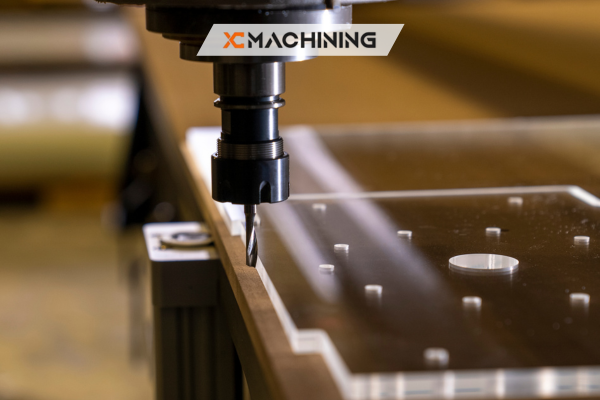
How to Choose the Right CNC Routing Service Provider?
Finding the right cnc routing company makes all the difference. Here’s your decision framework:
Erfahrung und Fachwissen
Look for providers with:
- At least 3-5 years of routing experience
- Portfolio showing projects similar to yours
- Knowledge of your specific industry requirements
- Certified operators and quality systems
Machine Capabilities
Ask about:
- Maximum work area dimensions
- Available cutting tools and bits
- Spindle power and speed range
- Axis accuracy and repeatability
Material-Optionen
Ensure they work with your materials:
- Do they stock the materials you need?
- Can they source specialty materials?
- What thickness ranges do they handle?
Durchlaufzeit
Speed matters for most projects:
- What’s their standard lead time?
- Do they offer rush services?
- How do they handle urgent orders?
Qualitätssicherung
Quality control prevents costly mistakes:
- Do they inspect every part?
- What tolerances do they guarantee?
- How do they handle defects or errors?
Pricing and Transparency
Cost is important, but value matters more:
- Do they provide detailed quotes?
- Are setup fees clearly stated?
- Do they offer volume discounts?
- What additional costs might apply?
Customer Service
Good communication prevents problems:
- How quickly do they respond to questions?
- Will they review your design files?
- Can they suggest improvements?
- Do they provide design support?
Get Started with Professional CNC Routing
Need professional CNC routing service in your new project? Our professional staff combine the latest cnc routing machines with decades of manufacturing experience to produce the best results. We are providing fast turnaround times and competitive prices to the aerospace, automotive, furniture, electronics and signage industries.
Get a free quote today and find out how our CNC routing service can make your designs work. Send your files or call our team to discuss your project needs.
FAQs
What’s the difference between CNC routing and laser cutting?
CNC routing employs a spinning bit to physically cut the material, while laser cutting uses a focused beam of light. Routing works better for thick materials and leaves no burnt edges. Laser cutting excels at thin materials and creates very fine details without tool pressure.
How long does a CNC routing project take?
Depending on the complexity and the workload in the shop, turnaround varies. On the one hand, simple components may be delivered within 2-3 days, on the other hand, complicated projects may require 1-2 weeks. Rush services can be provided at a higher price that is usually 24-48 hour delivery.
Do I need to provide materials or can the service get them?
Most CNC routing companies offer both options. They can source materials for you (with a markup) or work with materials you supply. Providing your own materials can save money but requires careful specification.
What file format do I need for CNC routing?
Vector files work best: DXF, DWG, SVG, or AI formats. For 3D projects, provide STL or STEP files. Some services also accept hand sketches and can create digital files for you at additional cost.
Can internal corners be perfectly sharp?
No. Because router bits are round, internal corners will have a radius equal to half the bit diameter. Special techniques like dog-bone or T-bone fillets can help mating parts fit together despite radiused corners.



 German
  English
  French
  Spanish