
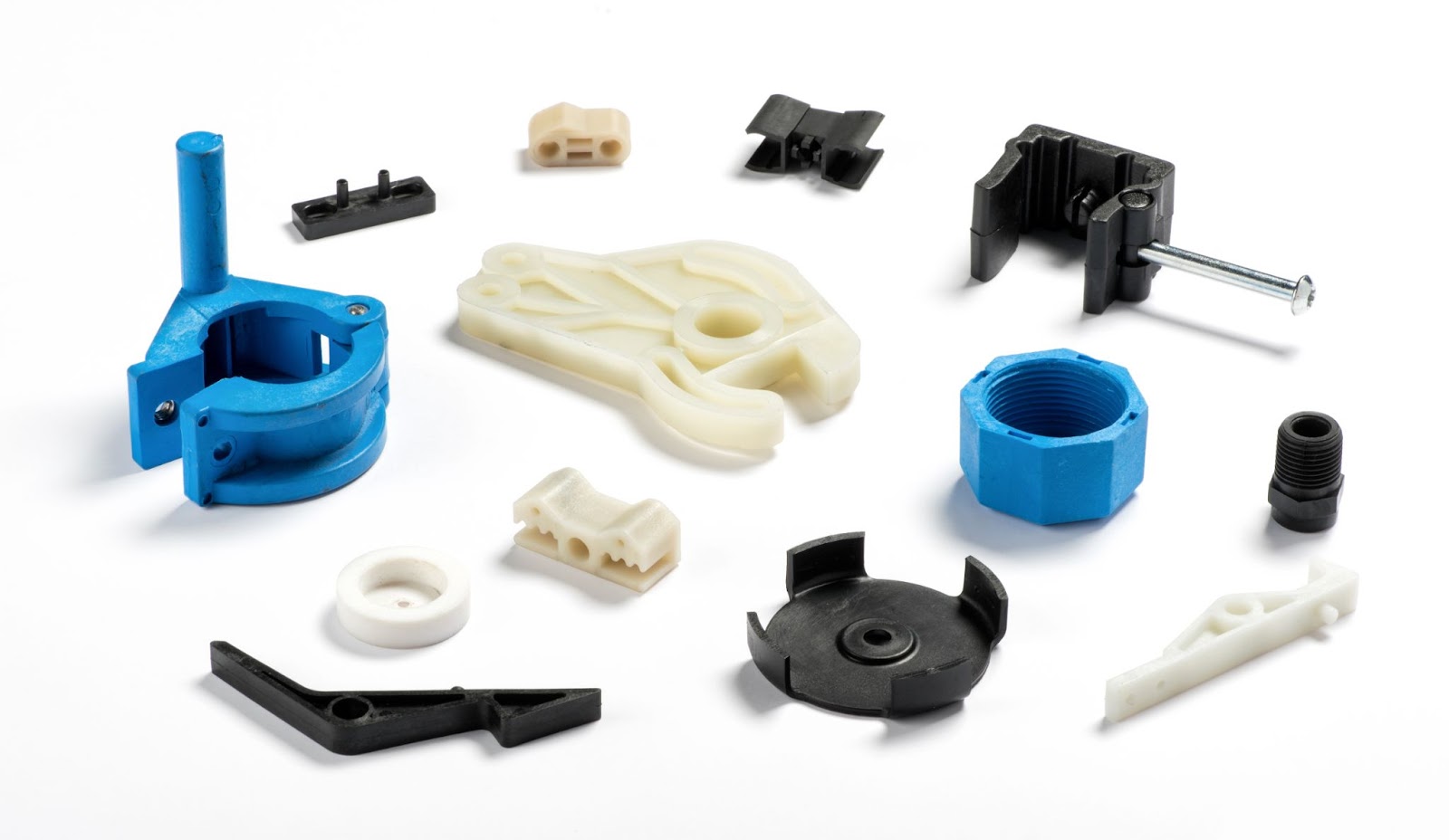
Material choice decides more about a machined part than most drawings admit. It sets the strength, the weight, the corrosion behavior, the finishes available, the achievable tolerance, and a large share of the unit price. Change the alloy and you change the quote, the lead time, and sometimes the design itself.
This guide walks through how engineers narrow the field of CNC machining materials, what the common metals and plastics actually do well, and how to lock in a choice you will not have to revisit after the first prototype run.
Start With the Part’s Job, Not the Material List
Most material decisions go wrong because they start at the wrong end. Someone picks a familiar alloy, then discovers late that it cannot be anodized, cannot hold the tolerance after heat treatment, or costs four times what the budget allows.
A better sequence starts with what the part has to survive:
- Mechanical load. Static load, cyclic fatigue, impact, and whether deflection is acceptable
- Operating temperature. Both the maximum in service and any temperature seen during assembly, such as reflow or paint bake
- Environment. Humidity, salt spray, solvents, fuels, cleaning chemicals, UV exposure
- Wear and friction. Sliding contact, thread engagement, repeated assembly cycles
- Electrical and thermal behavior. Conductivity, insulation, EMI shielding, heat dissipation
- Weight targets. Critical on aerospace, drone, and handheld products
- Tolerance and stability. Whether the part must hold dimensions after machining, over time, and across temperature
- Cosmetics and finish. Whether the surface is visible, and what finish is required
- Regulatory requirements. FDA contact, UL flammability, RoHS, aerospace material specifications
- Volume and budget. A prototype and a 50,000-piece run rarely justify the same material
Material selection for CNC machining works best when these constraints are written down before any grade is named. Two or three usually dominate, and those are the ones that decide the answer.
CNC Machining Metals and What Each Family Does Well
CNC machining metals handle the majority of parts because they combine strength, dimensional stability, and predictable behavior under the cutter. Most CNC machining work runs in four families: aluminum, stainless, carbon steel, and the specialty group of brass, copper, and titanium.
Aluminum Grades for Machining
Aluminum is the default for prototyping and a large share of production work. It cuts fast, holds tolerance, weighs about a third of steel, and takes anodizing well. The grade matters more than most drawings acknowledge.
| Grade | Strengths | Watch for |
| 6061-T6 | The all-purpose choice. Good strength, weldable, corrosion resistant, anodizes cleanly | Not the strongest option when weight is tightly constrained |
| 7075-T6 | Roughly twice the yield strength of 6061, favored in aerospace structure | Poor corrosion resistance, not readily weldable, higher stock cost |
| 2024-T3 | High fatigue resistance, common in aircraft skins and fittings | Corrosion resistance requires coating, limited weldability |
| 5052 | Excellent formability and marine corrosion resistance | Non heat treatable, lower strength, better suited to sheet work |
| 6063 | Clean extruded surfaces, superior decorative anodizing | Lower strength, mostly used for extruded profiles |
If the drawing just says “aluminum,” the shop has to guess, and the guess is usually 6061-T6. Naming the grade and temper prevents a surprise at inspection, since aluminum grades for machining differ as much in finish behavior as in strength.
Stainless Steel
Stainless earns its place when corrosion resistance, strength, or sterilization matters more than machining speed.
- 303 is the free-machining grade, easy to cut thanks to added sulfur, but not suitable for welding or the harshest corrosive environments
- 304 is the general-purpose workhorse with broad corrosion resistance, though it work hardens and cuts slower
- 316 adds molybdenum for chloride and marine resistance, the standard choice for medical and food contact parts
- 17-4 PH is precipitation hardening, reaching high strength after heat treatment, common in aerospace and firearm components
Carbon and Alloy Steel
Carbon steels cost less per pound than almost anything else with comparable strength. 1018 machines predictably and welds well. 1045 offers higher strength and can be induction hardened. 4140 is the tough alloy choice for shafts, gears, and fixtures. All of them rust, so a plating, black oxide, or paint finish is part of the specification, not an afterthought.
Brass, Copper, and Titanium
Brass C360 has the best machinability of any common metal, which makes it attractive for high-volume turned parts, fittings, and fixtures. Copper C110 leads on electrical and thermal conductivity, but it is gummy under the tool and demands sharp geometry. Titanium Ti-6Al-4V delivers the best strength-to-weight ratio in common use along with biocompatibility, and it costs accordingly: slow cutting speeds, heavy tool wear, and stock prices well above steel. It shows up mainly in aerospace and medical programs where the weight or biocompatibility case justifies the price.
CNC Machining Plastics and When They Beat Metal
CNC machining plastics are not a budget compromise. They win outright when a part needs electrical insulation, chemical resistance, low friction, low weight, or optical clarity.
The tradeoffs are real. Most machinable plastics hold looser tolerances than metal, typically around plus or minus 0.1 mm rather than plus or minus 0.01 mm. They move with temperature and humidity, and machining releases internal stress, so thin or asymmetric parts can warp after the cut.
| Plastic | Best for | Limitations |
| Delrin (acetal, POM) | Gears, bushings, precision mechanical parts. Machines beautifully and holds tight tolerances | Poor UV resistance, limited adhesive bonding |
| Nylon 6/6 | Wear parts, rollers, low-friction components | Absorbs moisture, which shifts dimensions |
| PEEK | High temperature, chemical exposure, medical and semiconductor use | Expensive, and demanding to machine |
| PTFE | Chemical inertness, seals, very low friction | Soft, creeps under load, tolerances are difficult |
| Polycarbonate | Impact resistance, transparent covers and guards | Scratches easily, sensitive to solvents and stress cracking |
| ABS | Cost-effective enclosures and fit-check prototypes | Lower strength, limited temperature range |
| PEI (Ultem) | Flame retardant, sterilizable structural parts | Notch sensitive, higher cost |
| HDPE | Wear strips, tanks, food contact parts | Low stiffness, difficult to bond |
Acetal and nylon cover most mechanical applications among machinable plastics. PEEK and PEI enter the conversation when temperature or chemical exposure removes the cheaper options. When a design needs large flat plastic panels or complex internal geometry, 3D printing is often the better route than machining from solid stock.
What CNC Machining Materials Do to Your Cost
Stock price is only part of the picture. The bigger driver is how long the part sits on the machine.
| Factor | Effect on price |
| Machinability rating | Titanium and hardened steel run at a fraction of aluminum’s cutting speed, multiplying machine time |
| Tool wear | Abrasive and work-hardening materials consume inserts, and that cost is built into the quote |
| Stock availability | Uncommon grades and thick plate carry longer lead times and minimum buys |
| Secondary operations | Heat treatment, stress relief, and plating add days and handling steps |
| Scrap risk | Expensive stock raises the cost of a single mistake, which raises the quoted margin |
A useful habit: when a part is not weight or strength critical, quote it in both the preferred alloy and 6061-T6. The difference is often larger than the design benefit. Reviewing the available stock list on the XC Machining materials page before finalizing a drawing avoids specifying a grade that carries a four-week lead time.
Match the Material to the Finish You Need
Finish compatibility surprises more design teams than any other constraint, because it only appears at the end of the project.
- Anodizing works on aluminum and titanium only. Steel and plastics cannot be anodized
- Passivation applies to stainless steel and other corrosion-resistant alloys
- Electroplating requires a conductive substrate, so most plastics need a specialized process
- Powder coating suits most metals but needs a bake cycle that some plastics cannot survive
- Bead blasting works on nearly all metals and changes surface texture rather than chemistry
If the part must be clear anodized purple or black, that decision constrains the alloy, since different aluminum grades take dye differently. Checking the surface finishing options alongside the material decision keeps both choices compatible.
Common Material Selection Mistakes
- Specifying 7075 where 6061 would do. Strength is rarely the binding constraint on brackets and housings
- Choosing PEEK on temperature alone. Acetal and PEI cover many applications at a fraction of the cost
- Leaving the temper off the drawing. 6061-T6 and 6061-O behave completely differently
- Ignoring stock form. A part designed 1 mm thicker than standard plate forces machining from the next size up, which adds cost and time
- Overlooking galvanic pairs. Aluminum fastened to stainless in a wet environment corrodes at the joint
- Forgetting post-machining stress. Plastics and thin aluminum sections can move after release from the fixture unless stress relief is planned
A Practical Way to Lock In Your Material Choice
Material selection for CNC machining becomes routine once it follows a fixed sequence.
- Write down the two or three constraints that actually govern the part, such as load, temperature, and corrosion.
- Shortlist two candidates, usually one familiar metal and one alternative.
- Confirm stock availability and form before the drawing is released.
- Check finish compatibility with the intended appearance and corrosion requirement.
- Prototype in the cheaper candidate where the test does not depend on final material properties.
- Lock the grade and temper on the drawing, not just the family name.
For teams moving from prototype to volume, one more step matters. If annual quantities climb past a few thousand units, compare the machined design against injection molding, since the material shortlist and the geometry both change. Engineers weighing several candidate grades can send drawings to XC Machining for machinability feedback before committing to stock.
FAQs
Q: Which CNC machining materials are used most often?
Aluminum 6061-T6 leads by a wide margin. It machines fast, holds tight tolerances, resists corrosion, anodizes well, and costs less than most alternatives. It is the default for prototypes, brackets, housings, and general mechanical components across nearly every industry.
Q: Can CNC machined plastics hold the same tolerances as metal?
Generally no. Typical achievable tolerances on machinable plastics run around plus or minus 0.1 mm, compared with plus or minus 0.01 mm or tighter on metals. Softer plastics deflect under cutting forces and move with temperature and moisture.
Q: How do I choose between 6061 and 7075 aluminum?
Choose 7075 when strength-to-weight is critical and the part will be coated or protected. Choose 6061 for everything else. 7075 offers higher strength but weaker corrosion resistance, no practical weldability, and a noticeably higher stock cost.
Q: Does material choice affect the surface finish options available?
Yes, significantly. Anodizing requires aluminum or titanium, passivation applies to stainless steel, and electroplating needs a conductive substrate. Choosing the finish and the material together prevents a late redesign when the intended appearance turns out to be impossible.
Q: What information should I include on the drawing?
Specify the alloy, the grade, and the temper or condition, for example 6061-T6 rather than aluminum. Add any material specification, heat treatment, certification requirement, and the finish callout with the surfaces it applies to.