MJF 3D Printing Services
XC Machining MJF 3D printing uses HP Multi Jet Fusion technology — depositing fusing and detailing agents via inkjet array onto PA12, PA11, PP, or TPU nylon powder at 80 μm layer resolution, then fusing with infrared heat. Tolerance: ±0.3 mm + 0.1% of nominal. ~95% isotropic mechanical properties. No support structures required. Up to 80% powder reusability. First parts in 2–4 business days from Dongguan, China.
- All uploads are secure and confidential
What Is MJF 3D Printing at XC Machining?
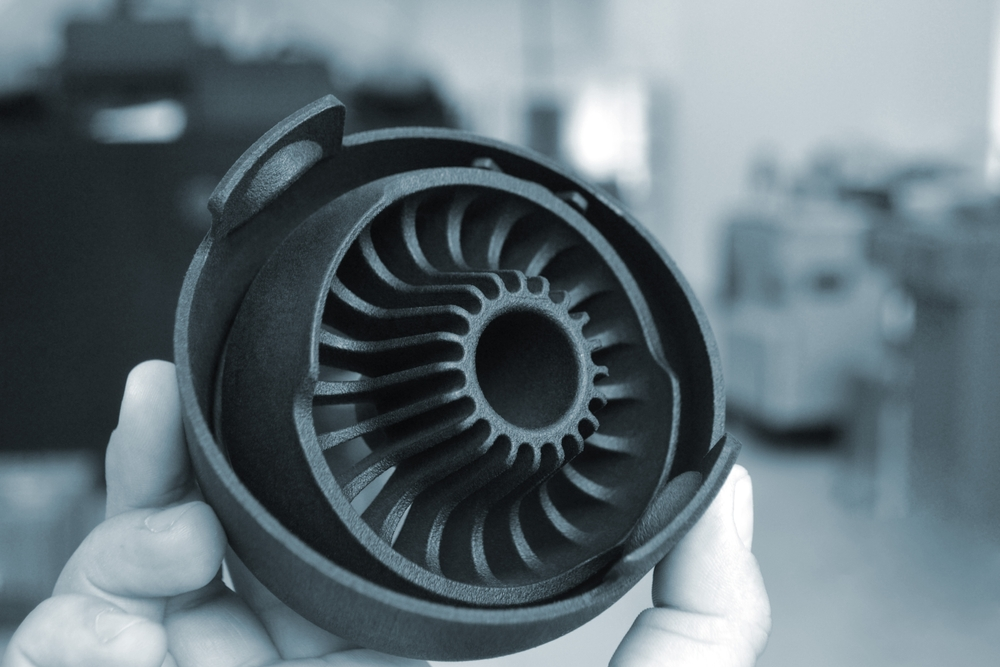
Multi Jet Fusion (MJF) is HP’s proprietary powder bed fusion (PBF) 3D printing technology, commercially available since 2016. MJF uses a page-wide inkjet array to deposit fusing agent (IR-absorbing) and detailing agent (edge-sharpening) onto nylon powder at 80 μm resolution, then fuses with an infrared lamp — processing the entire layer simultaneously, not point-by-point like SLS.
Precision MJF 3D Printing Solutions for Complex Parts
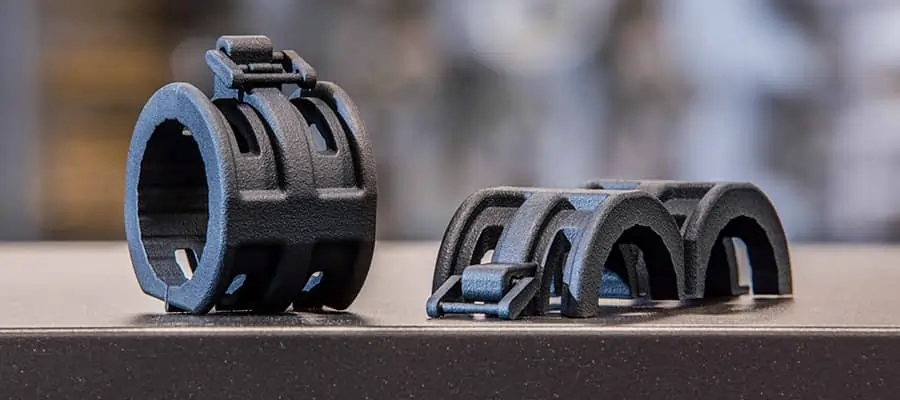
XC Machining provides precision MJF 3D printing solutions that are perfect for creating complex geometries, multi-material components, and fully functional prototypes. Whether you’re in aerospace, automotive, or healthcare, our multi jet fusion 3D printing services offer the accuracy, strength, and flexibility needed to bring your designs to life in the USA.
Custom CNC machining Services: Machining, Turning, Routing, and More
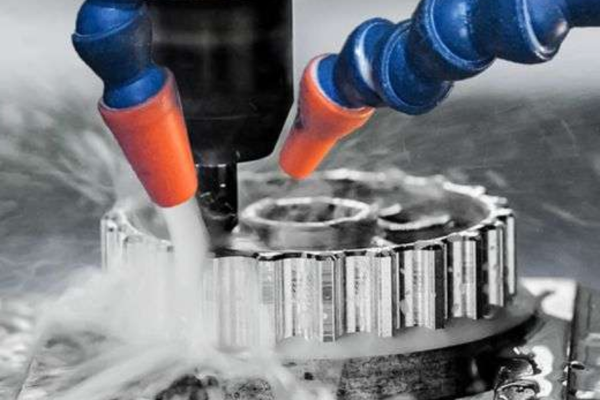
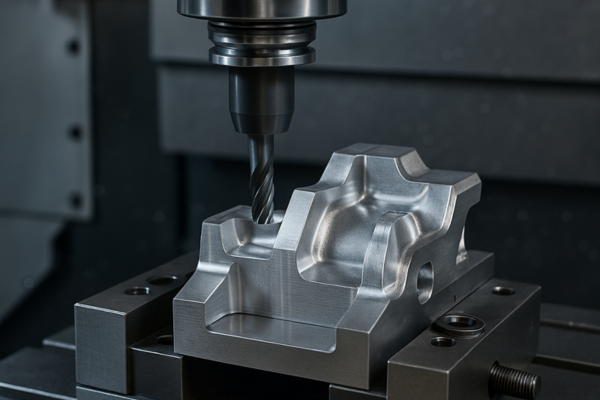
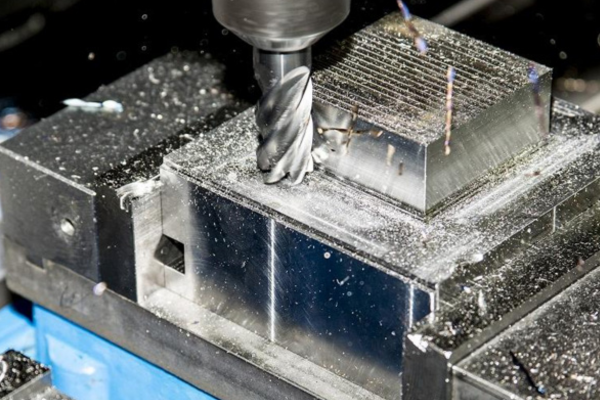
XCMachining aims to please with our CNC Milling Services to give our customers great, quick, and affordable services and products. Whether you are someone who needs one prototype made or a whole batch of low-volume parts, our results are the highest in quality and precision. With our ISO 9001:2015 certification, you can count on us. You can also get precise CNC machining and production feedback, and help to improve production.
Tolerances for Multi Jet Fusion (MJF)
| Description | Specification |
| General Tolerances | Metals: ISO 2768-m |
| Plastics: ISO 2768-c | |
| Precision Tolerances | Tolerances as tight as ±0.005 mm, per drawing specs and GD&T annotations |
| Minimum Wall Thickness | 0.5mm |
| Minimum Layer Thickness | 0.1mm |
| Minimum Part Size | 100mm x 100mm x 0.1mm |
| Maximum Part Size | CNC Milling: 4000×1500×600 mm |
| MJF: 380mm x 284mm x 380mm | |
| Production Volume | Prototyping: 1-100 pcs |
| Low Volume: 101-10,000 pcs | |
| High Volume: Above 10,001 pcs | |
| Lead Time | 5 business days for most projects. Simple parts can be delivered as fast as 1 day |
Why Choose XC Machining for MJF 3D Printing Services?
XC Machining MJF 3D printing produces ~95% isotropic nylon parts at ±0.3 mm tolerance, 80 μm layer resolution, with no support structures — in PA12, PA11, PA12-GF, PP, and TPU. Build volume: 380 × 284 × 380 mm. DFM review within 12 hours. Parts in 2–4 business days from Dongguan, China.

MJF produces ~95% isotropic parts — tensile strength, elongation, and fatigue resistance are nearly identical in XY and Z directions. PA12 MJF: 48 MPa XY ≈ 46 MPa Z. This near-isotropy is MJF's primary mechanical advantage over FDM (Z-axis = 50–75% of XY) and is slightly better than SLS (~85% isotropy). For end-use production parts loaded in multiple directions — brackets, enclosures, connectors — MJF's isotropy eliminates the need to orient parts around anisotropy as required with FDM.

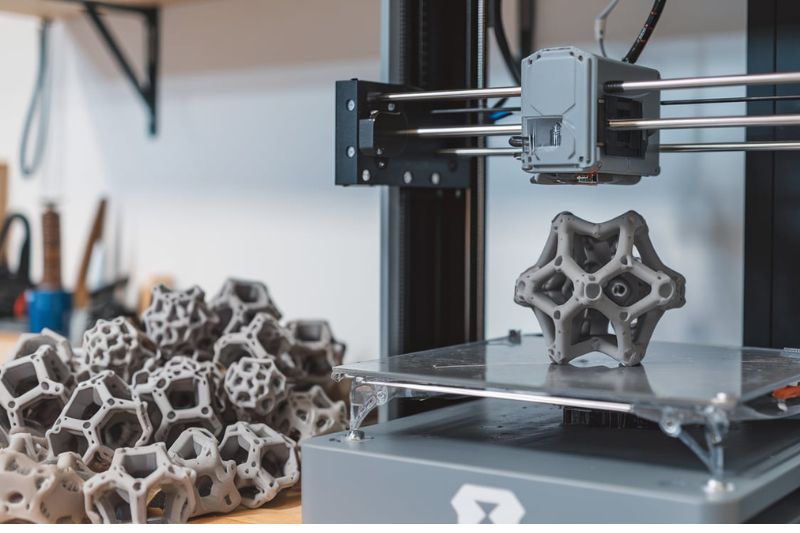
MJF's inkjet array spans the full 380 mm build width and deposits agents in one pass per layer — processing the entire cross-section simultaneously regardless of how many parts are in the build. A build of 50 identical parts takes approximately the same time as a build of 1 part. This makes MJF uniquely cost-efficient for production batches: per-part cost drops 60–70% from 1-part to 50-part builds, with no speed penalty for adding more parts.

MJF recycles up to 80% of unused powder from each build — the highest powder reusability of any powder bed fusion process (SLS: ~50%). Recycled powder is blended with fresh powder at XC Machining's defined refresh rate to maintain consistent part mechanical properties across production batches. Lower material waste reduces per-part cost on repeat production orders and makes MJF the most sustainable nylon 3D printing process.

Upload STL or STEP file. XC Machining engineers return DFM review within 12 hours: minimum wall thickness for warp resistance (≥ 2.0 mm for large parts), internal channel clearance (≥ 2.0 mm for depowdering), color plan (gray/black only vs painting for custom color), material recommendation (PA12 vs PA11 vs TPU), and build orientation for optimal surface finish on critical faces.
What Surface Finishes Are Available for MJF 3D Printed Parts?
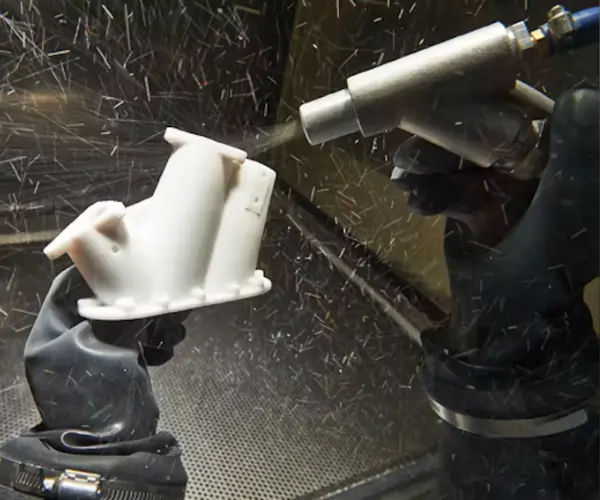
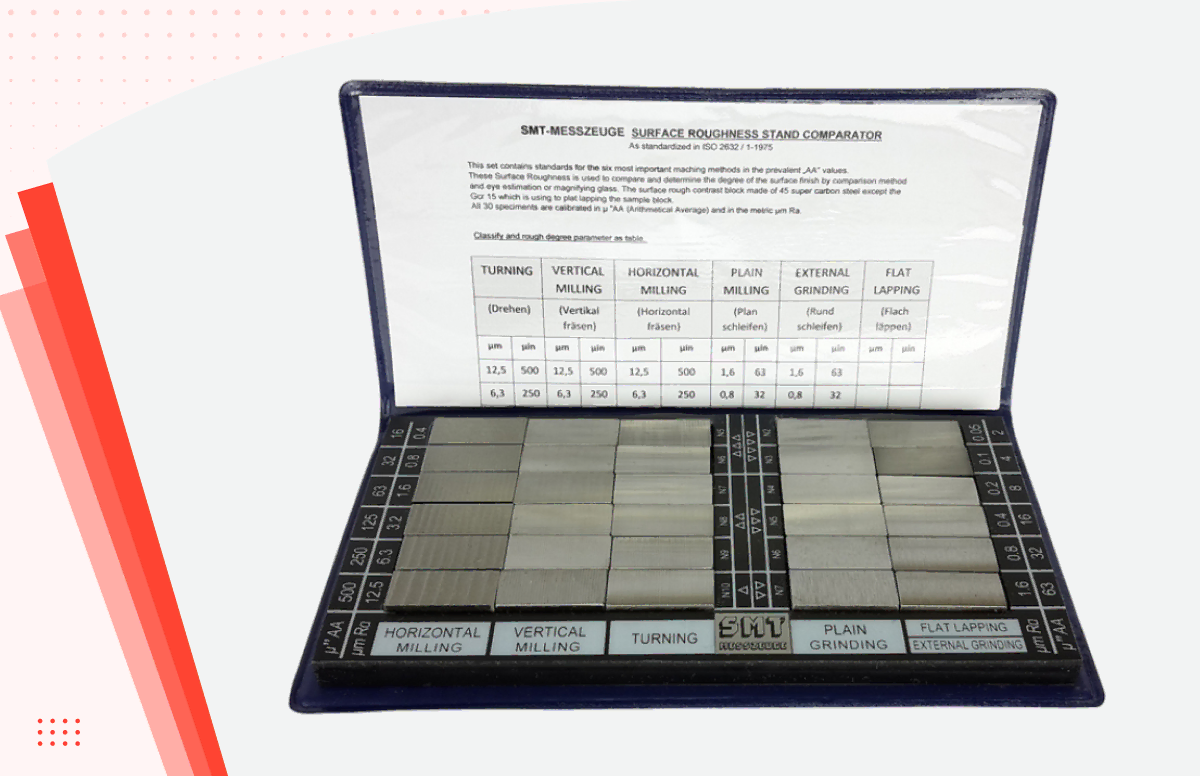
XC Machining MJF surface finishes: as-printed + bead blasted (Ra 4–8 μm, uniform gray matte — standard on all MJF parts), dyed black (Ra 4–8 μm, dye penetrates 0.3–0.5 mm), vapor smoothed (Ra 1–2 μm, semi-gloss sealed), painted (Ra 0.4–1.6 μm, RAL/Pantone matched), and polished (Ra 0.8–2 μm, improved cosmetic appearance).
All XC Machining MJF parts receive glass-bead blasting as standard post-processing — this is included in the base price and lead time. Surface roughness after bead blasting: Ra 4–8 μm. Color: characteristic gray / dark gray from the carbon-black fusing agent. Texture: uniform matte. Better surface finish than SLS as-printed (Ra 6–12 μm) due to the detailing agent’s edge-sharpening effect. Suitable for most functional and industrial applications without additional post-processing.
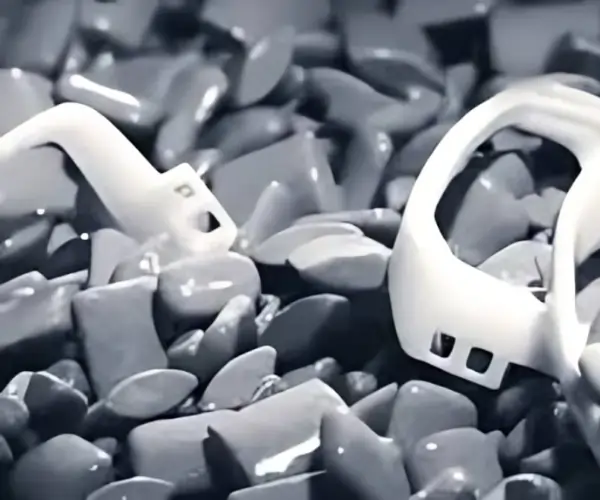
Parts are exposed to a controlled chemical vapor that re-flows the outermost surface layer, sealing porosity and significantly reducing roughness. Surface roughness after vapor smoothing: Ra 1–2 μm (from Ra 4–8 μm bead-blasted). Produces a semi-gloss sealed surface that is water-resistant, easier to clean, and visually more refined. Improves fatigue resistance by eliminating surface crack initiation sites. Available for PA12 and PA11. Reduces dimensional accuracy by 0.05–0.15 mm on critical features.
Manual or vibratory polishing improves surface smoothness on MJF PA12 parts after bead blasting. Surface roughness after polishing: Ra 0.8–2 μm. Removes the granular matte texture and improves tactile quality for consumer-facing parts. Less effective than vapor smoothing for surface sealing — polishing does not close surface porosity. Used for connector housings, medical device touch surfaces, and wearable device components requiring improved tactile quality without painting.
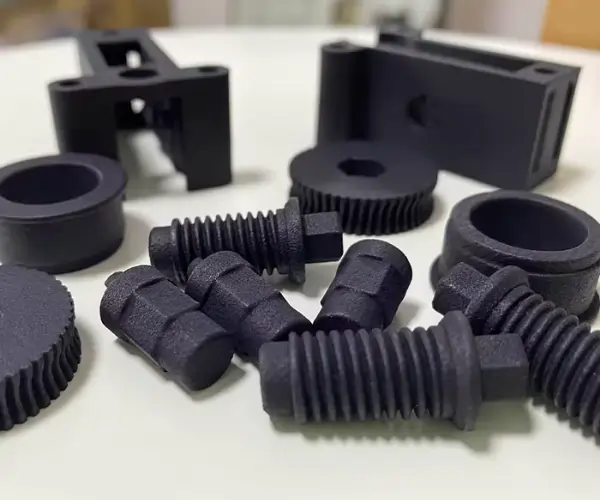
MJF PA12 parts are immersed in heated dye solution to achieve black, blue, or red coloring. Dye penetrates 0.3–0.5 mm below the surface — colorfast, does not chip or flake. Surface roughness after dyeing: Ra 4–8 μm (texture unchanged). Black dyeing produces near-black, high-contrast parts — the most common MJF color finish for consumer-facing products. Important: MJF parts cannot be dyed white — the carbon-black fusing agent permanently colors the PA12 gray. For white parts, SLS with PA12 White powder is recommended.
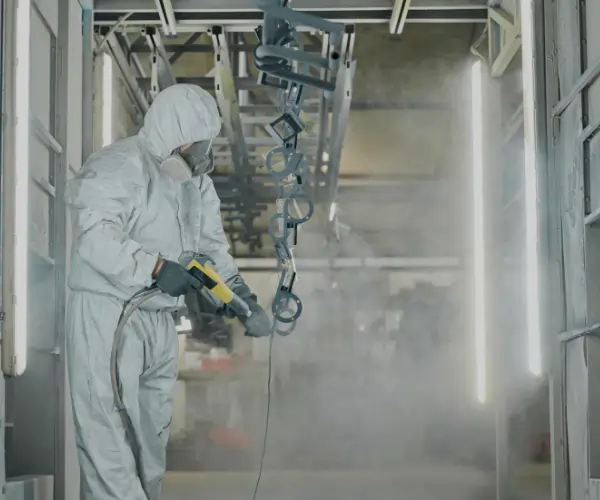
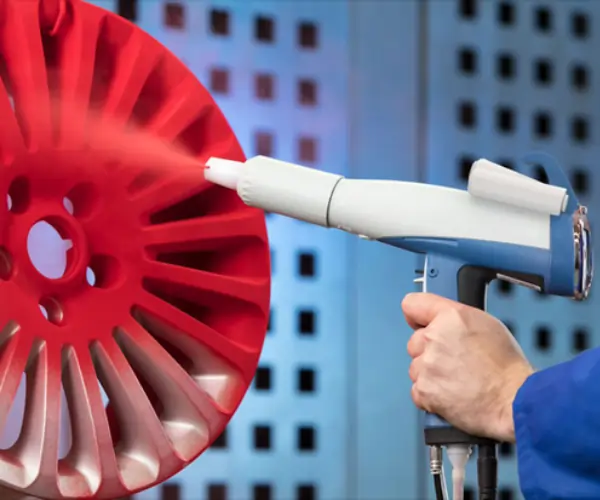
Two-coat spray painting: primer (40–60 μm) + polyurethane or epoxy topcoat (40–80 μm), applied after bead blasting. Surface roughness: Ra 0.4–1.6 μm. RAL and Pantone color matching. Matte, satin, and gloss finishes (gloss: 85+ GU at 60°). UV-resistant clear coat for outdoor or display parts. Total film thickness: 80–140 μm — accounts for ±0.04–0.07 mm on critical dimensions. Enables true Pantone-matched color on MJF parts (the only route to non-gray/non-black color).
Materials for Multi Jet Fusion (MJF) Parts
HP 3D High Reusability PA 11
HP 3D High Reusability PA 12
HP 3D High Reusability PA 12 Glass Beads (40% GB)
HP 3D High Reusability PP
BASF Ultrasint™ TPU01
Our Multi Jet Fusion(MJF) Prototype Manufacturing Capabilities
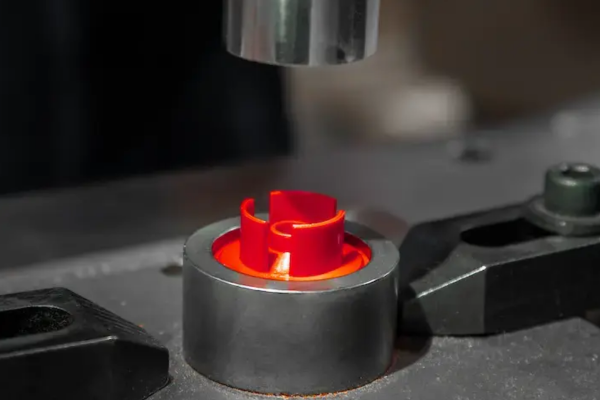
Provides injection molding for prototypes and custom parts, emphasizing expert support, competitive pricing, and faster production cycles.
Get reliable vacuum casting services for high-quality prototypes and production parts at competitive prices. XinCheng offers highly detailed casting parts with consistent quality.
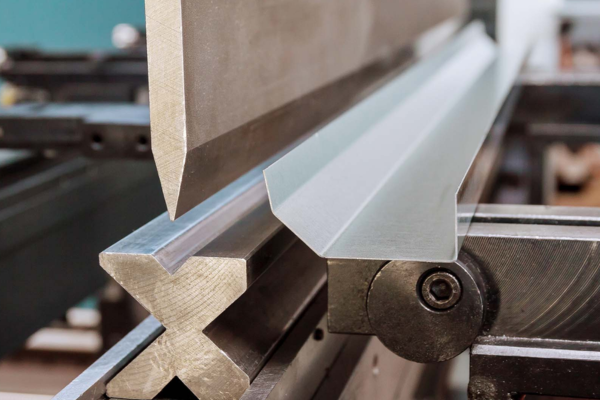
Uses cutting, bending, and forming techniques to produce precision metal components suited for industrial, commercial, and manufacturing applications.
Specialist Industries
Bring Your Designs to Life with XC Machining
- Expertise Shared Widely
- Market Reach Expanded
- Advanced Technology Integrated
- Collaborative Innovation Opportunities
- All uploads are secure and confidential
Multi Jet Fusion (MJF) FAQs
What Tolerance Does XC Machining Hold for MJF 3D Printed Parts?
XC Machining MJF achieves ±0.3 mm or ±0.1% of nominal dimension — whichever is larger — at 80 μm layer resolution. For a 100 mm feature, tolerance is ±0.3 mm (the floor governs). For a 300 mm feature, tolerance is ±0.3 mm (0.1% = 0.3 mm — both equal). Parts larger than 180 mm in any dimension are more susceptible to warp — XC Machining recommends minimum 2.0–3.0 mm wall thickness on large MJF parts to prevent dimensional distortion during cooling.
What Is the Difference Between MJF and SLS 3D Printing?
MJF and SLS are both powder bed fusion processes using nylon PA12 — similar materials, similar tolerances, no support structures. Key differences: MJF uses inkjet-deposited fusing and detailing agents + infrared lamp (entire layer processed simultaneously), while SLS uses a laser rastering point-by-point. MJF is 1.5–2× faster for equivalent part volumes. MJF achieves ~95% isotropy vs SLS ~85%. MJF surface finish is finer (Ra 4–8 μm vs Ra 6–12 μm). MJF cannot produce white parts — SLS can. SLS offers broader material range including PA12 FR and PA11 Black pre-pigmented.
What Materials Are Available for MJF 3D Printing at XC Machining?
XC Machining MJF supports: PA12 (48 MPa, 18% elongation, general-purpose — most common), PA11 (48 MPa, 40–50% elongation, bio-based, more flexible), PA12-GF (60 MPa, glass-filled, high stiffness for elevated temperature), PP (22 MPa, polypropylene-like, chemical resistant, flexible, living hinge capable), and TPU M95A (Shore A 95, 250% elongation, flexible, abrasion resistant). All materials produce ~95% isotropic parts. White color is not available in any MJF material — as-printed parts are gray due to the carbon-black fusing agent.
Why Are MJF 3D Printed Parts Always Gray in Color?
MJF parts are gray because the fusing agent — the fluid that causes the nylon powder to sinter — contains carbon black (an infrared-absorbing pigment). Carbon black is distributed throughout the fused part volume, permanently coloring it dark gray regardless of the powder’s natural color. White or light-colored MJF parts are not achievable. To get white or custom Pantone-matched colors: (1) use SLS with white PA12 powder and dye, or (2) apply primer + spray paint over the MJF part (adds 80–140 μm film and enables any RAL/Pantone color).
How Does MJF's Build Time Compare to SLS for High-Volume Production?
MJF build time is nearly independent of part count — a full build of 50 parts takes approximately the same total time as a build of 1 part, because the inkjet array processes the entire 380 mm-wide bed in one pass per layer regardless of what is in that layer. SLS lasers raster each cross-section point-by-point, so build time scales with cross-sectional area per layer. At volumes above 10 parts per build, MJF is 1.5–2× faster than SLS for equivalent part sizes.
What Is the Lead Time for MJF 3D Printed Parts at XC Machining?
Standard lead time: 2–4 business days for prototype to medium production quantities (1–50 parts). 3–7 business days for full production batches (50–300+ parts filling the complete 380 × 284 × 380 mm build volume, including build planning, cooling, depowdering, and bead blasting). Rush delivery: 24–48 hours for small simple PA12 parts. DFM review and quote returned within 12 hours of STL or STEP file upload from Dongguan, China.
When Should I Choose MJF Instead of Injection Molding for Nylon Parts?
Choose MJF over injection molding when: (1) quantity is below 1,000 units — injection mold tooling ($5,000–$50,000, 25–35 day lead time) is not cost-justified; (2) part geometry changes are still anticipated — MJF has $0 tooling modification cost vs $500–$5,000 for mold modification; (3) delivery is required in 2–4 days — injection molding with new tooling takes 25–35 days; (4) complex internal geometry (channels, lattices, undercuts) that injection molding cannot produce is needed. Choose injection molding above 5,000 units/year for lowest per-part cost and best surface finish.3D printing