Injection Molding Services
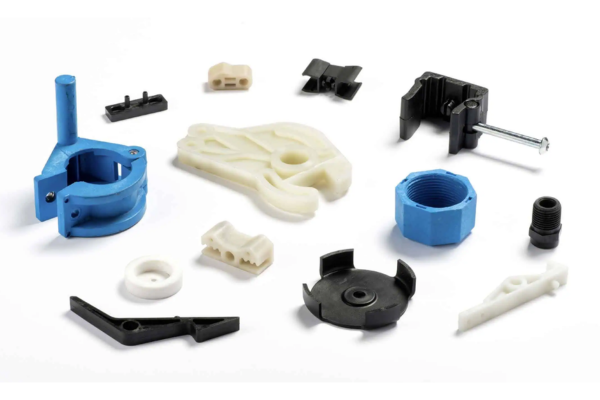
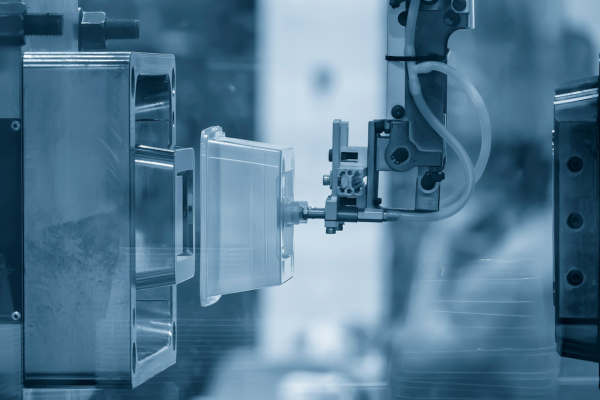
XC Machining provides injection molding for production-grade plastic parts in ABS, PC, Nylon, PP, PEEK, and 50+ thermoplastic resins. Mold clamping force from 50 to 800 tons, tolerances to ±0.05 mm, and mold life from 5,000 to 1,000,000+ shots.
- All uploads are secure and confidential
How Does XC Machining Deliver Prototype Injection Molded Parts?
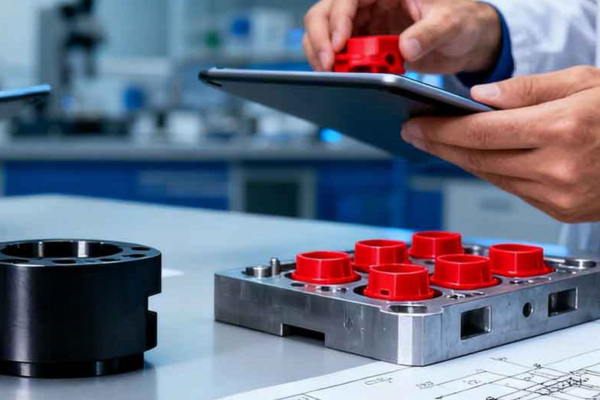
XC Machining delivers functional injection molded prototypes in 15–20 business days using aluminum rapid tooling. Prototype molds produce 500–5,000 parts for design verification, material testing, and pre-production validation before investing in hardened steel production tooling.
XC Machining produces injection molded plastic components with wall thickness from 0.5 mm, tolerances to ±0.05 mm, and SPI surface finishes from A-1 (mirror) to D-3 (textured). For metal inserts or tight-tolerance features, our CNC machining services integrate directly with the molding process.
Prototype injection molds at XC Machining use aluminum 7075 tooling that ships in 15 days with T1 samples included for dimensional approval before production ramp-up.
What Plastic Part Manufacturing Capabilities Does XC Machining Injection Molding Offer?
XC Machining injection molds plastic parts for automotive, medical device, consumer electronics, and industrial applications. Our press fleet ranges from 50-ton to 800-ton clamping force, producing parts from 5 × 5 × 2 mm to 1000 × 1000 × 500 mm in single-cavity, multi-cavity, and family mold configurations.
For functional prototypes, XC Machining produces T1 sample parts from aluminum rapid tooling within 15 days. All prototype parts undergo CMM dimensional verification against your CAD model before shipment.
What Makes XC Machining Different for Injection Molding Projects?
XC Machining injection molding combines ISO 9001:2015 certified quality, in-house mold design and fabrication, DFM review on every project, and press capacity from 50 to 800 tons for parts of any complexity.

XC Machining designs and fabricates injection molds in-house using P20 pre-hardened steel (100,000+ shots), H13 hardened steel (500,000+ shots), S136 stainless (1,000,000+ shots for corrosive resins), and aluminum 7075 (5,000–10,000 shots for prototyping).

Injection moldable resins include ABS, PC, PC/ABS, Nylon 6/66, PP, PE, POM (Delrin), PMMA, PBT, PPS, PEEK, TPU, TPE, LSR (liquid silicone), and glass-filled and carbon-filled engineering compounds.

Our mold engineers review part designs for uniform wall thickness, draft angle adequacy (minimum 0.5°), gate location optimization, sink mark prevention, weld line management, and ejector pin placement. DFM feedback within 12 hours of file upload.

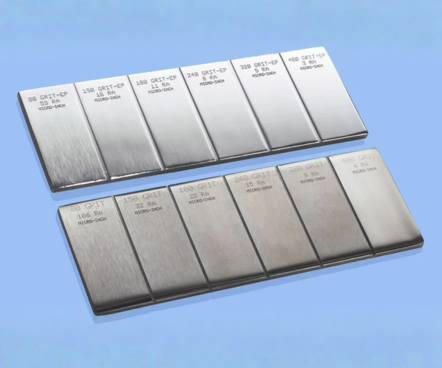
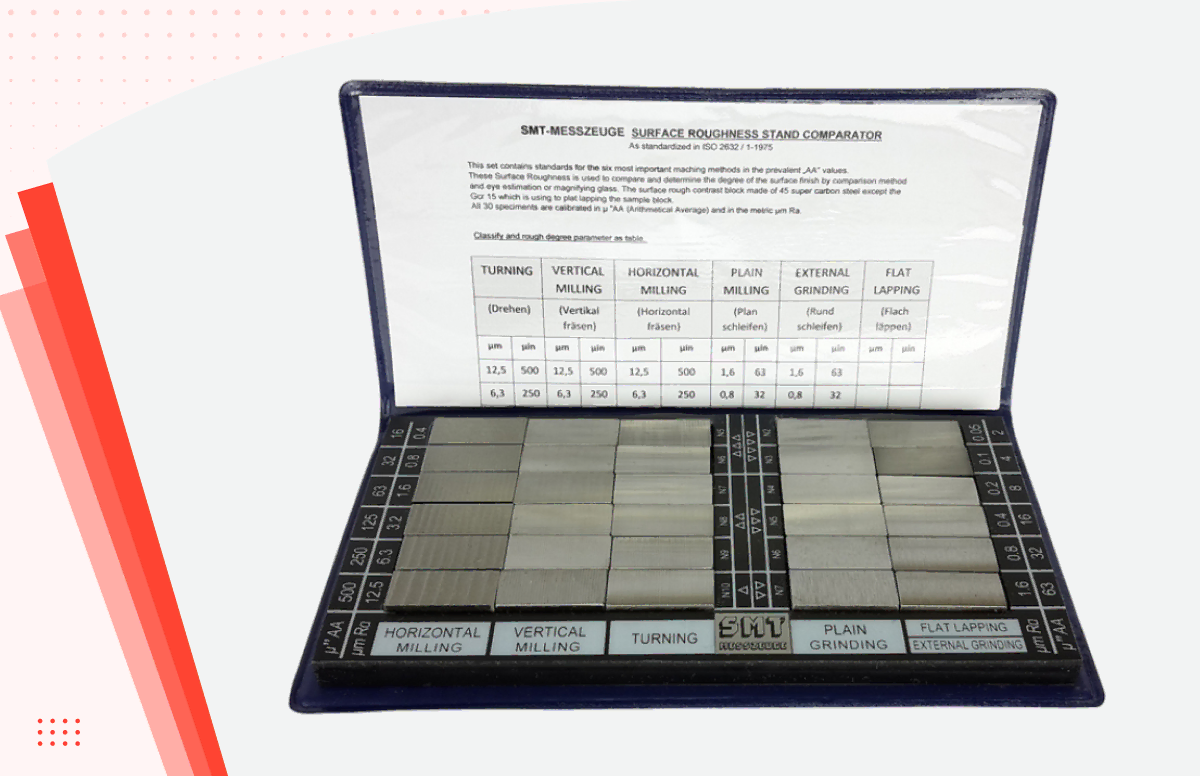
Injection molded parts receive SPI surface finishes from A-1 (diamond-polished mirror, Ra 0.012 μm) to D-3 (sandblast texture, Ra 3.2 μm). Custom textures (VDI, Mold-Tech) available for grip and cosmetic requirements.
What Tolerances Does Injection Molding Achieve at XC Machining?
XC Machining holds injection molding tolerances per the specifications below. Achievable tolerance depends on resin type (amorphous resins hold tighter tolerances than semi-crystalline), wall thickness uniformity, and mold temperature control precision.
Description | Specification |
|---|---|
| Precision Tolerances | Typical ±0.005 inches (±0.127 mm); achievable up to ±0.002 inches (±0.05 mm) for critical dimensions. |
| Shrinkage Allowance | 0.4%–2.0% (varies by polymer type) |
| Surface Finish | Ra 8 µin (0.2 µm) to Ra 63 µin (1.6 µm) |
| Minimum Wall Thickness | 0.5–1.5 mm depending on plastic material |
| Draft Angle | 0.5°–2° for most part designs |
| Gate Tolerance | ±0.003 inches (±0.076 mm) |
| Ejector Pin Tolerance | ±0.001 inches (±0.025 mm) |
| Maximum Part Size | 1000×1000×500 mm |
| Minimum Part Size | 5×5×2 mm |
| Production Volume | Prototyping: 1–500 pcs |
| Low Volume: 501–10,000 pcs | |
| High Volume: Above 10,000 pcs |
What Materials Can Be Injection Molded at XC Machining?
XC Machining injection molds thermoplastics, engineering plastics, elastomers, and specialty materials including ceramic injection molding (CIM) and metal injection molding (MIM) feedstocks. Each material below includes typical applications, shrinkage range, and processing temperature to help you select the right resin for your project.
Commodity: PP (0.4–0.7% shrinkage), PE, PS, ABS. Engineering: PC, Nylon 6/66, POM, PBT, PMMA, PPS. High-Performance: PEEK, PEI (Ultem), LCP. Processing temperatures 180–400°C depending on resin.
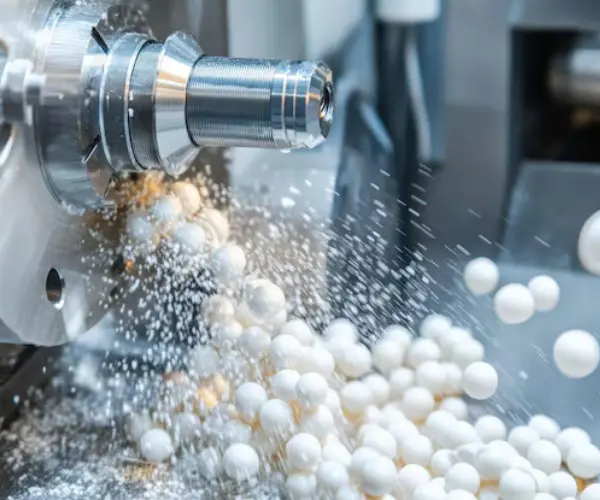
Ceramic Injection Molding (CIM) — alumina (Al₂O₃), zirconia (ZrO₂), and silicon nitride (Si₃N₄) for wear-resistant, high-temperature, and electrically insulating components. CIM produces complex ceramic geometries impossible with traditional ceramic pressing.
Thermoplastic elastomers (TPE-S, TPE-O, TPE-U, TPE-V), thermoplastic polyurethane (TPU), and liquid silicone rubber (LSR) for soft-touch grips, seals, gaskets, and overmolded components with Shore A 20–90 hardness range.
Metal Injection Molding (MIM) — stainless steel 316L/17-4PH, titanium, copper alloys, and tool steel for small, complex metal parts (1–100g) produced at near-net-shape with 95–99% theoretical density.
What Surface Finishes Are Available for Injection Molded Parts?
XC Machining applies the following surface finishes to injection molded plastic parts. Mold surface finish is classified per SPI (Society of the Plastics Industry) standards from A-1 to D-3.
Sanding removes gate vestiges, parting line flash, and ejector pin marks from molded parts to Ra 0.8–1.6 μm for a clean finished surface.
SPI A-1 diamond-polished mold cavities produce mirror-finish molded parts at Ra 0.012–0.025 μm directly from the mold — used for optical lenses, light guides, and cosmetic consumer electronics.
Mold-Tech and VDI textures add patterns ranging from fine leather grain to geometric stipple directly into the mold cavity. Textured surfaces (SPI C-1 to D-3, Ra 0.8–3.2 μm) hide sink marks, improve grip, and reduce fingerprint visibility.
Electropolishing of injection mold cavities in S136 and H13 steel achieves Ra 0.05–0.1 μm mold surface, improving plastic part release, reducing cycle time, and extending mold life by minimizing cavity wear.
Hard-coat anodizing (Type III) on aluminum prototype molds adds 25–50 μm wear-resistant oxide layer, extending aluminum mold life from 5,000 to 10,000+ shots while maintaining SPI B-1 surface quality.
Vibratory finishing deburrs injection molded parts in batch, removing gate nubs and parting line flash to achieve uniform Ra 0.8–1.6 μm edge quality across production quantities for consumer-safe handling.
Our Injection Molding Prototype Manufacturing Capabilities
Provides injection molding for prototypes and custom parts, emphasizing expert support, competitive pricing, and faster production cycles.
Get reliable vacuum casting services for high-quality prototypes and production parts at competitive prices. XinCheng offers highly detailed casting parts with consistent quality.
Uses cutting, bending, and forming techniques to produce precision metal components suited for industrial, commercial, and manufacturing applications.
Specialist Industries
Bring Your Designs to Life with XC Machining
- Expertise Shared Widely
- Market Reach Expanded
- Advanced Technology Integrated
- Collaborative Innovation Opportunities
- All uploads are secure and confidential
Injection Molding Frequently Asked Questions
What Are the Advantages of Injection Molding for Plastic Parts?
Injection molding advantages: (1) per-part cost drops significantly above 1,000 units due to mold amortization, (2) cycle times of 15–60 seconds per part enable high-volume output, (3) tolerances to ±0.05 mm with ±0.005 mm repeatability across millions of parts, (4) 50+ resin options including glass-filled and flame-retardant compounds, (5) complex geometries with undercuts, living hinges, and snap fits produced in a single shot, (6) material waste below 5% with runner regrind.
How Accurate Is XC Machining's Injection Molding Process?
XC Machining injection molding achieves ±0.05 mm typical tolerance and ±0.025 mm on critical dimensions with optimized process parameters. Accuracy depends on resin shrinkage (0.4–2.0% varies by polymer), mold temperature stability (±2°C), injection pressure consistency, and uniform wall thickness. All production parts are verified with CMM inspection and go/no-go gauges per drawing specifications.
Can Injection Molding Be Cost-Effective for Low-Volume Production?
Yes. XC Machining offers aluminum rapid tooling that produces 500–10,000 parts at 40–60% lower tooling cost than hardened steel molds. Aluminum molds ship in 15 days versus 25–35 days for steel. This makes injection molding cost-effective for bridge production, market testing, and low-volume products. For quantities below 500, consider CNC machining or vacuum casting as alternatives.
What Is the Lead Time for Injection Molding at XC Machining?
Injection molding lead times at XC Machining: aluminum prototype tooling ships in 15 business days with T1 samples, steel production tooling ships in 25–35 business days. After mold approval, production parts ship in 5–10 business days per batch depending on quantity and resin availability. Rush delivery available for time-critical projects.