SLA 3D Printing Services
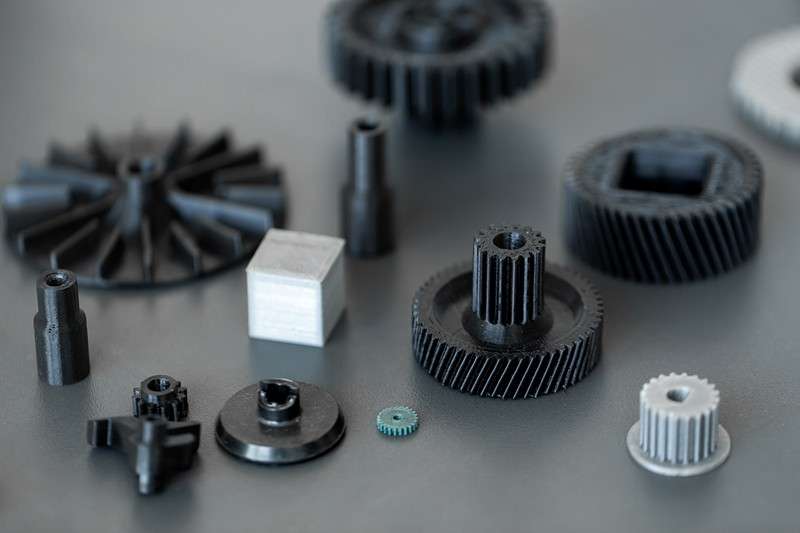
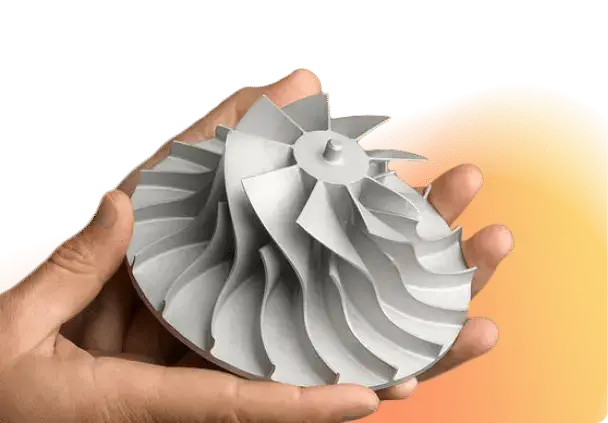
XC Machining SLA 3D printing cures liquid photopolymer resin layer-by-layer using an ultraviolet laser at 25–100 μm resolution — producing parts with ±0.1–0.2 mm dimensional tolerance, Ra 0.5–2 μm surface finish, and watertight sealed walls. Available in standard, tough/ABS-like, clear/transparent, flexible/PP-like, high-temperature, and castable resins. First parts delivered in 1–3 business days from Dongguan, China. No tooling required.
- All uploads are secure and confidential
What Is SLA 3D Printing at XC Machining?
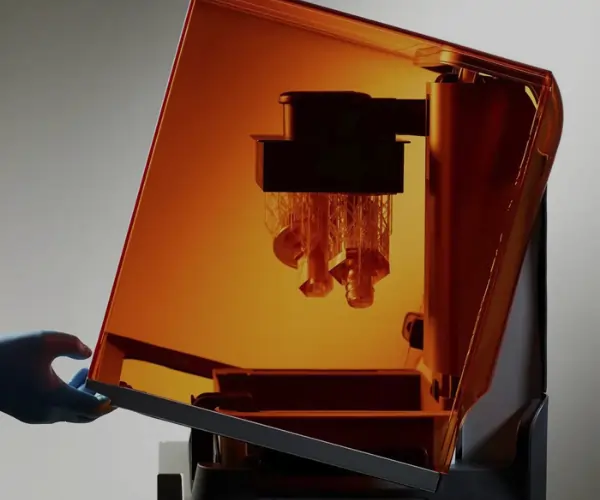
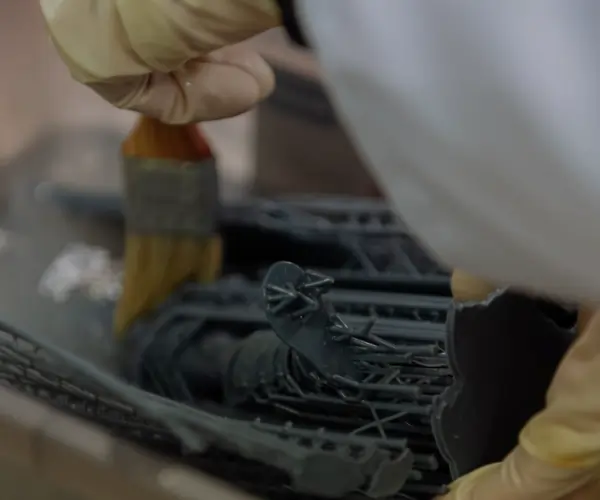
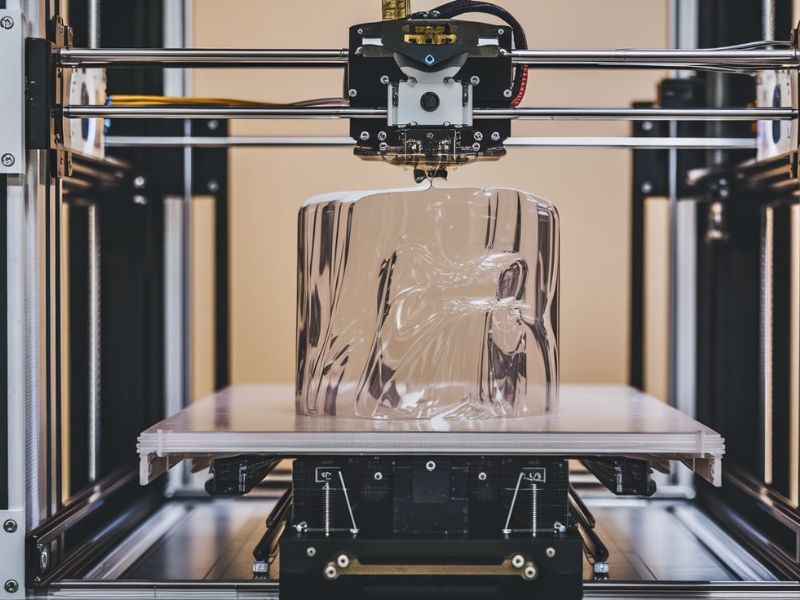
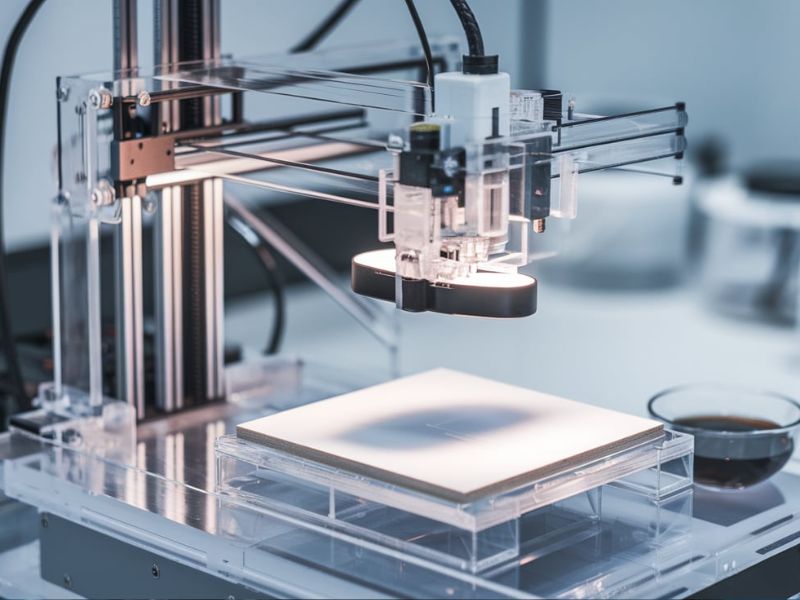
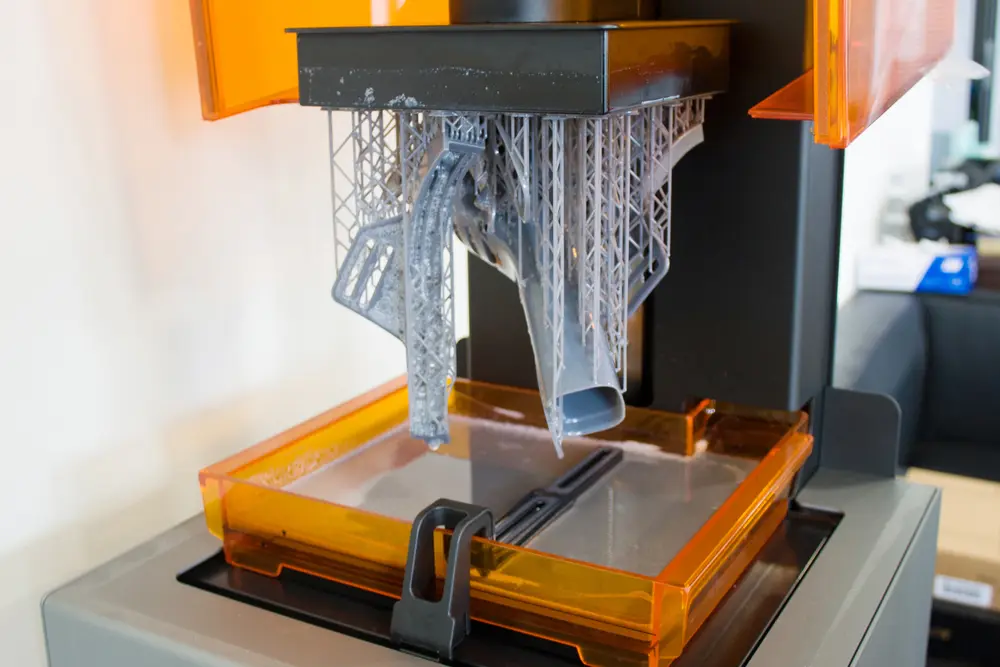
SLA (Stereolithography) 3D printing uses an ultraviolet laser to selectively cure liquid thermoset photopolymer resin in a vat, building parts layer-by-layer at 25–100 μm resolution. SLA produces the smoothest surface finish of any polymer 3D printing process — Ra 0.5–2 μm as-printed — with ±0.1–0.2 mm dimensional tolerance.
Online SLA 3D Printing Services for Convenient Ordering and Fast Turnaround
Tolerances for Stereolithography (SLA)
| Description | Specification |
| General Tolerances | Metals: ISO 2768-m |
| Plastics: ISO 2768-c | |
| Precision Tolerances | Tolerances as tight as ±0.1 mm, per drawing specs and GD&T annotations |
| Minimum Wall Thickness | 0.5mm |
| Minimum Layer Thickness | 0.05mm |
| Minimum Part Size | 10mm x 10mm x 1mm |
| Maximum Part Size | 500mm x 500mm x 600mm |
| Production Volume | Prototyping: 1-100 pcs |
| Low Volume: 101-10,000 pcs | |
| High Volume: Above 10,001 pcs | |
| Lead Time | 5 business days for most projects. Simple parts can be delivered as fast as 1 day |
Why Choose XC Machining for SLA 3D Printing Services?
XC Machining SLA 3D printing produces the smoothest surface finish of any polymer 3D printing (Ra 0.5–2 μm as-printed) with ±0.1–0.2 mm tolerance at 25–100 μm layer resolution. Six resins: standard, tough, clear, flexible, high-temp, and castable. DFM review within 12 hours. Parts in 1–3 business days from Dongguan, China.

SLA produces Ra 0.5–2 μm surface finish as-printed — smoother than FDM (Ra 6–16 μm), SLS (Ra 6–12 μm), and MJF (Ra 4–8 μm). After sanding and priming, SLA surfaces reach Ra 0.1–0.4 μm — visually and tactilely equivalent to injection-molded ABS. This makes SLA the default choice when the prototype will be presented to investors, photographed for marketing, shown to customers, or used as a master pattern for vacuum casting silicone molds.

SLA parts have watertight, sealed walls because the UV curing process fuses each layer into a continuous solid — no inter-layer porosity, no FDM-style layer gaps. Wall thickness ≥ 1.5 mm reliably produces watertight seals confirmed by pressurization testing. Used for fluid visualization models, microfluidic device prototypes, waterproof enclosure prototypes, and biomedical flow-path models where FDM or SLS parts would leak.

XC Machining offers standard (65 MPa, brittle, ideal for display models), tough/ABS-like (55 MPa, 25–35% elongation, snap fits), clear/transparent (optical-grade clarity, 60 MPa), flexible/PP-like (Shore A 80, 70–130% elongation), high-temperature (HDT 220°C, mold inserts), and castable (0% ash, investment casting masters). Engineers recommend the optimal resin during DFM review based on mechanical load, temperature, optical, and casting requirements.

Upload STL or STEP file. XC Machining engineers return DFM review within 12 hours: minimum wall thickness check (≥ 1.0 mm), support placement strategy to protect cosmetic surfaces, build orientation for optimal face finish, resin recommendation, and post-processing plan (sanding, painting, clear coating) to achieve your target Ra and color specification.
What Surface Finishes Are Available for SLA 3D Printed Parts?
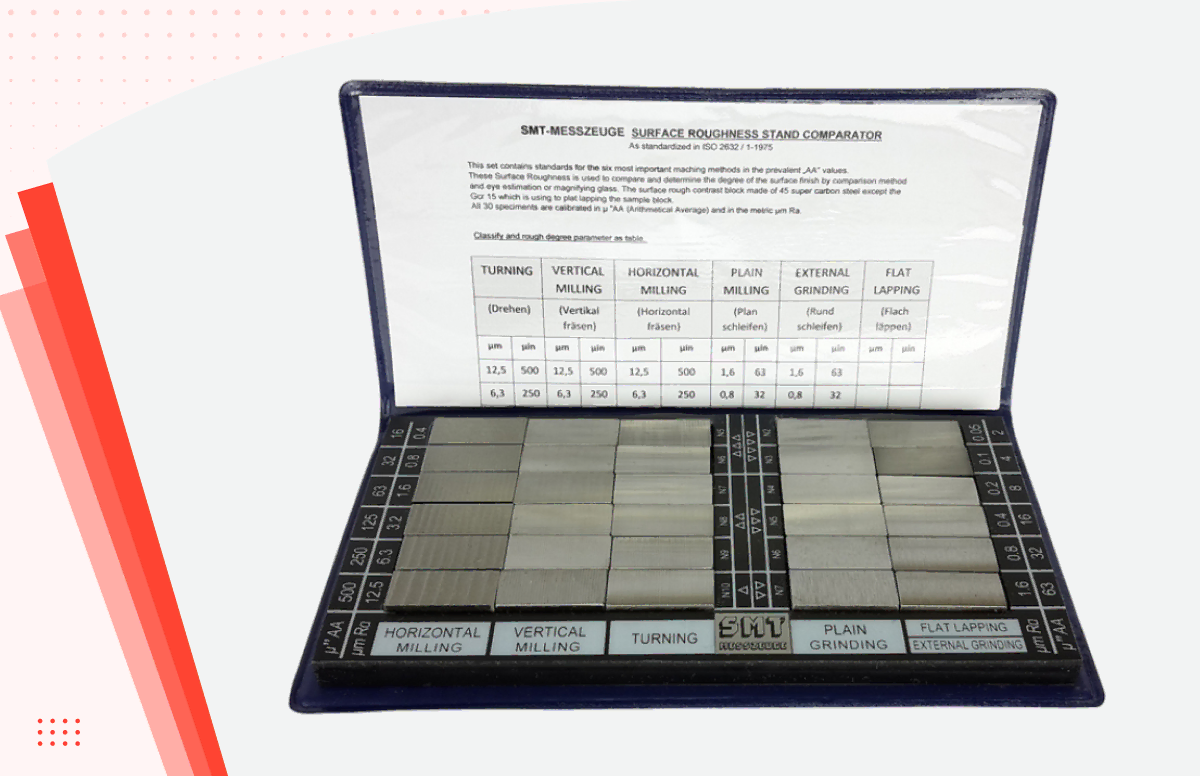
XC Machining SLA surface finishes: as-printed (Ra 0.5–2 μm, smoothest of any polymer 3D printing), sanded (Ra 0.1–0.4 μm, near-injection-mold quality), primed and painted (Ra 0.1–0.4 μm, RAL/Pantone matched), clear coated (optical-grade transparency for clear resin parts), and polished (Ra ≤ 0.1 μm for lens-quality surfaces).
SLA parts emerge from post-curing with a smooth, slightly matte surface from the layer-by-layer cure process. Surface roughness: Ra 0.5–2 μm — the smoothest as-printed surface of any polymer 3D printing process. Downward-facing surfaces (in contact with supports) are rougher: Ra 1.5–4 μm due to support witness marks. No secondary finishing required for most visual prototype and display model applications.
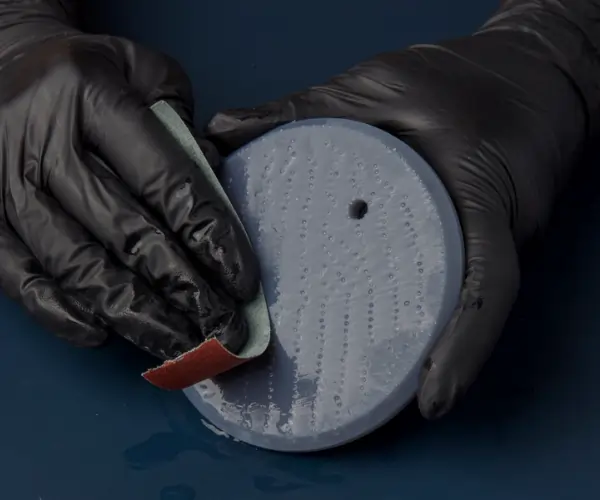
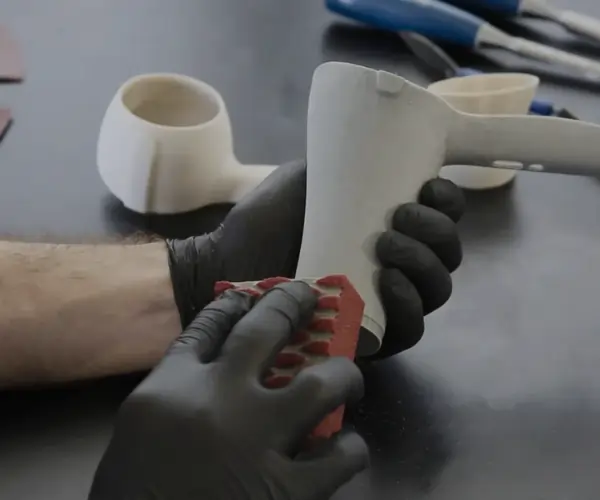
Progressive sanding from 120 grit → 400 grit → 800 grit → 2000 grit removes layer lines, support witness marks, and any surface imperfections. Surface roughness after 2000-grit sanding: Ra 0.1–0.4 μm — virtually indistinguishable from injection-molded ABS. Used as preparation for priming and painting, or as the final finish for cosmetic presentation models. Wet sanding with 2000 grit produces a semi-gloss finish suitable for client presentations without paint.
Two-coat spray painting: automotive-grade primer (40–60 μm) + polyurethane or epoxy topcoat (40–80 μm). Surface roughness after painting: Ra 0.1–0.4 μm. RAL and Pantone color matching. Matte, satin, and gloss finishes available (gloss: 85+ GU at 60°). UV-resistant clear coat for outdoor display or photoshoot models. Film thickness: 80–140 μm total — accounts for ±0.04–0.07 mm on critical dimensions.
For SLA parts in clear/transparent resin, XC Machining applies optical-grade clear coat after polishing to restore and enhance optical clarity lost during post-curing. Surface roughness after clear coating: Ra 0.1–0.2 μm. Light transmission: 85–92% (resin-dependent). Used for lens prototypes, light guide models, headlight covers, and fluid visualization test parts where optical clarity is a functional requirement.
Mirror polishing using diamond paste (3 μm → 1 μm → 0.5 μm grade) on clear SLA resin parts. Surface roughness: Ra ≤ 0.1 μm. Produces lens-quality optical surfaces on small parts (< 50 mm diameter). Used for prototype camera lenses, optical sensor covers, gemstone-like display pieces, and precision light-guide end faces. Labor-intensive — requires 1–2 additional business days.
Standard white SLA resin parts are soaked in heated dye solution or airbrushed with translucent tints for color without opaque paint. Dye penetrates 0.1–0.2 mm below the surface. Available for medical device mockups, consumer product color studies, and architectural model vegetation and landscape elements. Tinting clear resin produces colored-transparent parts — amber, blue, green, red — for automotive light lens prototypes and decorative display models.
Materials for Fused Deposition Modeling (FDM) Parts
Black, Blue, Dark Grey, Ivory, Red, White.
Black (electrostatic dissipative properties)
Translucent Natural, Translucent Amber, Translucent Red
Black, Dark Blue, Dark Gray, Light Gray, Green, Ivory, Orange, Red, White, Yellow
Black
Black
White
Translucent Natural, White
Black, Blue, Red, White
Black, Tan
Amber (Natural)
Our Stereolithography (SLA) Prototype Manufacturing Capabilities
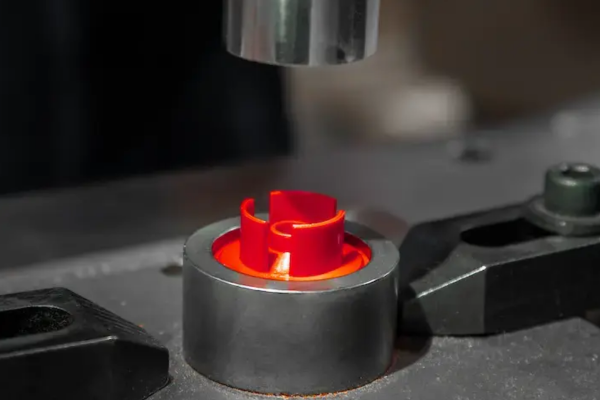
Provides injection molding for prototypes and custom parts, emphasizing expert support, competitive pricing, and faster production cycles.
Get reliable vacuum casting services for high-quality prototypes and production parts at competitive prices. XinCheng offers highly detailed casting parts with consistent quality.
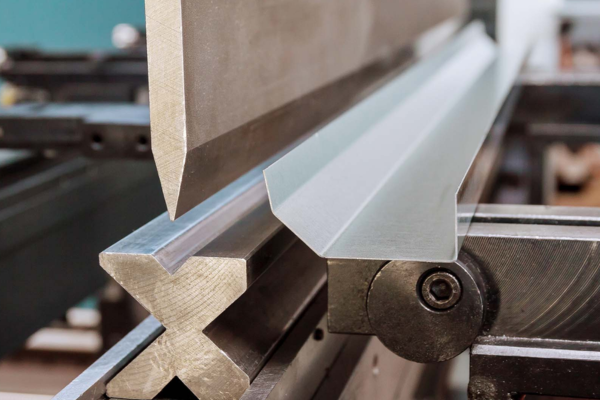
Uses cutting, bending, and forming techniques to produce precision metal components suited for industrial, commercial, and manufacturing applications.
Specialist Industries
Bring Your Designs to Life with XC Machining
- Expertise Shared Widely
- Market Reach Expanded
- Advanced Technology Integrated
- Collaborative Innovation Opportunities
- All uploads are secure and confidential
Stereolithography (SLA) FAQs
What Tolerance Does XC Machining Hold for SLA 3D Printed Parts?
XC Machining SLA achieves ±0.1 mm dimensional tolerance on parts up to 100 mm in XY. For parts larger than 100 mm, tolerance is ±0.2% of nominal dimension. Z-axis (build direction) tolerance: ±0.1–0.2 mm, dependent on layer height selected (25 μm, 50 μm, or 100 μm). Additional 0.3–0.6% resin shrinkage occurs during UV post-curing — XC Machining compensates with pre-scaling offsets on critical dimensions.
What Is the Smoothest Surface Finish Achievable with SLA 3D Printing?
As-printed SLA surface finish: Ra 0.5–2 μm — the smoothest of any polymer 3D printing process. After sanding (120–2000 grit) and priming: Ra 0.1–0.4 μm — equivalent to injection-molded ABS. After diamond polishing on clear resin: Ra ≤ 0.1 μm — optical-grade for lens surfaces. FDM comparison: Ra 6–16 μm as-printed. SLS comparison: Ra 6–12 μm as-printed. SLA is the only polymer 3D printing process routinely used as a master for vacuum casting silicone molds.
What Resins Are Available for SLA 3D Printing at XC Machining?
XC Machining SLA offers: standard resin (65 MPa tensile, 5–10% elongation — visual prototypes and display models); tough/ABS-like (55 MPa, 25–35% elongation — snap fits and functional enclosures); clear/transparent (65 MPa, optical-grade clarity — lenses and fluid models); flexible/PP-like (Shore A 80, 70–130% elongation — gaskets and living hinges); high-temperature (HDT 220°C — mold inserts); and castable (0% ash burnout — investment casting masters for jewelry and precision metal parts).
Does SLA 3D Printing Produce Watertight Parts?
Yes. SLA parts with wall thickness ≥ 1.5 mm are reliably watertight — the UV curing process fuses each resin layer into a continuous, pore-free solid with no inter-layer gaps. Wall thickness ≥ 2.0 mm is recommended for pressurized fluid applications. SLA watertight parts are used for microfluidic device prototypes, waterproof enclosures, fluid visualization models, and biomedical flow-path testing — applications where FDM and SLS parts (porous) would leak.
What Is the Maximum Part Size XC Machining Can SLA 3D Print?
XC Machining’s standard SLA build volume: 335 × 200 × 300 mm per build. Large-format SLA build volume: 736 × 635 × 533 mm for oversize parts. Parts larger than 736 × 635 × 533 mm are split into sections, bonded with structural adhesive, and seam-sanded to produce seamless large models. Splitting is standard for architectural models, large display models, and full-scale industrial design mockups.
What Is the Lead Time for SLA 3D Printed Parts at XC Machining?
Lead time: 1–3 business days for prototype quantities (1–10 parts in standard or tough resin). 3–7 business days for batches of 10–50+ parts or parts requiring multi-step post-processing (sanding, priming, painting, clear coating). Rush delivery: 24 hours for simple standard resin parts with as-printed finish. DFM review and quote returned within 12 hours of STL or STEP file upload from Dongguan, China.
When Should I Choose SLA Instead of SLS or FDM for My 3D Printed Prototype?
Choose SLA when: (1) surface finish is critical — Ra 0.5–2 μm as-printed for presentations, photography, or vacuum casting masters; (2) tight tolerance is required — ±0.1 mm vs SLS ±0.3 mm; (3) clear or transparent material is needed — SLA is the only polymer 3D printing process offering optical-grade clear resin; (4) watertight walls are required — SLA is sealed, SLS and FDM are porous; (5) fine detail below 1.0 mm must be resolved — SLA at 25 μm layers captures textures, logos, and micro-features that SLS and FDM cannot.