Plastic Injection Molding Services
XC Machining produces custom plastic injection molded parts in ABS, PC, Nylon, PP, PEEK, TPE, LSR, and 50+ thermoplastic and elastomeric resins on presses from 50 to 800 tons with ±0.05 mm tolerances.
- All uploads are secure and confidential
What is Plastic Injection Molding?
Plastic injection molding heats thermoplastic resin pellets to 180–400°C (depending on material), then injects the molten plastic into a steel or aluminum mold cavity under 500–2,000 bar pressure. The plastic fills the cavity, cools, and solidifies into the finished part geometry within 15–60 second cycle times.
XC Machining injection molds plastic parts for automotive interiors, consumer electronics housings, medical device enclosures, industrial equipment covers, and packaging components. Press capacity ranges from 50 tons (small connectors, 5g parts) to 800 tons (large enclosures, 3kg+ parts).
Production volumes range from 500 prototype units in aluminum rapid tooling to 1,000,000+ annual parts in hardened steel molds with hot runner systems for zero-waste manufacturing.
What Are the Key Benefits of Plastic Injection Molding?
Benefit | Description |
High Efficiency | Cycle times of 15–60 seconds per part. A single 4-cavity mold produces 5,000–7,000 parts per 24-hour shift. |
Design Flexibility | Injection molding produces wall thickness from 0.5 mm, living hinges, snap fits, undercuts with lifters/slides, and internal ribs — all in one shot. |
Cost-Effectiveness | Per-part cost drops 40–70% above 5,000 units compared to CNC machining, due to mold amortization and automated production. |
Material Variety | 50+ resins: commodity (ABS, PP, PE, PS), engineering (PC, Nylon, PBT, POM), high-performance (PEEK, PEI, PPS), and elastomers (TPE, TPU, LSR). |
Precision & Consistency | ±0.05 mm standard tolerance with ±0.005 mm part-to-part repeatability across production runs of 10,000+ parts. |
Reduced Waste | Cold runner regrind recycles 15–25% of material. Hot runner systems eliminate runner waste entirely, achieving 98%+ material utilization. |
Automation | Robotic part removal, automated stacking, and in-line vision inspection reduce labor to 1 operator per 4–6 presses. |
Enhanced Strength | Glass fiber (10–40% GF), carbon fiber, mineral fillers, and impact modifiers increase tensile strength, stiffness, and heat resistance of base resins. |
Scalability | Aluminum rapid molds produce 500–10,000 parts. Steel production molds rated 100,000–1,000,000+ shots scale to any volume. |
Speed of Production | Mold-to-market in 3–5 weeks: 15-day aluminum mold + 5–10 days production. Steel production tooling in 25–35 days. |
Surface Finish | SPI A-1 mirror (Ra 0.012 μm) through D-3 textured (Ra 3.2 μm) directly from the mold. Mold-Tech and VDI custom textures available. |
Low Labor | One operator monitors 4–6 automated presses. Parts eject, stack, and gate-trim automatically. Total labor content per part: 2–5 seconds. |
Sustainability | Closed-loop regrind of TPE, PP, and ABS runners. Bio-based PLA and recycled PET (rPET) available for eco-conscious applications. |
Customization | Pantone and RAL color matching, in-mold labeling (IML), in-mold decoration (IMD), multi-material two-shot molding, and custom texture patterns. |
Why Should You Choose XC Machining for Plastic Injection Molded Parts?
XC Machining provides end-to-end plastic injection molding: DFM review, Moldflow simulation, in-house mold design and fabrication, T1 sample trials, and production molding on 50–800 ton presses with ISO 9001:2015 certified quality.

XC Machining operates injection molding presses from 50 tons (small connectors, buttons, and caps weighing 1–10g) to 800 tons (large housings, panels, and enclosures weighing 500g–3kg+). All presses feature servo-hydraulic drives for energy efficiency and precise pressure control.

Commodity: ABS, PP, PE, PS, PVC. Engineering: PC, Nylon 6/66, PBT, POM, PMMA. High-Performance: PEEK, PEI (Ultem), PPS, LCP. Elastomers: TPE, TPU, LSR. Glass-filled, carbon-filled, flame-retardant, and medical-grade compounds available for all engineering resins.

Every plastic injection molding project receives Moldflow simulation analyzing fill pattern, weld line location, air trap positions, cooling uniformity, warpage prediction, and gate location optimization. DFM report and Moldflow results delivered within 48 hours of CAD upload.

Mold cavity finishes per SPI: A-1 diamond polish (Ra 0.012 μm, optical), B-1 semi-gloss (Ra 0.05 μm), C-1 matte (Ra 0.35 μm), D-1 textured (Ra 0.8 μm). Mold-Tech and VDI custom textures for branded surfaces.
What Types of Plastic Parts Does XC Machining Injection Mold?
XC Machining injection molds plastic parts across these categories: consumer electronics housings, automotive interior panels, medical device enclosures, industrial equipment covers, packaging components, and precision connectors. Gallery images show actual production parts.
What Plastic Resins Does XC Machining Injection Mold?
XC Machining injection molds 50+ thermoplastic resins, engineering polymers, and elastomers. Each material below includes shrinkage range, processing temperature, and typical applications to help engineers select the right resin. Glass-filled, carbon-filled, flame-retardant (UL 94 V-0), and medical-grade compound options are available for all engineering resins.
General-purpose, high-impact, flame-retardant (UL 94 V-0), and medical-grade ABS. Shrinkage: 0.4–0.7%. Melt temp: 220–260°C. Applications: electronics housings, automotive trim, appliance panels, medical device covers.
PA6, PA66, PA6 GF30 (30% glass-filled), PA66 GF50 (50% glass-filled). Shrinkage: 0.8–2.0% (unfilled), 0.3–0.8% (glass-filled). Melt temp: 230–290°C. Applications: structural automotive connectors, gear housings, industrial brackets, cable ties.
Homopolymer, copolymer, random copolymer, glass-filled, and talc-filled PP. Shrinkage: 1.0–2.5%. Melt temp: 200–260°C. Applications: packaging containers, automotive battery covers, medical disposables, food-contact housings.
Homopolymer (Delrin), copolymer, glass-filled POM. Shrinkage: 1.8–2.5%. Melt temp: 190–210°C. Applications: gears, bearings, conveyor components, fuel system parts, snap-fit mechanisms.
LDPE, HDPE, LLDPE, UHMWPE. Shrinkage: 1.5–3.5%. Melt temp: 160–260°C. Applications: packaging, chemical-resistant containers, food-grade components, low-friction wear parts.
TPE (Shore A 20–90), TPU (Shore A 60–95), LSR (Shore A 10–70). Shrinkage: 0.5–2.0%. Melt temp: 180–230°C (TPE/TPU), room-temp injection + 150–200°C cure (LSR). Applications: soft-touch grips, seals, gaskets, medical silicone components, overmold layers.
General-purpose, optical-grade (92% light transmittance), flame-retardant (UL 94 V-0), and medical-grade PC. Shrinkage: 0.5–0.7%. Melt temp: 280–320°C. Applications: transparent lenses, LED diffusers, flame-retardant electrical enclosures, medical device housings.
PET (crystalline), PETG (glycol-modified, amorphous), HCPET (high-crystallinity). Shrinkage: 0.2–0.5% (PETG), 1.5–2.5% (PET). Melt temp: 260–290°C. Applications: bottles, food-contact packaging, transparent displays, recycled-content (rPET) sustainable packaging.
What Surface Finishes Are Available for Plastic Injection Molded Parts?
Plastic injection molded part surfaces are determined by the mold cavity finish (applied before molding) and optional post-molding treatments. XC Machining offers SPI standard mold finishes A-1 through D-3 plus secondary cosmetic and functional treatments.
Mirror polish achieved by diamond-buffing the mold cavity to Ra 0.012–0.05 μm. Produces optical-grade clarity on PC, PMMA, and transparent resins. Used for lenses, light pipes, display covers, and cosmetic consumer electronics.
Stone-polished mold cavity at Ra 0.05–0.1 μm. Produces smooth semi-gloss surface on molded parts. Standard finish for functional industrial parts, medical device housings, and non-optical consumer products.
Stone-finished mold cavity at Ra 0.35–1.0 μm. Produces uniform matte surface that hides minor sink marks and flow lines. Commonly specified for automotive interior panels, industrial equipment covers, and medical devices.
Sandblasted mold cavity at Ra 0.8–3.2 μm. Produces rough textured surface for grip and cosmetic purposes. Draft angle must increase by 1.5° per 0.025 mm of texture depth to ensure part release.
Chemical etching or EDM texturing applied to mold cavity steel produces custom patterns: leather grain (Mold-Tech MT-11010), geometric stipple, wood grain, or branded patterns. Ra 1.6–12.5 μm depending on pattern depth and style.
Post-molding ink transfer process for adding logos, text, icons, and multi-color graphics to molded plastic surfaces. Compatible with ABS, PC, PP, and Nylon. Pantone color matching available.
Post-molding spray application of primer + topcoat for custom colors (RAL/Pantone matching), soft-touch coatings, UV-resistant clear coats, and EMI shielding conductive paints on plastic parts.
Permanent marking of serial numbers, logos, QR codes, and regulatory symbols directly onto molded plastic surfaces without ink or consumables. No additional material layer — marks are created by surface carbonization or foaming.
Pre-printed film is placed in the mold cavity before injection. The molten plastic bonds to the film during molding, producing a permanently decorated surface in a single step — eliminates secondary printing or labeling.
Our Plastic Injection Molding Prototype Manufacturing Capabilities
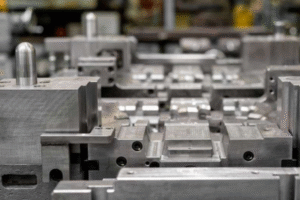
Provides injection molding for prototypes and custom parts, emphasizing expert support, competitive pricing, and faster production cycles.
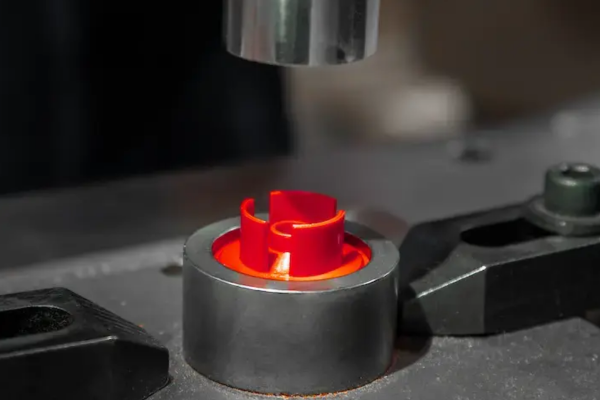
Get reliable vacuum casting services for high-quality prototypes and production parts at competitive prices. XinCheng offers highly detailed casting parts with consistent quality.
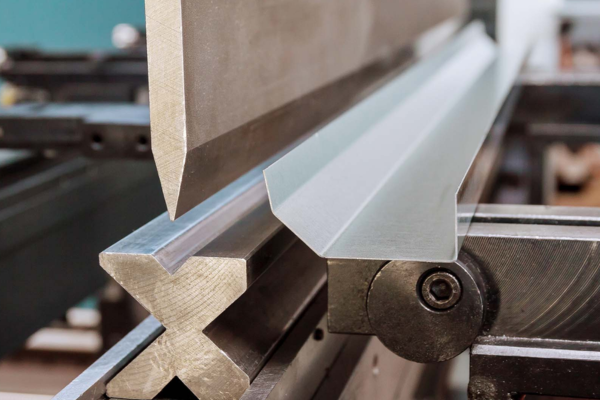
Uses cutting, bending, and forming techniques to produce precision metal components suited for industrial, commercial, and manufacturing applications.
Specialist Industries
Bring Your Designs to Life with XC Machining
- Expertise Shared Widely
- Market Reach Expanded
- Advanced Technology Integrated
- Collaborative Innovation Opportunities
- All uploads are secure and confidential
Plastic Injection Molding Frequently Asked Questions
What Processing Technologies Does XC Machining Use for Plastic Injection Molding?
XC Machining presses feature servo-hydraulic drives for ±0.5% shot weight repeatability, closed-loop barrel temperature control (±1°C across 4–6 heating zones), cavity pressure transducers for real-time pack/hold optimization, and robotic part removal with in-line vision inspection. Press sizes range from 50 to 800 tons with shot weights from 1g to 3,000g.
How Does XC Machining Maintain Injection Molds for Consistent Production Quality?
XC Machining follows a documented mold maintenance schedule: preventive cleaning and lubrication every 5,000–10,000 shots, cavity surface inspection for wear and corrosion after every production run, ejector pin and slide mechanism verification, cooling channel flushing to prevent scale buildup, and parting line inspection for flash development. All maintenance is logged with shot count tracking per mold.
How Does XC Machining Handle Complex Plastic Part Geometries?
Complex geometry management:
(1) Moldflow simulation verifies fill pattern and predicts weld line locations before mold fabrication,
(2) lifters and slides enable undercuts and internal features without secondary operations,
(3) conformal cooling channels maintain uniform mold temperature (±2°C) across complex shapes,
(4) sequential valve gating controls fill progression on large or multi-zone parts, and
(5) gas-assist injection creates hollow sections for thick-wall parts without sink marks.
What Cycle Times Does XC Machining Achieve for Plastic Injection Molding?
Typical cycle times: thin-wall parts (0.5–1.0 mm wall) in 10–20 seconds, standard parts (1.5–2.5 mm wall) in 20–45 seconds, thick-wall parts (3.0–4.0 mm) in 45–90 seconds. XC Machining optimizes cycle time through: conformal cooling (reduces cooling time 20–40%), optimized gate size and location (reduces fill time), and robotic part removal (saves 3–5 seconds vs manual extraction per cycle).
How Does XC Machining Scale Production Volume for Plastic Injection Molding?
Three tooling tiers enable volume flexibility:
(1) aluminum rapid molds (15-day delivery, 5,000–10,000 shots) for prototyping and design validation,
(2) P20 steel bridge molds (20-day delivery, 100,000+ shots) for initial market launch, and
(3) H13/S136 hardened steel production molds (25–35 days, 500,000–1,000,000+ shots) for full-scale manufacturing. Multi-cavity molds (2–64 cavities) multiply output per cycle at any volume tier.
What Makes XC Machining Different from Other Plastic Injection Molding Suppliers?
Three differentiators:
(1) vertical integration — XC Machining designs molds, fabricates mold tooling (CNC + EDM), and runs production molding on our own presses, eliminating the handoff risk between separate mold maker and molder,
(2) CNC machining capability — we CNC machine prototype parts from the same resin for design verification before committing to mold tooling, and
(3) material breadth — we mold high-performance resins (PEEK at 400°C, PEI/Ultem, PPS) that many competitors cannot process.