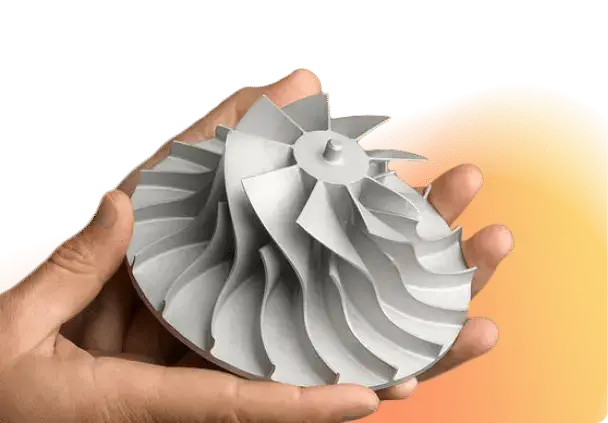
Waterjet Cutting Services
XC Machining abrasive waterjet cutting uses a 60,000–90,000 PSI water-garnet stream to cut steel up to 150 mm, aluminum up to 100 mm, titanium up to 80 mm, stone up to 200 mm, glass, composites, and rubber — all without heat-affected zones (HAZ). Standard tolerance: ±0.1 mm. Kerf width: 0.76–1.0 mm. No material structural change, no thermal distortion, no HAZ. Parts in 3–5 business days.
- All uploads are secure and confidential
What Is Abrasive Waterjet Cutting at XC Machining?
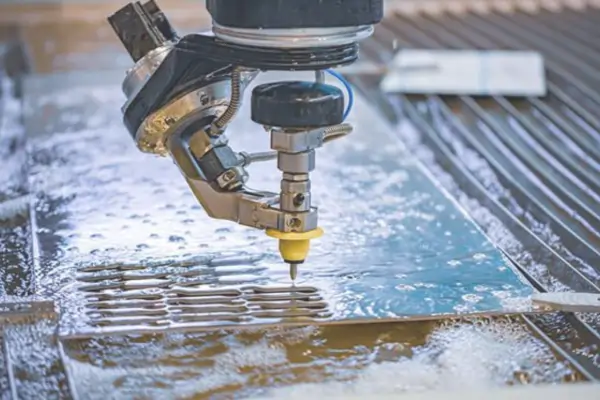
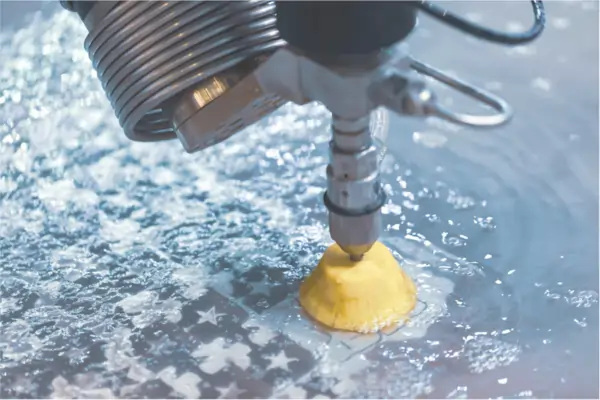
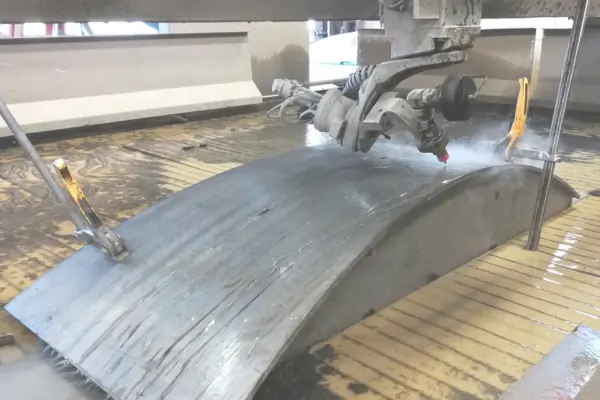
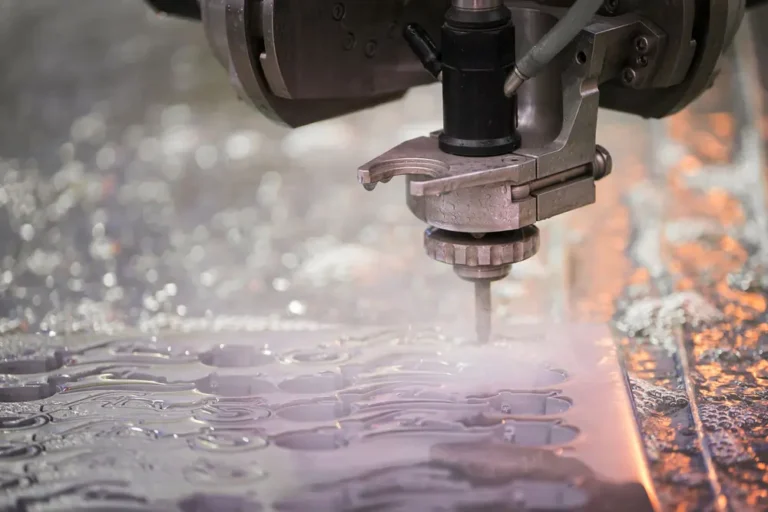
Abrasive waterjet cutting forces water at 60,000–90,000 PSI through a sapphire or diamond orifice (0.25–0.35 mm diameter) to accelerate garnet abrasive (80 mesh, 0.5–1.5 lb/min) through a mixing tube onto the workpiece, eroding material along the CNC-programmed cut path without heat, maintaining full material mechanical properties throughout.
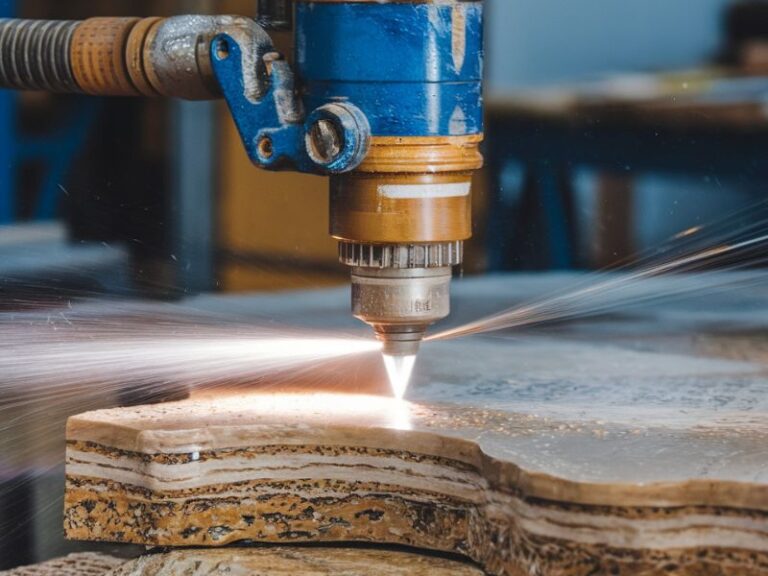
XC Machining operates two waterjet cutting modes. Pure waterjet (water only, 20,000–60,000 PSI) cuts soft materials — rubber, foam, gaskets, textiles, and thin plastics — at high speed with a kerf as narrow as 0.1–0.3 mm. Abrasive waterjet (water + garnet, 60,000–90,000 PSI) cuts hard materials — steel, aluminum, titanium, stone, glass, and composites — up to 150 mm thick, with a kerf of 0.76–1.0 mm and zero heat-affected zone.
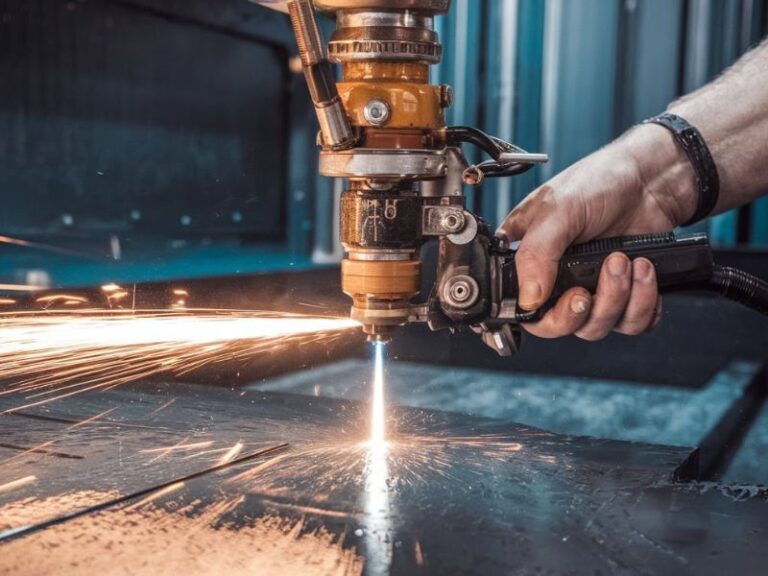
Because waterjet cutting is a cold process, it produces no heat-affected zone (HAZ), no microstructural changes, no work hardening, and no residual thermal stress in the cut part. This makes waterjet cutting essential for heat-sensitive materials — titanium alloys, hardened tool steels, carbon fiber composites, tempered glass, and aluminum alloys where laser or plasma cutting would alter material properties.
Get Custom Waterjet Cut Parts Supplier for All Industries
We are a custom waterjet cut parts supplier, offering services according to your demands. Our tailored water jet cutting services are ideal applications in creating component parts that are accurate and have intricate varieties. Whether it is prototypes, or end use parts, our team dives deep in collaboration with you to ensure that there is functionality and beauty in the parts.
For fast-turnaround industries, XC Machining can provide the company with rapid waterjet cutting service for production runs. We can manufacture high quantities of parts in a short time using our waterjet technology without affecting the quality.
Why Choose XC Machining for Waterjet Cutting Services?
XC Machining abrasive waterjet cutting produces zero heat-affected zone on steel up to 150 mm, aluminum up to 100 mm, and titanium up to 80 mm — at ±0.1 mm standard tolerance with garnet 80-mesh abrasive at 60,000–90,000 PSI. DFM review within 12 hours. ISO 9001:2015 certified.

Waterjet cutting is a cold process — no heat, no HAZ, no microstructural change, no thermal stress, no warping. Material mechanical properties (tensile strength, hardness, fatigue resistance) remain identical after waterjet cutting. Critical for titanium Grade 5 (aerospace brackets), 304 stainless (medical housings), hardened tool steel (D2, H13), and carbon fiber composites — materials where laser or plasma cutting alters properties and triggers rework.

XC Machining waterjet cuts steel to 150 mm, aluminum to 100 mm, titanium to 80 mm, stone and granite to 200 mm, tempered glass to 50 mm, CFRP composites to 30 mm, and rubber and foam to 100 mm — in a single operation with no tool changes between materials.

XC Machining's 5-axis waterjet cutting head automatically tilts to compensate for jet stream taper on material thickness above 25 mm — producing perpendicular walls (0° taper) on thick steel and aluminum plates. Eliminates secondary machining to correct taper angle on precision structural parts and mold components.

Upload DXF or STEP file. XC Machining engineers return DFM review within 12 hours: minimum hole size, minimum internal corner radius, taper risk by thickness, material certification requirement, and cut quality grade recommendation for your tolerance and surface finish specification.
Waterjet Cutting Tolerances
| General Dimensional Tolerance | ±0.076 mm to ±0.254 mm (±0.003″ to ±0.010″) | Tighter tolerances achieved with fine abrasive and slow cutting speeds. |
|---|---|---|
| Cut Edge Quality (Kerf Taper) | ±1° or better | Kerf taper increases on thicker materials; can be minimized with taper control. |
| Minimum Hole Size | ≥ material thickness | Holes smaller than material thickness may be inaccurate or incomplete. |
| Minimum Feature Size | 0.5 – 1.0 mm | Thin walls, sharp corners, and narrow slots must be designed cautiously. |
| Minimum Kerf Width | ~0.8 – 1.2 mm (0.032″ – 0.047″) | Depends on nozzle size and abrasive type. |
| Part-to-Part Repeatability | ±0.025 mm (±0.001″) | High-end machines with controlled conditions. |
| Edge Finish Quality (Q Levels) | Q1 to Q5 | Q1 = roughest/fastest; Q5 = smoothest/slowest cut. |
| Material Thickness Range | Up to 300 mm+ (12″+) | Can cut very thick or layered materials without distortion. |
| Heat-Affected Zone (HAZ) | None | Ideal for temperature-sensitive materials like titanium or composites. |
| Flatness of Cut Parts | Maintained | Since no heat is applied, flatness is preserved unless material stress is present. |
Materials for Waterjet Cutting Parts
Leading companies and engineers rely on XC Machining for rapid iterations and durable, high-quality parts. Whether it’s for prototyping or full-scale production, our wide range of materials ensures we meet the unique requirements of any CNC Machining Services project with precision and speed.
Aluminum (5052, 6061, 7075), Stainless Steel (304, 316, 430), Mild/Carbon Steel (A36, 1018, 1045), Copper (C110, C101), Brass (C260, C464), Titanium (Grade 2, Grade 5 – Ti-6Al-4V), Tool Steel (D2, A2, O1, H13), Inconel (625, 718), Hastelloy, Monel
Acrylic (PMMA), Delrin (POM/Acetal), Nylon (PA6, PA66), Polycarbonate (PC), UHMW, HDPE, LDPE PVC (Rigid), PTFE (Teflon),
Carbon Fiber Reinforced Polymer (CFRP), Glass Fiber Reinforced Polymer (GFRP), Phenolic Resin Sheets
Granite, Marble, Slate, Ceramic Tile, Porcelain, Glass (Tempered, Laminated, Annealed)
What Surface Finishes Does XC Machining Apply to Waterjet-Cut Parts?
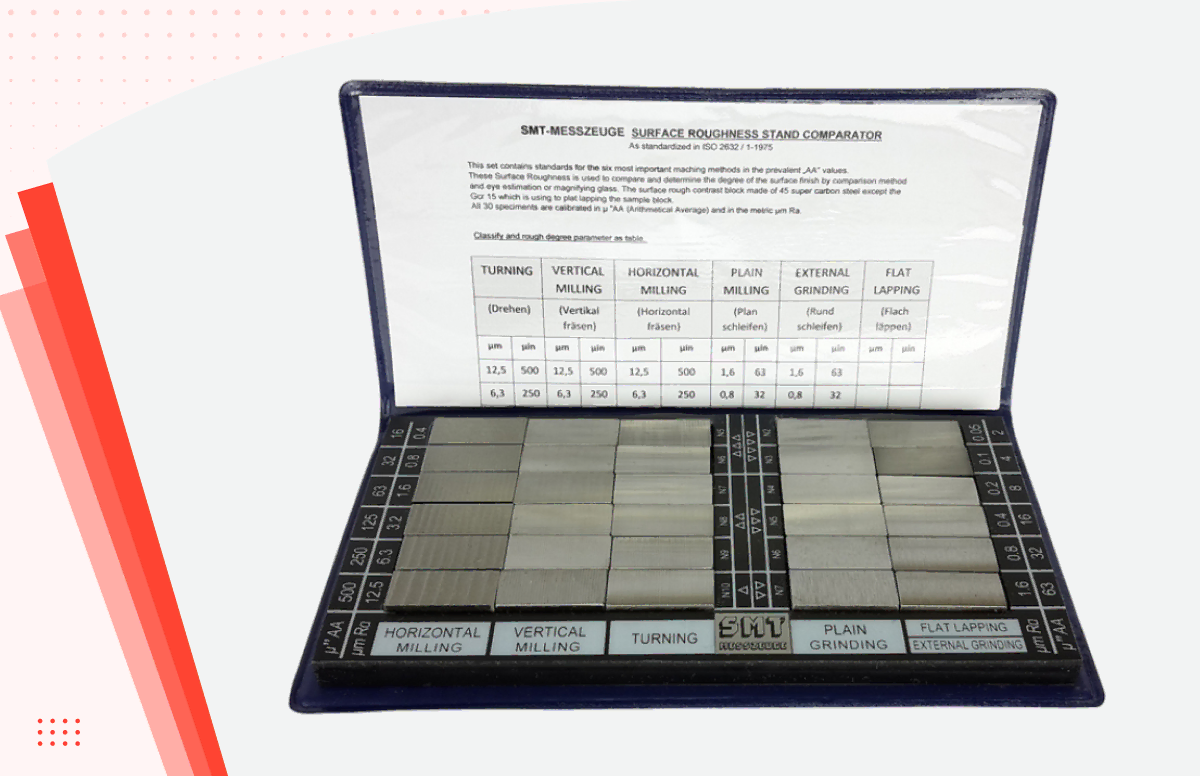
XC Machining applies deburring (as-cut edge Ra 1.6–12.5 μm depending on quality grade), brushing (Ra 0.4–0.8 μm), polishing (Ra 0.1–0.4 μm), anodizing (Type II 5–25 μm film), powder coating (60–120 μm), and painting (RAL/Pantone matched) to waterjet-cut aluminum, steel, stainless steel, and titanium parts.
Waterjet-cut edge produced at Q3–Q5 quality grade. Edge roughness: Ra 1.6–3.2 μm (Q4–Q5, suitable for most functional applications without secondary finishing). Q1–Q2 edges: Ra 6.3–12.5 μm (require deburring or grinding for assembly use). No heat tint, no oxide layer, no HAZ on any grade.
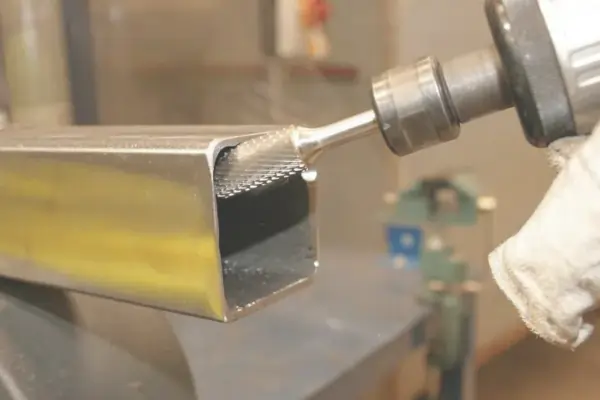
Vibratory or hand deburring removes residual burrs and sharp arris from waterjet-cut profiles. Post-deburring edge roughness: Ra 1.6–3.2 μm. Applied to Q1–Q3 cut parts before assembly or secondary processing. Included in standard waterjet cutting lead time for production orders at no additional scheduling delay.
Directional abrasive brushing produces a uniform satin texture across the cut part surface. Surface roughness: Ra 0.4–0.8 μm. Applied to aluminum, stainless steel, and titanium waterjet-cut parts for consumer electronics enclosures, architectural panels, and medical device housings requiring a consistent grain direction without polishing cost.
Mechanical polishing produces semi-mirror (Ra 0.1–0.4 μm) or mirror finish (Ra ≤ 0.1 μm) on stainless steel and aluminum waterjet-cut parts. Used for food processing equipment, medical device components, and architectural decorative panels where surface reflectivity and contamination resistance are functional requirements.
Type II anodizing (5–25 μm film, Ra 0.4–0.8 μm, Vickers hardness 200–300 HV) and Type III hardcoat anodizing (25–50 μm film, Ra 0.4–1.6 μm, Vickers hardness 400–600 HV) for waterjet-cut aluminum parts. Clear, black, blue, red, and gold available. Salt spray resistance: 336 hours (Type II), 1,000+ hours (Type III). Applied after deburring and pre-treatment.
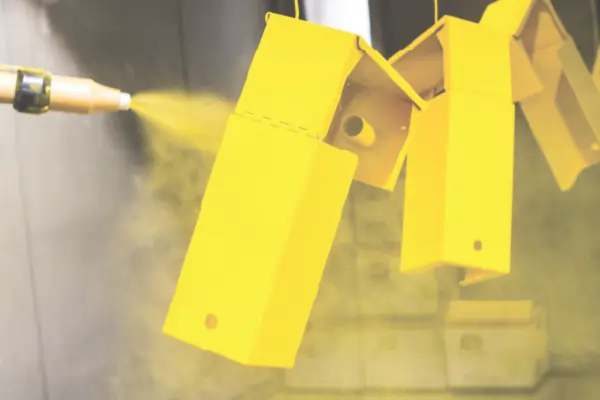
Thermosetting polyester powder coat applied electrostatically and cured at 180–200°C. Film thickness: 60–120 μm. RAL and Pantone color matching. Salt spray resistance: 500–1,000 hours. Gloss levels: matte (10–30 GU), satin (50–60 GU), gloss (85+ GU). Applied to waterjet-cut carbon steel, stainless steel, and aluminum structural, architectural, and industrial parts.
Our Waterjet Cutting Prototype Manufacturing Capabilities
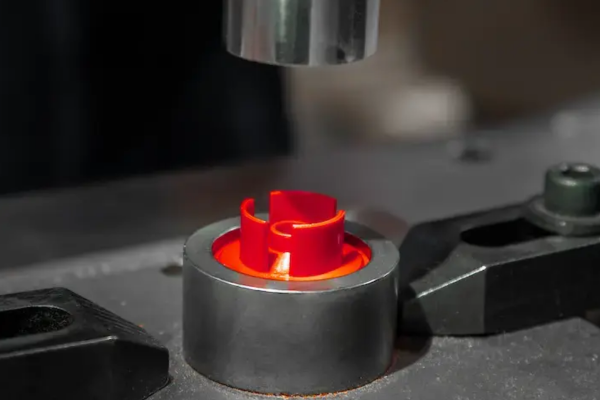
Provides injection molding for prototypes and custom parts, emphasizing expert support, competitive pricing, and faster production cycles.
Get reliable vacuum casting services for high-quality prototypes and production parts at competitive prices. XinCheng offers highly detailed casting parts with consistent quality.
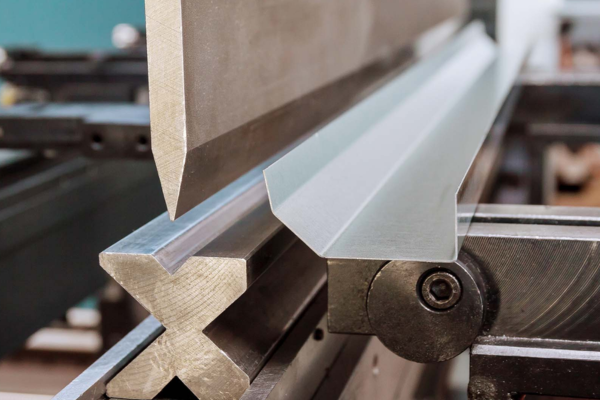
Uses cutting, bending, and forming techniques to produce precision metal components suited for industrial, commercial, and manufacturing applications.
Specialist Industries
Bring Your Designs to Life with XC Machining
- Expertise Shared Widely
- Market Reach Expanded
- Advanced Technology Integrated
- Collaborative Innovation Opportunities
- All uploads are secure and confidential
Prototyping Manufacturing FAQs
What Materials Can XC Machining Cut with Abrasive Waterjet?
XC Machining abrasive waterjet cuts: carbon steel (150 mm max), stainless steel 304 and 316L (100 mm), aluminum 5052 and 6061 (100 mm), titanium Grade 2 and Grade 5 (80 mm), brass (80 mm), copper (60 mm), hardened tool steel D2 and H13 (80 mm), granite and marble (200 mm), tempered glass (50 mm), CFRP composites (30 mm), rubber and foam (pure waterjet, 100 mm), and acrylic (50 mm) — without heat-affected zones.
What Tolerance Does XC Machining Hold for Waterjet-Cut Parts?
Standard positional tolerance: ±0.1 mm on material up to 25 mm thick. Tight tolerance: ±0.05 mm available on parts ≤ 500 × 500 mm at Q4–Q5 cut quality. Precision tolerance: ±0.025 mm for small parts under 200 × 200 mm on thin material (≤ 10 mm). Kerf width: 0.76–1.0 mm (abrasive) — XC Machining compensates kerf in nesting software; no manual kerf offset needed in your DXF file.
What Is the Difference Between Pure Waterjet and Abrasive Waterjet Cutting?
Pure waterjet (water only, 20,000–60,000 PSI) cuts soft materials — rubber, foam, gaskets, textiles — at high speed with a kerf of 0.1–0.3 mm. No abrasive, no garnet, no mixing tube. Abrasive waterjet (water + garnet, 60,000–90,000 PSI) cuts hard materials — steel, aluminum, titanium, glass, stone — up to 150 mm. XC Machining operates both modes; the cutting mode is selected automatically based on material type and thickness.
Does Waterjet Cutting Leave a Heat-Affected Zone on the Cut Material?
No. Waterjet cutting is a cold process — water temperature rises less than 5°C at the cut zone. There is no heat-affected zone (HAZ), no microstructural change, no work hardening, no thermal stress, and no discoloration. Material tensile strength, hardness, and fatigue resistance are identical before and after waterjet cutting. This makes waterjet the required cutting method for titanium alloys, CFRP composites, tempered glass, and hardened steels.
What Is the Maximum Thickness XC Machining Can Cut with Waterjet?
Maximum cutting thickness by material: carbon steel 150 mm, stainless steel 100 mm, aluminum 100 mm, titanium 80 mm, hardened tool steel 80 mm, brass 80 mm, copper 60 mm, granite and marble 200 mm, tempered glass 50 mm, CFRP composites 30 mm, acrylic 50 mm, rubber and foam 100–150 mm. Thicker sections above 50 mm require 5-axis taper compensation to maintain perpendicular walls.
What Is the Lead Time for Waterjet-Cut Parts at XC Machining?
Standard lead time: 3–5 business days (includes 1-day DFM review, 1-day material preparation and nesting, 1–2 days cutting, 1 day deburring, inspection, and packaging). Rush delivery: 2–3 business days for simple flat profiles on commonly stocked materials (carbon steel, stainless 304, aluminum 5052). Post-processing — anodizing, powder coating, painting — adds 2–5 business days. DFM review and quote returned within 12 hours of file upload.
When Should I Choose Waterjet Cutting Instead of Laser Cutting?
Choose waterjet over laser when: (1) material is heat-sensitive — titanium, CFRP, hardened steel, tempered glass, where laser HAZ alters properties; (2) material thickness exceeds laser limits (steel > 25 mm, aluminum > 15 mm); (3) material is non-conductive — stone, granite, glass, rubber, foam; (4) mixed-material nesting is needed — waterjet cuts metal and composite in the same job without tool changes. Choose laser for thin metal (≤ 15 mm) where cutting speed and edge smoothness are the priority.