
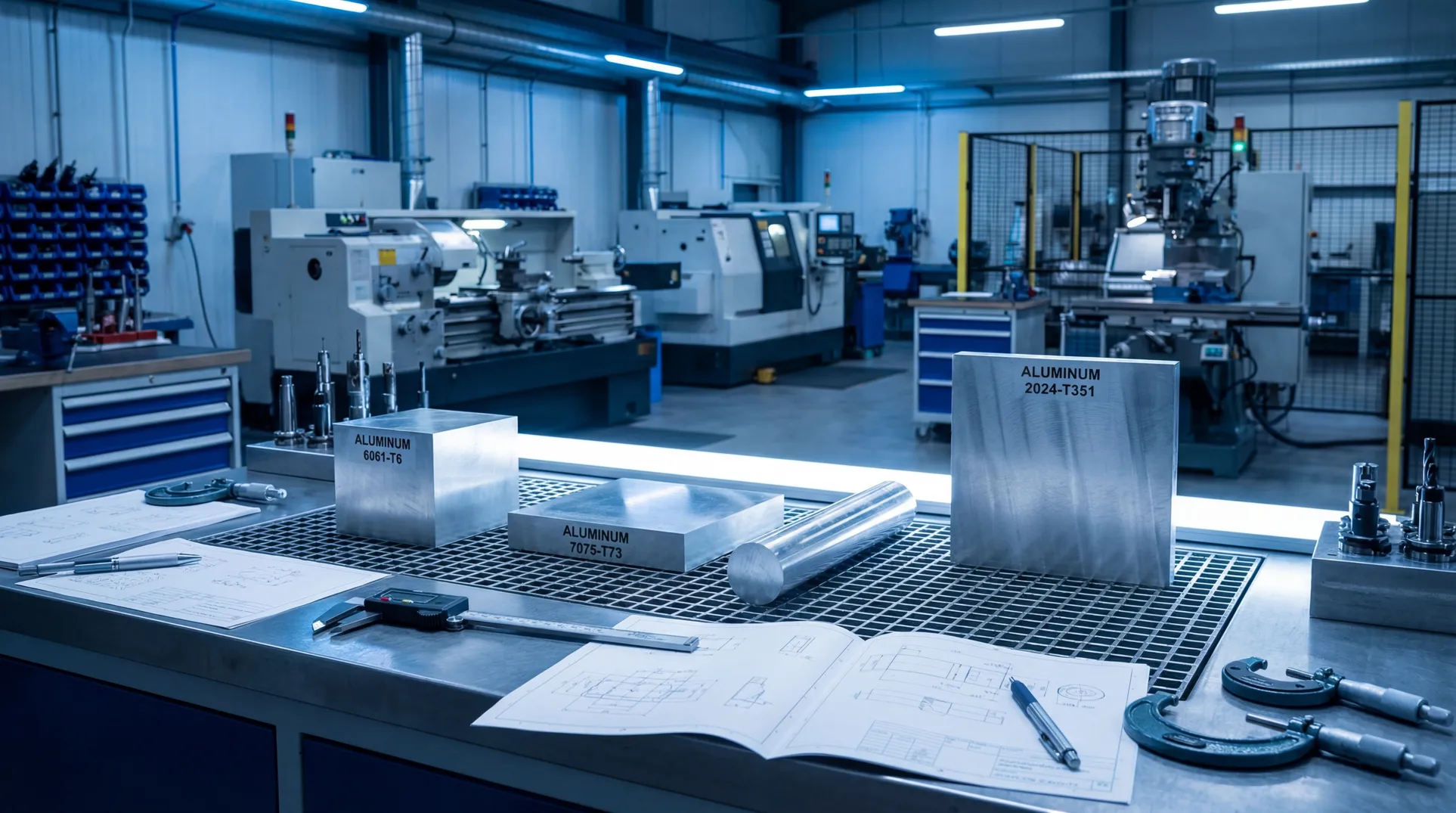
No, 7075 aluminum is not hard to machine. It actually has an excellent machinability rating and produces clean, well-broken chips, often cutting more easily than softer alloys that tend to gum up. The real challenges with 7075 are tool wear, material cost, and distortion from residual stress, not cutting difficulty.
7075 is roughly twice as strong as 6061, which wears tooling faster and can cause thin parts to warp as machining relieves internal stress. Specifying the stress-relieved T651 plate temper and a roughing-then-finishing strategy solves most of those problems.
1. Is 7075 actually difficult to machine?
7075 is one of the more machinable aluminum alloys, not a difficult one. Because it is hard and strong, chips break cleanly and the material does not smear the way soft, gummy alloys can. Shops routinely achieve excellent surface finishes and tight tolerances on 7075 with standard carbide tooling.
The myth that it is hard to machine usually comes from confusing hardness with machinability: a harder material can be easier to cut cleanly even though it stresses the tool more. So the cutting itself is straightforward. The complications show up around the edges of the job, in tool life, material price, and how the part behaves as metal is removed.
2. How does 7075 machinability compare to 6061?
Both 6061 and 7075 machine well, but 7075’s higher strength produces even better chip control at the cost of faster tool wear. 6061 is the everyday workhorse and the easier alloy on tooling and budget. 7075 cuts cleanly and finishes beautifully, but its hardness means cutting edges dull sooner and the material costs significantly more.
If your part does not need 7075’s strength, 6061 is the more economical choice. For a detailed strength and application breakdown, see our guide on 7075 vs 6061 aluminum CNC machining.
| Factor | 6061-T6 | 7075-T6 |
| Relative machinability | Very good | Very good (cleaner chips) |
| Tool wear | Lower | Higher |
| Material cost | Lower | Notably higher |
| Tendency to warp | Low | Higher (residual stress) |
| Yield strength | ~276 MPa (40 ksi) | ~503 MPa (73 ksi) |
Note: Typical published values for the T6 temper.
3. The real challenges: tool wear, cost, and warping
The three major things to plan for with 7075 are accelerated tool wear, higher material cost, and stress-induced distortion.
-
Tool Wear: Manageable with sharp carbide tooling and proper coolant, but expect to change inserts or end mills more often than on 6061.
-
Material Cost: Simply higher because 7075 contains zinc as its main alloying element and commands a premium, so it should be specified only where its strength is needed.
-
Distortion: This is the subtle challenge—7075 plate carries internal residual stress, and removing material unbalances that stress, which can bow or twist a thin part after machining.
A fourth consideration is corrosion and weldability. 7075 has lower corrosion resistance than 6061 and is generally considered not weldable by conventional methods, so it is chosen for strength rather than for welded or marine assemblies.
4. How do I avoid distortion on 7075 parts?
Specify stress-relieved plate (the T651 temper) and machine in stages so stress releases evenly. The T651 temper is stretched after solution heat treatment to relieve internal stress, which dramatically reduces warping compared to standard T6 plate.
Beyond material selection, three machining practices keep thin 7075 parts flat:
-
Rough both sides, then finish: Remove the bulk of the material first, let the stress settle, then take light finishing passes to final dimension.
-
Balance material removal: Avoid machining one face completely before touching the other, which unbalances the stress and bows the part.
-
Use light finishing passes: Small depths of cut on the final passes minimize new stress and heat.
For very thin or flatness-critical parts, leaving the part to rest between roughing and finishing, or implementing an interim stress relief, can be worth the extra time.
5. Speeds, feeds, and tooling tips
Run 7075 with sharp carbide tooling, high spindle speeds, and plenty of coolant or air blast to clear chips. Aluminum cuts fast, and 7075 is no exception, but heat management matters because built-up edge and chip recutting hurt finish and tool life. Use tooling with polished flutes and high helix angles designed for aluminum, keep chips evacuated, and favor climb milling for a better finish.
These are the same fundamentals as standard aluminum CNC machining, just with the expectation of somewhat shorter tool life given the harder material.
At XC Machining, we machine 7075 daily for aerospace and high-load parts and hold tolerances to ±0.005 mm. We utilize staged roughing and finishing on thin parts to control the distortion that catches many shops off guard. For complex geometries requiring advanced setups, our 5-axis CNC machining capabilities handle high-strength alloys with extreme precision.
6. When is 7075 worth it, and when is it not?
Specify 7075 when you need maximum strength-to-weight, and stick with 6061 for everything else. 7075 earns its premium on structural aerospace parts, high-stress brackets, tooling, and components where every gram of weight savings at a given strength matters.
For general brackets, enclosures, fixtures, and cosmetic parts, choosing 6061 vs 6063 aluminum or other commercial grades delivers more than enough strength at lower material cost, easier finishing, better corrosion resistance, and excellent weldability. Choosing 7075 by default, when the application does not demand its structural strength, simply adds unnecessary cost.
7. Frequently Asked Questions
Is 7075 harder to machine than 6061?
Not in the cutting sense. Both machine well, and 7075’s hardness actually gives cleaner chip control. The differences are faster tool wear, higher material cost, and more tendency to warp, not cutting difficulty.
Why does 7075 warp during machining?
7075 plate carries internal residual stress from manufacturing. Removing material unbalances that stress and can bow or twist thin parts. Specifying T651 stress-relieved plate and machining in staged roughing and finishing passes minimizes it.
Does 7075 wear out cutting tools faster?
Yes, somewhat. Because 7075 is roughly twice as strong as 6061, cutting edges dull faster. Sharp carbide tooling and good coolant keep tool life reasonable, but expect more frequent tool changes than on 6061.
Can 7075 be welded after machining?
Generally no. 7075 is considered not weldable by conventional fusion methods and is prone to cracking. If your design needs welding, choose 6061, which welds well.
Is 7075 worth the extra cost?
Only when you need its strength. For aerospace and high-load structural parts, yes. For general enclosures, brackets, and cosmetic parts, 6061 is the better value with easier finishing and better corrosion resistance.
Sources
-
The Aluminum Association, Aluminum Standards and Data
-
ASM International, Properties and Selection: Nonferrous Alloys and Special-Purpose Materials
-
ASTM B209, Standard Specification for Aluminum and Aluminum-Alloy Sheet and Plate
About the Author
The XC Machining Engineering Team machines 7075, 6061, and other aerospace and industrial aluminum alloys, using staged machining to control distortion on high-strength parts. If you are ready to send your design to production, you can precision CNC machining experts or upload your files directly to quote a 7075 part.